Product Image

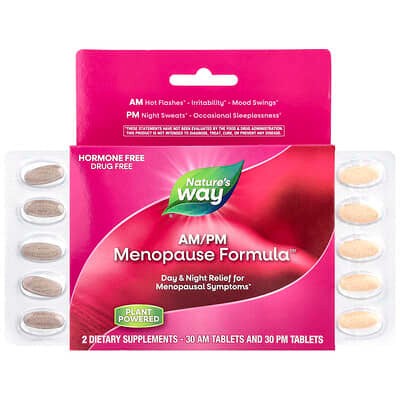
AM Formula

Nature's Way
4.5
★ ★ ★ ★ ★
(351 ratings)
Green Tea 250 mg
Product Image
Score66
A compact morning blend combining green tea, ginseng, and black cohosh. Missing active percentages and unclear caffeine exposure limit precise use.
How scoring works
Quantity:30 Tablet(s) • (30 servings)
Goals:
Cognitive Support
Anti-Aging
Anti-Inflammatory Support

Score 66

A compact morning blend combining green tea, ginseng, and black cohosh. Missing active percentages and unclear caffeine exposure limit precise use.
How scoring works
$18.52($0.61 per serving)
Vitacost
$ 20.94
iHerb
$ 21.35
Pure Formulas
$ 18.52
Vitacost
$ 20.94
Report prices

Analysis

Green-tea extract at 250 mg, Asian-ginseng extract at 100 mg, and black-cohosh extract at 20 mg provide a concise three-botanical formula. Ginsenosides and triterpene glycosides are named, but their standardization percentages are not supplied.

Ginseng may support daytime energy, while black cohosh is more narrowly aligned with menopausal symptoms. Green tea adds potential catechins and caffeine, but neither EGCG nor stimulant exposure is disclosed.

One morning tablet is convenient and avoids a large blend. The formula fits users deliberately seeking its combined purpose, though the ingredients do not form a broad anti-aging, skin, or cognitive product.

Who is it for
  • Adults seeking a morning botanical formula
  • Menopausal users considering black cohosh with ginseng
Best for
  • Daytime botanical support
  • Ginseng supplementation
  • Menopause-oriented morning routines

Pros

  • Only three active botanicals
  • Names ginsenoside and triterpene markers
  • One-tablet serving
  • Clearly lists extract weights

Cons

  • Marker percentages are missing
  • Caffeine amount is undisclosed
  • Ingredients serve partly different goals
  • Only moderate value

Warnings

  • Black cohosh has occasionally been linked with liver injury; stop use for jaundice, dark urine, or persistent upper-abdominal pain.
  • Asian ginseng may alter blood glucose and may interact with warfarin, so those treatments require prescriber guidance.
  • Undisclosed green-tea caffeine may worsen insomnia, palpitations, or anxiety in sensitive users.

Nutrient quality

68 High impact

Ginseng and black cohosh markers are partly described, while green tea lacks catechin standardization. Useful botanical doses are present, but unclear green tea potency and a mixed purpose reduce coherence.
Ingredient transparency

81 Highest impact

All three botanical amounts are stated clearly. No proprietary blend hides the listed active doses.

Customer satisfaction

64 Moderate impact

The supplied average is positive, with moderate response volume. Complaint patterns and purpose-related experiences are not supplied.

Value for money

47 Lower impact

The asking price is difficult to justify for the disclosed formula. Serving value is weak relative to the green tea support provided.

Report analysis

Goals

Cognitive Support
Impact
High effect
B- Goal FitC Strength of SupportC CoverageC Formula Quality
Green Tea · 250 mg

Green tea may support alertness and ginseng may help mental stamina, creating a plausible daytime cognitive combination. Their active caffeine and ginsenoside yields are not fully disclosed, while black cohosh has little direct focus or memory value.

Evidence is moderate for ginseng-related fatigue support but less consistent for broad cognitive improvement. Unknown caffeine exposure from green tea may disturb sleep or cause jitters in sensitive users.

Study evidence
Green Tea Supportive 32 studies
Anti-Aging
Impact
Moderate effect
C Goal FitD Strength of SupportC- CoverageC- Formula Quality
Green Tea · 250 mg

Green tea and ginseng may support antioxidant defense, metabolic resilience, and energy, while black cohosh addresses a narrower life-stage concern. The combination has some healthy-aging relevance but lacks a clear, unified longevity strategy.

Green tea does not disclose EGCG or caffeine, and ginseng does not state a ginsenoside percentage. Unknown stimulant exposure may worsen restlessness or sleep in sensitive users.

Study evidence
Green Tea Supportive 9 studies
Anti-Inflammatory Support
Impact
Moderate effect
B+ Goal FitF Strength of SupportD- CoverageC Formula Quality
Green Tea · 250 mg

Green tea extract can modulate inflammatory signaling and oxidative stress through its polyphenols. Green tea has meaningful human and mechanistic evidence, especially when EGCG content is known.

The 250 mg extract amount cannot be judged well because EGCG and total polyphenols are not disclosed. Lack of standardization and caffeine disclosure substantially weakens confidence in the active form.

Study evidence
Green Tea Mixed 16 studies

Ingredients

IngredientAmount per serving
Green Tea leaf extract
250 mg
Asian Ginseng root extract (Ginsenosides)
100 mg
Black Cohosh root and rhizome extract (Triterpene Glycosides)
20 mg
Gluten Free Dairy Free Sugar Free Women 50+ Women 18–50 Menopause Vegetarian
Report overview
Green Tea · 250 mg OverallScore8
F Active Ingredient Quality & BioavailabilityF Dose, Safety & Label TransparencyF Value

Green tea extract is the leading ingredient, but its active-marker content is not standardized. Caffeine exposure and EGCG dosing remain unclear. Value for active EGCG cannot be established.

Loading alternative details
Report alternatives

Sources

Published studies used for the product analysis and the top-ranked studies for each ingredient and goal.

  1. Green tea and coffee intake and risk of cognitive decline in older adults: the National Institute for Longevity Sciences, Longitudinal Study of Aging.
    Shirai Y; Kuriki K; Otsuka R; Kato Y; Nishita Y; Tange C; Tomida M; Imai T; Ando F; Shimokata H · Public health nutrition · 2021
    Cohort study1,305 participantsAnti-Aging forGreen Tea
  2. Associations of green tea, coffee, and soft drink consumption with longitudinal changes in leukocyte telomere length.
    Sohn I; Shin C; Baik I · Scientific reports · 2023
    Cohort study1,952 participantsAnti-Aging forGreen Tea
  3. Can teatime increase one's lifetime?
    Nakachi K; Eguchi H; Imai K · Ageing research reviews · 2003
    Cohort studyAnti-Aging forGreen Tea
  4. Influences of tea consumption on self-rated health and life satisfaction among older adults: Evidence from the CLHLS.
    Zou M; Sun C; Yang M; Li C; Wang S; Zheng D; Wang J; Yu L; Sun L; Wang Y; Chen H; Zeng Y · PsyCh journal · 2025
    Cohort study78,345 participantsAnti-Aging forGreen Tea
  5. Double-blinded, placebo-controlled trial of green tea extracts in the clinical and histologic appearance of photoaging skin.
    Chiu AE; Chan JL; Kern DG; Kohler S; Rehmus WE; Kimball AB · Dermatologic surgery : official publication for American Society for Dermatologic Surgery [et al.] · 2005
    Randomized trial40 participantsAnti-Aging forGreen Tea
  6. The effects of green tea on acne vulgaris: A systematic review and meta-analysis of randomized clinical trials.
    Kim S; Park TH; Kim WI; Park S; Kim JH; Cho MK · Phytotherapy research : PTR · 2021
    Meta-analysis247 participants5 studies pooledAnti-Inflammatory Support forGreen Tea
  7. Green Tea Catechin Association with Ultraviolet Radiation-Induced Erythema: A Systematic Review and Meta-Analysis.
    Kapoor MP; Sugita M; Fukuzawa Y; Timm D; Ozeki M; Okubo T · Molecules (Basel, Switzerland) · 2021
    Meta-analysis100 participants6 studies pooledAnti-Inflammatory Support forGreen Tea
  8. Efficacy of (-)-epigallocatechin gallate delivered by a new-type scaler tip during scaling and root planing on chronic periodontitis: a split-mouth, randomized clinical trial.
    Wang Y; Zeng J; Yuan Q; Luan Q · BMC oral health · 2021
    Randomized trial20 participantsAnti-Inflammatory Support forGreen Tea
  9. Camellia Sinensis Mouthwashes in Oral Care: a Systematic Review.
    Tafazoli A; Tafazoli Moghadam E · Journal of dentistry (Shiraz, Iran) · 2020
    Systematic review69 studies pooledAnti-Inflammatory Support forGreen Tea
  10. Skin photoprotection by green tea: antioxidant and immunomodulatory effects.
    Katiyar SK · Current drug targets. Immune, endocrine and metabolic disorders · 2004
    Narrative reviewAnti-Inflammatory Support forGreen Tea
  11. Safety and efficacy of cognitive training plus epigallocatechin-3-gallate in young adults with Down's syndrome (TESDAD): a double-blind, randomised, placebo-controlled, phase 2 trial.
    de la Torre R; de Sola S; Hernandez G; Farré M; Pujol J; Rodriguez J; Espadaler JM; Langohr K; Cuenca-Royo A; Principe A; Xicota L; Janel N; Catuara-Solarz S; Sanchez-Benavides G; Bléhaut H; Dueñas-Espín I; Del Hoyo L; Benejam B; Blanco-Hinojo L; Videla S; Fitó M; Delabar JM; Dierssen M; TESDAD study group · The Lancet. Neurology · 2017
    Randomized trial87 participantsCognitive Support forGreen Tea
  12. Association between tea consumption and risk of cognitive disorders: A dose-response meta-analysis of observational studies.
    Liu X; Du X; Han G; Gao W · Oncotarget · 2018
    Meta-analysis48,435 participants17 studies pooledCognitive Support forGreen Tea
  13. Investigating the Impact of Tea Consumption on Cognitive Function and Exploring Tea-Genetic Interactions in Older Adults Aged 65-105 Years: Findings from the 2002-2018 CLHLS Data.
    Yu L; Yang M; Ye KX; Li C; Zou M; Wang J; Yuan X; Zheng D; Sun C; Zhang Y; Feng Q; Maier AB; Sun L; Feng L; Wang Y; Chen H; Zeng Y · The journal of prevention of Alzheimer's disease · 2024
    Cohort study76,270 participantsCognitive Support forGreen Tea
  14. Consumption of green tea, but not black tea or coffee, is associated with reduced risk of cognitive decline.
    Noguchi-Shinohara M; Yuki S; Dohmoto C; Ikeda Y; Samuraki M; Iwasa K; Yokogawa M; Asai K; Komai K; Nakamura H; Yamada M · PloS one · 2014
    Cohort study490 participantsCognitive Support forGreen Tea
  15. Green Tea Consumption and the Risk of Incident Dementia in Elderly Japanese: The Ohsaki Cohort 2006 Study.
    Tomata Y; Sugiyama K; Kaiho Y; Honkura K; Watanabe T; Zhang S; Sugawara Y; Tsuji I · The American journal of geriatric psychiatry : official journal of the American Association for Geriatric Psychiatry · 2018
    Cohort study13,645 participantsCognitive Support forGreen Tea