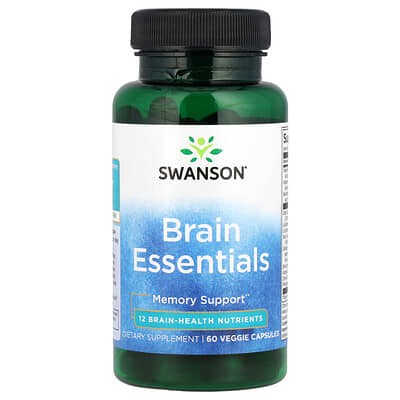
An inexpensive and clearly labeled brain blend with impressive breadth on paper, but token specialty doses keep its real cognitive contribution modest.
An inexpensive and clearly labeled brain blend with impressive breadth on paper, but token specialty doses keep its real cognitive contribution modest.
Gotu kola, ginkgo, tyrosine, DMAE, DHA, phospholipids, and B vitamins create broad cognitive intent. The amounts are individually disclosed, which is more useful than hiding the stack inside a proprietary blend.
Practical depth is weak because tyrosine is only 100 mg, DHA is 30 mg, and phosphatidylserine is 1 mg. Ginkgo is modest and lacks marker percentages, while cyanocobalamin and pyridoxine hydrochloride are functional but basic vitamin forms.
The one-capsule serving may suit someone who wants inexpensive, gentle nutritional coverage rather than a strong nootropic effect. It is poorly matched to dedicated DHA, mood, vision, cardiovascular, or hair goals because the relevant ingredients are either missing or far below focused amounts.
thumb_upPros
Discloses individual active amounts instead of using a proprietary blend
Combines B vitamins with several cognitive ingredient classes
Uses the preferred L-tyrosine form
Simple one-capsule serving is easy to maintain
thumb_downCons
DHA and phosphatidylserine are present at token amounts
Ginkgo marker percentages are not supplied
Tyrosine, alpha-lipoic acid, and DMAE are too lightly dosed for focused use
Uses cyanocobalamin and pyridoxine hydrochloride rather than active coenzyme forms
The broad formula is scattered across many weak pathways
warningWarnings
Ginkgo may increase bleeding tendency when combined with anticoagulants such as warfarin or antiplatelet medicines such as clopidogrel.
The 25 mg vitamin B6 amount is high for long-term daily use and may add to neuropathy risk when stacked with other B6 supplements.
Soy lecithin makes the formula unsuitable for people with a soy allergy unless the specific product labeling confirms otherwise.
scienceNutrient quality
51
Moderate impact
Pyridoxine hydrochloride, cyanocobalamin, and standard pantothenate are usable but not the most metabolically direct forms. DHA, phosphatidylserine, amino acids, alpha-lipoic acid, and DMAE are too small for focused cognitive support.
.
scienceIngredient transparency
66
High impact
Most principal ingredients have amounts, but several marker and form entries show no usable quantity. A complete excipient list is not available in the supplied data.
.
thumb_upCustomer satisfaction
75
High impact
The average rating is strong. The large rating volume provides a reliable satisfaction signal.
.
workspace_premiumValue for money
53
Moderate impact
Each serving is inexpensive but weak as an effective cognitive dose. Numerous lightly dosed additions provide limited practical value.
C+
Goal FitD
Strength of SupportC-
CoverageD+
Formula Quality
Vitamin B5 · 25 mgVitamin B12 · 250 mcg
Vitamin B12, B6, pantothenic acid, and tyrosine support metabolic and neurotransmitter pathways linked to mental energy. The 250 mcg vitamin B12 amount meets the rubric’s higher threshold.
Most botanical, amino-acid, DHA, and phosphatidylserine amounts are low, leaving the broad brain stack diluted. Ginkgo may increase bleeding risk with anticoagulant or antiplatelet medicines.
scienceStudy evidence
SupportiveMixedNo effectAdverse
Vitamin B12 Disputed star star star star star 14 studies
C+
Goal FitD-
Strength of SupportC
CoverageC-
Formula Quality
Vitamin B6 · 25 mgVitamin B12 · 250 mcg
Gotu kola, tyrosine, ginkgo, DHA, DMAE, and phosphatidylserine target several cognitive mechanisms. The ingredient list is impressively broad, but most doses are well below established standalone ranges.
Ginkgo is modest, DHA is only 30 mg, and phosphatidylserine is present at a token 1 mg. Ginkgo may increase bleeding risk when combined with anticoagulant or antiplatelet medicines.
scienceStudy evidence
SupportiveMixedNo effectAdverse
Ginkgo Supportive star star star_border star_border star_border 87 studies
D+
Active Ingredient Quality & BioavailabilityA+
Dose, Safety & Label TransparencyB-
Value
The B6 dose is well placed for metabolic and neurological support, but pyridoxine hydrochloride requires conversion to its active form. A one-capsule serving and clear form disclosure make the formula easy to understand and use. Its low serving cost is favorable for a synthetic-form B6 product.
B-
Active Ingredient Quality & BioavailabilityD-
Dose, Safety & Label TransparencyC
Value
The label clearly identifies DMAE bitartrate, but it gives only the salt weight rather than active Deanol yield. After conversion from the salt weight, the active amount is very low. No Deanol-specific safety warning is included, while the one-capsule serving is convenient and the broad stack supports neutral Deanol value.
B-
Active Ingredient Quality & BioavailabilityD+
Dose, Safety & Label TransparencyF
Value
The preferred L-Tyrosine form is used, but the 100 mg dose is too small for strong acute cognitive support. The amount is clearly disclosed, while tyrosine-specific purity and sourcing remain undocumented. Low tyrosine output keeps the cost per gram high despite an inexpensive serving.
A more focused cognitive blend provides substantially more ginkgo and adds meaningful bacopa alongside methylcobalamin and DMAE. The stated huperzine amount is aggressive, and missing extract standardization still warrants caution.
A much larger tyrosine amount and supporting phenylalanine make the focus-oriented amino-acid core more substantial, while DMAE and standardized ginkgo retain overlap with the original. Phenylalanine is unsuitable for people with phenylketonuria, and the ginkgo and CoQ10 amounts remain modest.
Theanine, bacopa, methylcobalamin, and standardized ginkgo provide broader calm-focus support than the original formula’s lightly dosed cognitive ingredients. Caffeine and kava change the use case, while kava also brings liver and sedation concerns.
The lower-cost serving keeps vitamin B6, vitamin B12, and pantothenic acid in the formula. It is less suitable for broad cognitive support because it omits ginkgo, tyrosine, DHA, and DMAE, and its vitamin B6 amount is unusually high.
The focused formula supplies far more DMAE and stronger pantothenic-acid support than the original, with comparatively strong ingredient quality and value evidence. It gives up ginkgo, tyrosine, and DHA coverage, and the vitamin B6 amount may limit routine long-term use.
Phosphatidylserine, acetyl-L-carnitine, and a somewhat larger DMAE amount broaden the cognitive blend beyond the original’s shallow phosphatidylserine dose. Most actives are still lightly dosed, and the unclear DHA source and unquantified kola-nut caffeine weaken the value case.
Theanine, bacopa, methylcobalamin, and standardized ginkgo offer a more deliberate focus blend than the original’s diffuse formula. The higher-cost serving, kava safety concerns, and incomplete botanical standardization make the practical value mixed.
flagReport alternatives
schoolSources
Published studies used for the product analysis and the top-ranked studies for each ingredient and goal.
von Gunten A; Schlaefke S; Überla K · The world journal of biological psychiatry : the official journal of the World Federation of Societies of Biological Psychiatry · 2017
Meta-analysis1,628 participants4 studies pooledflagCognitive Support forscienceGinkgo
Riepe M; Hoerr R; Schlaefke S · The world journal of biological psychiatry : the official journal of the World Federation of Societies of Biological Psychiatry · 2025
Meta-analysis782 participants4 studies pooledflagCognitive Support forscienceGinkgo
Ihl R; Bachinskaya N; Korczyn AD; Vakhapova V; Tribanek M; Hoerr R; Napryeyenko O; GOTADAY Study Group · International journal of geriatric psychiatry · 2013
Randomized trial410 participantsflagCognitive Support forscienceGinkgo