
Nutrient quality
Glucosamine is meaningfully dosed, but active omega-3 potency cannot be established. The formula is coherent and avoids obvious excess or filler-heavy additions.
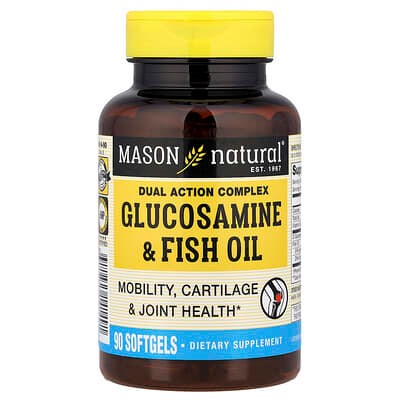
 Pure Formulas Pure Formulas | $ 17.36 | |
 iHerb iHerb | $ 0.00 | |
 Vitacost Vitacost | $ 13.85 |
Fish oil could provide meaningful lipid support, but the label does not disclose EPA or DHA. The joint-focused glucosamine dose dominates the formula and offers little direct cardiovascular value. Fish oil amount and natural vitamin E are visible, while source, molecular form, purification, and active fatty-acid yield are unknown.
Fish oil could provide direct omega-3 support for inflammatory balance, with glucosamine adding joint-focused context. The label does not disclose EPA or DHA, so active potency cannot be established. A 1200 mg fish-oil amount does not show whether a meaningful omega-3 dose is present, and molecular form and purification are unknown.
Natural d-alpha-tocopherol is clearly identified, but the amount is only a small supporting dose in a fish-oil formula. Mixed tocopherols and tocotrienols are absent. The low serving cost supports value for the broader combination, although vitamin E coverage is limited.
Glucosamine is meaningfully dosed, but active omega-3 potency cannot be established. The formula is coherent and avoids obvious excess or filler-heavy additions.
Fish oil has a total amount, but EPA and DHA are not quantified. Daily directions and complete excipient details are not supplied.
The supplied aggregate satisfaction metric is strong and supported by the available feedback volume. No feedback excerpts or complaint themes are supplied, so specific experience patterns cannot be verified.
Serving value appears reasonable but not exceptional. The focused ingredient profile avoids costly low-value extras.

Fish oil could provide meaningful lipid support, but the label does not disclose EPA or DHA. The joint-focused glucosamine dose dominates the formula and offers little direct cardiovascular value.
Fish oil amount and natural vitamin E are visible, while source, molecular form, purification, and active fatty-acid yield are unknown. People using anticoagulant or antiplatelet therapy should review combined fish-oil use clinically.

Fish oil could provide direct omega-3 support for inflammatory balance, with glucosamine adding joint-focused context. The label does not disclose EPA or DHA, so active potency cannot be established.
A 1200 mg fish-oil amount does not show whether a meaningful omega-3 dose is present, and molecular form and purification are unknown. The concept is coherent, but weak disclosure prevents confident evaluation.
| Ingredient | Amount per serving |
|---|---|
Calories | 21 {Calories} |
Total Fat | 1.77 Gram(s) |
Total Carbohydrates | 0 mg |
Protein | 825 mg |
Vitamin E (D-Alpha-Tocopherol) | 15 IU |
D-Glucosamine Sulfate | 1500 mg |
Fish Oil | 1200 mg |
Natural d-alpha-tocopherol is clearly identified, but the amount is only a small supporting dose in a fish-oil formula. Mixed tocopherols and tocotrienols are absent. The low serving cost supports value for the broader combination, although vitamin E coverage is limited.
The fish oil amount is stated, but its molecular form, species, and purification method are not. EPA and DHA are not broken out, leaving active potency and concentration unknown. Vitamin E adds oxidation protection, yet value per gram of active omega-3 cannot be determined.
Published studies used for the product analysis and the top-ranked studies for each ingredient and goal.