No linked studies yet.
Product analysis
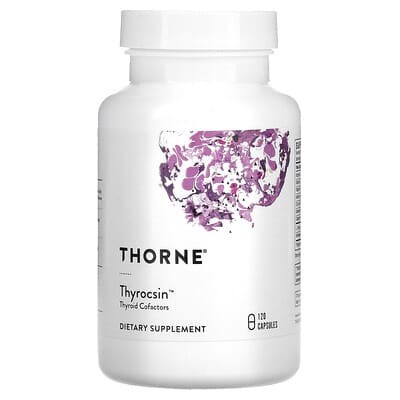
Thyrocsin supplies iodine and other nutrients involved in normal thyroid and immune functions, with benefits most relevant when intake is low. Several additions have less certain benefits, making it harder to justify the whole mixture for one need.
AI assessment of the formula, label and price. How scoring works
Nutrient Quality52
Iodine and selenium use favorable identified forms, making those nutrient sources easier to compare. Other preparations are less fully characterized, limiting an equally clear view of the complete formula.
Ingredient Transparency92
All ingredient amounts and most forms are disclosed. Tyrosine and ashwagandha have less complete form descriptions, leaving part of the preparation unclear.
Value For Money33
Iodine provides moderate value, while selenium and tyrosine are relatively costly contributions. Value for the remaining ingredients is uncertain, making the full mixture harder to justify on price.
Customer Satisfaction92
Customer feedback is broadly positive across a large number of ratings. The volume provides a wider picture of satisfaction without proving health benefits.
Product Focus62
The clearest role is filling nutrient gaps, including iodine needed to make thyroid hormones. The mixture does not establish a metabolism boost with adequate intake, and the ashwagandha amount is below the exposure behind its limited hair findings.
- Format
Capsule - Container
- 120 Capsule(s)
- Per serving
- $0.66
- Customer rating
- 4.8 · 10,606 ratings
Goals
Iodine helps make thyroid hormones, which regulate metabolic rate; correcting iodine deficiency can address an impaired thyroid response, rather than accelerate a normal one. The other supplied nutrient and biomarker findings do not establish an additional routine increase in energy expenditure.
How this product is rated for Metabolism Support
Ingredient fit69
Goal fit
Dose adequacy
Pathways0
Depth
Breadth
Evidence96
Evidence strength
Studied preparation
Formulation logic100
Partner coverage
Conflicts
Effective doses
Selenium supports normal antioxidant enzyme function, iodine supplies a nutrient needed by the thyroid, and vitamin B12 contributes to blood formation. These contributions are most useful when intake is insufficient. Selenium has the strongest saved contribution, while the smaller zinc and vitamin C amounts did not receive credit; the supplied facts do not establish additional benefit in nutrient-replete adults.

How this product is rated for Everyday Health
Ingredient fit81
Goal fit
Dose adequacy
Pathways60
Depth
Breadth
Evidence82
Evidence strength
Studied preparation
Formulation logic100
Partner coverage
Conflicts
Effective doses
Zinc can help address low intake associated with shedding, although its amount here was too small to count in the saved findings. KSM-66 ashwagandha has limited preparation-specific hair evidence, but 90 mg per serving is below the 600 mg daily exposure used in the supplied trial. Vitamin C supports normal collagen formation without establishing independent hair regrowth.

How this product is rated for Hair Health
Ingredient fit70
Goal fit
Dose adequacy
Pathways60
Depth
Breadth
Evidence76
Evidence strength
Studied preparation
Formulation logic100
Partner coverage
Conflicts
Effective doses
Selenium supports normal immune function, without establishing added protection against infections when intake is adequate. Copper and Vitamin B12 can help restore immune-cell function when intake is low.

How this product is rated for Immunity
Ingredient fit75
Goal fit
Dose adequacy
Pathways60
Depth
Breadth
Evidence85
Evidence strength
Studied preparation
Formulation logic100
Partner coverage
Conflicts
Effective doses
No linked studies yet.
Ingredients
| Ingredient | Amount per serving | Score |
|---|---|---|
Vitamin C (Ascorbic Acid) | 200 mg | |
Vitamin E (D-Alpha-Tocopheryl) | 67 mg | |
Vitamin B12 (Methylcobalamin) | 100 mcg | |
Iodine (Potassium Iodide) | 225 mcg | |
Zinc (Albion Zinc Bisglycinate Chelate) | 5 mg | |
Selenium (L-Selenomethionine) | 100 mcg | |
Copper (Copper Citrate) | 500 mcg | |
L-Tyrosine | 500 mg | |
Ashwagandha extract | 90 mg |
How this ingredient is rated
Active Ingredient Quality & Bioavailability100
Iodine Form & Bioavailability
Marine Source Purity & Sourcing
Dose, Safety & Label Transparency100
Dosage Efficacy for Daily Support
Dosage Safety & Upper Limits
Elemental Iodine Transparency
Value50
Price Per Effective Serving
How this ingredient is rated
Active Ingredient Quality & Bioavailability70
Tyrosine Chemical Form
Purity and Sourcing Signals
Dose, Safety & Label Transparency100
Tyrosine Dosage Adequacy
Label Transparency and Blends
Value10
Price per Gram of Tyrosine
How this ingredient is rated
Active Ingredient Quality & Bioavailability100
Selenium Chemical Form
Form Transparency & Isomer Specificity
Dose, Safety & Label Transparency88
Dosage Efficacy Sweet Spot
Safety Margin & UL Adherence
Value10
Price per 200 mcg Serving
Alternative products
Sources
Published studies used for the product analysis and the top-ranked studies for each ingredient and goal.

- Acute and Repeated Ashwagandha Supplementation Improves Markers of Cognitive Function and Mood.
- Effect of ashwagandha (Withania somnifera) extract with Sominone (Somin-Onâ„¢) to improve memory in adults with mild cognitive impairment: A randomized, double-blind, placebo-controlled study.
- Efficacy of Withania somnifera supplementation on adult's cognition and mood.
- A clinical assessment of the therapeutic effects of Ashwagandha root extract on cognitive performance, sleep, and fatigue in children aged 6-12 years.
- Efficacy and Safety of Ashwagandha Root Extract on Cognitive Functions in Healthy, Stressed Adults: A Randomized, Double-Blind, Placebo-Controlled Study.
- Combined L-carnosine and L-tyrosine supplementation as an ergogenic strategy for physical and cognitive performance under fatigue in professional football players.
- Effect of tyrosine supplementation on clinical and healthy populations under stress or cognitive demands--A review.
- Influence of nutritional tyrosine on cognition and functional connectivity in healthy old humans.
- Dietary Tyrosine Intake (FFQ) Is Associated with Locus Coeruleus, Attention and Grey Matter Maintenance: An MRI Structural Study on 398 Healthy Individuals of the Berlin Aging Study-II.
- Baseline-dependent effect of dopamine's precursor L-tyrosine on working memory gating but not updating.
- Relationship between vitamin B12 levels and motor development: A systematic review.
- Vitamin B12 supplementation improves cognitive function in middle aged and elderly patients with cognitive impairment.
- Structural and Functional Brain Changes Associated with Vitamin B12 Deficiency using Magnetic Resonance Imaging: A Systematic Review and Meta-analysis.
- Maternal vitamin B12, vitamin D, and folic acid status during pregnancy and child neurodevelopment: a systematic review.
- Higher vitamin B12 from mid- to late life is related to slower rates of cognitive decline.
- Efficacy of Zinc Supplement in Minimal hepatic Encephalopathy: A prospective, Randomized Controlled Study (Zinc-MHE Trial).
- A preliminary report: effects of zinc and micronutrient repletion on growth and neuropsychological function of urban Chinese children.
- Association between zinc deficiency and cognitive decline in community-dwelling older adults.
- Zinc status, psychological and nutritional assessment in old people recruited in five European countries: Zincage study.
- Zinc alleviates stroke development through autophagy-mediated modulation of immune microenvironment.