Iodine

Description

Iodine is a crucial trace mineral that plays a central role in human health, primarily through its involvement in the synthesis of thyroid hormones, triiodothyronine (T3) and thyroxine (T4). These hormones are fundamental regulators of metabolic processes throughout the body, impacting energy production, body temperature, and the proper functioning of virtually all organs. Adequate iodine intake is therefore indispensable for maintaining metabolic balance. Beyond its well-known role in metabolism, iodine is critical for normal growth and development, especially of the brain and nervous system, particularly during fetal development and early childhood. It supports cognitive function, nerve transmission, and energy levels, contributing to overall vitality and mental acuity. Deficiencies can lead to a range of issues, from impaired cognitive function to more severe conditions like goiter and hypothyroidism. Maintaining optimal iodine levels is also important for reproductive health and a healthy immune system. Given its widespread influence on bodily functions, ensuring sufficient intake through diet or supplementation is a key aspect of preventive health, supporting not only thyroid health but also broader physiological well-being.

Sources
Seaweed (kelp, nori, kombu)Cod, tuna, and other fishShrimp and other seafoodDairy products (milk, yogurt, cheese)EggsIodized saltSome fruits and vegetables, depending on soil content
Cheapest Iodine supplements
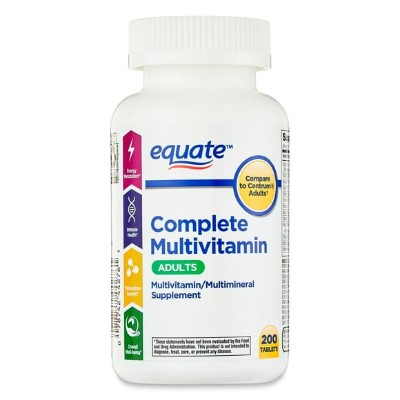
Discover the most affordable iodine supplements to support energy, mental focus, metabolism, hair health, and weight loss.
Best Iodine supplements
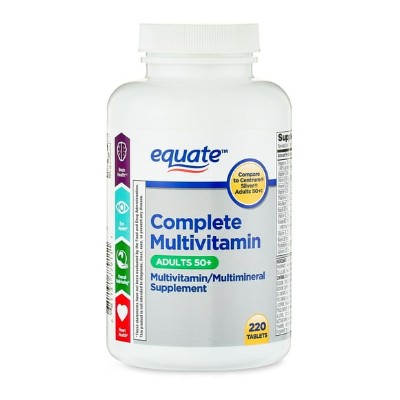
Discover the best Iodine supplements for boosting energy, enhancing mental focus, supporting metabolism, improving hair health, and aiding weight loss.
Value Iodine supplements
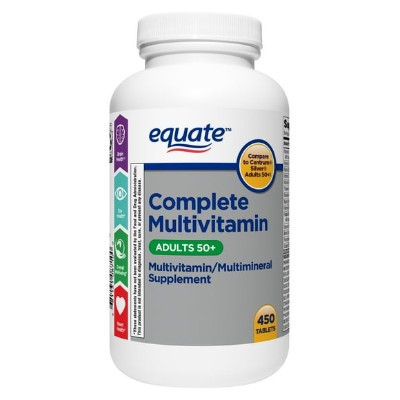
Discover the top iodine supplements to boost your energy, sharpen mental focus, optimize metabolism, enhance hair health, and support weight loss goals.
Timing & Intake
AnytimeWith foodTake with Food to minimize potential stomach upset.
Iodine can be taken at any time of day, preferably with a meal for better tolerance.
Daily Intake
RDA (Men)150 mcg
RDA (Women)150 mcg
RDI150 mcg
Optimal Dosage
Minimum150 mcg
Maximum300 mcg
Safety & Toxicity
Upper Limit (UL)1100 mcg
Toxicity Threshold2000 mcg
Toxicity EffectThyroid dysfunction
Goals
Energy
Energy
Impact
Highest effect
Typical dose:150–300 mcg
The thyroid gland cannot produce T3 and T4 hormones without adequate iodine. These hormones control the speed of cellular processes throughout the body. An iodine deficiency can lead to hypothyroidism, a condition whose primary symptoms include severe fatigue, weight gain, and low energy.
View goal ->
Weight Loss
Weight Loss
Impact
Highest effect
Typical dose:75–250 mcg
The thyroid gland cannot produce its hormones (T3 and T4) without adequate iodine. A deficiency, even a mild one, directly leads to a sluggish metabolism, making it significantly harder to lose weight. Ensuring sufficient intake is foundational for an efficient metabolism.
View goal ->
Hair Health
Hair Health
Impact
Situational effect
Typical dose:150–500 mcg
The thyroid gland requires iodine to produce hormones T3 and T4, which directly regulate the hair growth cycle. A deficiency can lead to hypothyroidism, a well-established cause of diffuse hair loss. Supplementation is critical for individuals with deficiency or related thyroid issues.
View goal ->
Mental Focus
Mental Focus
Impact
Situational effect
Typical dose:150–300 mcg
The thyroid gland controls the body's metabolic rate, and the brain is a highly metabolic organ. Iodine deficiency leads to hypothyroidism, a common cause of severe brain fog, poor memory, and an inability to concentrate. Ensuring adequate iodine is foundational for mental energy and clarity.
View goal ->
Metabolism Boost
Metabolism Boost
Impact
Situational effect
Typical dose:150–300 mcg
The thyroid gland cannot produce its hormones without adequate iodine. In cases of insufficiency, thyroid function slows, directly reducing metabolic rate. For individuals with low iodine intake, this supplement is crucial for restoring normal metabolic function.
View goal ->
Price per product
Average$27.52
Median$23.05
Price per serving
Average$0.66
Median$0.53
Price per 100 mcg
Average$0.40
Median$0.29
Price distribution
Price per serving distribution
Price per 100 mcg
Reference amount: 100 mcg
Forms
Paired ingredients
Potassium Iodide (455)85
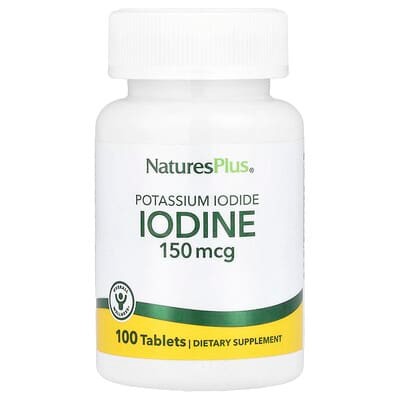
Potassium Iodide (KI) is a readily absorbed, pharmaceutical-grade form of iodine. It is widely recognized for its efficacy in preventing iodine deficiency and for its critical role in blocking the uptake of radioactive iodine by the thyroid gland during nuclear emergencies. Its precise iodine content allows for accurate and consistent dosing.
Pros
  • Highly bioavailable and well-absorbed
  • Provides precise and consistent dosing
  • Effective for preventing iodine deficiency
  • Medically recognized for thyroid protection against radioactive iodine
Cons
  • Synthetic form, not a whole-food source
  • Potential for gastrointestinal upset in some individuals
  • Risk of overdose if not monitored carefully
Per product
Avg$30.97
Med$24.32
Per serving
Avg$0.79
Med$0.53
Per 100 mcg
Avg$0.88
Med$0.42
Price distribution
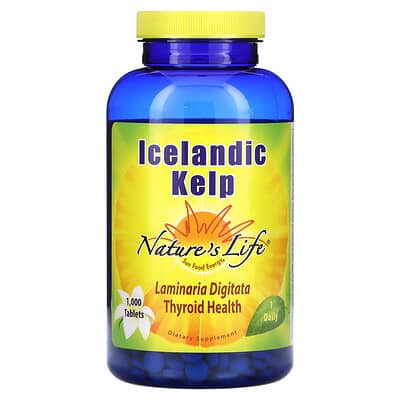
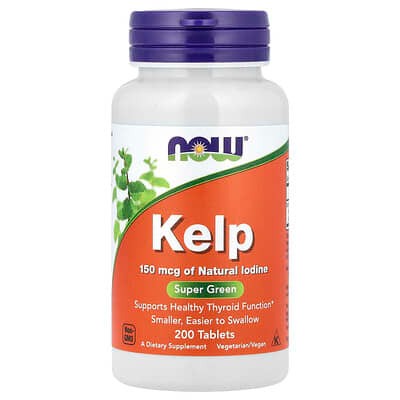
Kelp (149)78
Kelp is a large brown algae naturally rich in iodine, along with a spectrum of other essential minerals, vitamins, and antioxidants. As a whole-food source, it delivers iodine within a natural matrix, which is preferred by some over isolated forms. However, the iodine content can be highly variable depending on the kelp species, harvest location, and processing methods.
Pros
  • Natural, whole-food source of iodine
  • Provides additional trace minerals, vitamins, and phytonutrients
  • Generally well-tolerated by most individuals
Cons
  • Highly variable iodine content, making consistent dosing challenging
  • Potential for heavy metal contamination if sourced from polluted waters
  • Can be high in sodium
Per product
Avg$27.44
Med$24.95
Per serving
Avg$0.67
Med$0.48
Per 100 mcg
Avg$0.91
Med$0.35
Price distribution
fermented Iodine Glycinate (30)88
Iodine Glycinate is a chelated form where iodine is molecularly bound to glycine, an amino acid, to potentially enhance absorption and reduce digestive upset. The fermentation process is intended to further improve nutrient bioavailability and may introduce beneficial postbiotic compounds. This form aims for gentle, efficient absorption, offering a modern approach to iodine supplementation.
Pros
  • Potentially superior bioavailability due to chelation and fermentation
  • Designed to be gentler on the stomach, reducing irritation
  • Stable and easily dosed form
Cons
  • Newer form with less extensive long-term research compared to traditional forms
  • May be higher in cost than inorganic iodine sources
Per product
Avg$38.72
Med$36.29
Per serving
Avg$0.68
Med$0.60
Per 100 mcg
Avg$0.74
Med$0.59
Price distribution
organic Kelp (14)83
Organic Kelp is harvested or cultivated under strict organic guidelines, meaning it is typically free from synthetic pesticides, fertilizers, and potentially from certain environmental pollutants, depending on the certification body and source. This provides an assurance of purity and sustainable practices. Like other kelp forms, it offers iodine along with other beneficial nutrients in a whole-food matrix.
Pros
  • Natural, whole-food source of iodine
  • Certified organic ensures purity and adherence to sustainable practices
  • Provides additional trace minerals and phytonutrients
Cons
  • Iodine content can still vary, requiring careful consideration of dosage
  • May have higher sodium content
  • Generally more expensive than non-organic kelp
Per product
Avg$17.80
Med$17.09
Per serving
Avg$0.36
Med$0.31
Per 10 mcg
Avg$0.04
Med$0.03
Price distribution
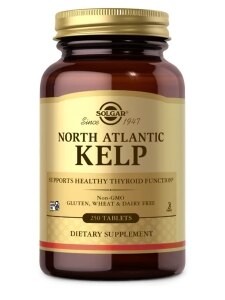
North Atlantic Kelp (13)82
North Atlantic Kelp emphasizes the geographic origin of the kelp, often indicating a higher standard of purity and nutrient density due to the presumed cleaner waters and specific marine environment of the North Atlantic. Like other forms of kelp, it provides iodine along with a broad spectrum of other essential minerals and vitamins in its natural food matrix.
Pros
  • Natural, whole-food source of iodine
  • Specific sourcing from North Atlantic suggests higher purity and quality control
  • Provides additional trace minerals and phytonutrients
Cons
  • Iodine content can still vary, though potentially more consistent than general kelp
  • May have higher sodium content
  • Specific sourcing may lead to a higher product cost
Per product
Avg$39.34
Med$35.25
Per serving
Avg$1.17
Med$0.78
Per 100 mcg
Avg$0.78
Med$0.52
Price distribution
S. cerevisiae (11)89
Saccharomyces cerevisiae, commonly known as brewer's or baker's yeast, is utilized to organically bind iodine, creating a food-form mineral. This process results in an iodine complex that is often well-absorbed and tolerated by the body, potentially reducing gastrointestinal issues associated with inorganic forms. The yeast cells naturally incorporate the iodine, enhancing its bioavailability and providing additional nutritional benefits from the yeast matrix.
Pros
  • Highly bioavailable due to its food-bound nature
  • Gentle on the digestive system, reducing potential irritation
  • Provides additional nutrients from the yeast matrix
  • Precise dosing possible with standardized products
Cons
  • Not suitable for individuals with yeast allergies or sensitivities
  • Less common than inorganic forms, potentially higher cost
  • Iodine content needs to be carefully standardized by the manufacturer
Per product
Avg$44.93
Med$38.24
Per serving
Avg$0.88
Med$1.02
Per 100 mcg
Avg$0.67
Med$0.70
Price distribution
wild, hand-harvested Kelp (9)87
This form of kelp emphasizes both its natural origin (wild) and the careful, sustainable collection method (hand-harvested). Wild harvesting suggests a pristine marine environment, while hand-harvesting often implies a more selective approach, potentially yielding higher quality and cleaner kelp with fewer contaminants than mechanically harvested varieties. It offers iodine as part of a rich, natural nutrient profile.
Pros
  • Natural, whole-food source with potentially superior purity and nutrient profile
  • Emphasizes sustainable and environmentally responsible harvesting practices
  • Provides additional trace minerals, vitamins, and phytonutrients
Cons
  • Iodine content can still vary, requiring careful consideration of dosage
  • Higher cost due to labor-intensive and selective harvesting methods
  • Availability may be more limited compared to mass-produced kelp
Per product
Avg$34.45
Med$36.95
Per serving
Avg$0.77
Med$0.66
Per 100 mcg
Avg$0.53
Med$0.39
Price distribution
organic Sea Kelp (8)78
Kelp is a large brown algae naturally rich in iodine, along with a spectrum of other essential minerals, vitamins, and antioxidants. As a whole-food source, it delivers iodine within a natural matrix, which is preferred by some over isolated forms. However, the iodine content can be highly variable depending on the kelp species, harvest location, and processing methods.
Pros
  • Natural, whole-food source of iodine
  • Provides additional trace minerals, vitamins, and phytonutrients
  • Generally well-tolerated by most individuals
Cons
  • Highly variable iodine content, making consistent dosing challenging
  • Potential for heavy metal contamination if sourced from polluted waters
  • Can be high in sodium
Per product
Avg$41.62
Med$34.29
Per serving
Avg$1.04
Med$1.08
Per 10 mcg
Avg$0.14
Med$0.15
Price distribution
Iodine Glycinate (7)88
Iodine Glycinate is a mineral chelate where iodine is chemically bonded to the amino acid glycine. This chelation helps protect the iodine from adverse interactions in the digestive tract, potentially leading to better absorption and reduced stomach upset compared to some inorganic forms. It is designed for optimal absorption and gentle delivery, making it a favorable option for sensitive individuals.
Pros
  • Improved bioavailability due to chelation with glycine
  • Designed to be gentler on the stomach, reducing irritation
  • Stable form with precise dosing capability
Cons
  • Generally higher cost than simpler inorganic forms of iodine
  • Less extensive long-term research compared to highly traditional forms like Potassium Iodide
Per product
Avg$38.23
Med$36.29
Per serving
Avg$0.80
Med$0.81
Per 10 mcg
Avg$0.10
Med$0.08
Price distribution
Atlantic Kelp (6)78
Kelp is a large brown algae naturally rich in iodine, along with a spectrum of other essential minerals, vitamins, and antioxidants. As a whole-food source, it delivers iodine within a natural matrix, which is preferred by some over isolated forms. However, the iodine content can be highly variable depending on the kelp species, harvest location, and processing methods.
Pros
  • Natural, whole-food source of iodine
  • Provides additional trace minerals, vitamins, and phytonutrients
  • Generally well-tolerated by most individuals
Cons
  • Highly variable iodine content, making consistent dosing challenging
  • Potential for heavy metal contamination if sourced from polluted waters
  • Can be high in sodium
Per product
Avg$31.67
Med$32.36
Per serving
Avg$0.92
Med$0.71
Per 10 mcg
Avg$0.23
Med$0.22
Price distribution