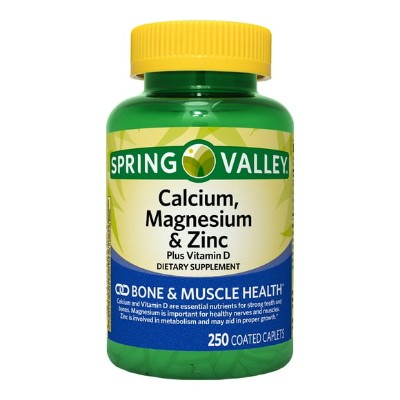


About this product
The main appeal is inexpensive support for calcium and magnesium intake when food leaves a gap, particularly for people who eat little dairy. The full three-caplet panel lists 1,000 mg calcium and 400 mg magnesium, while one caplet provides about 333 mg and 133 mg respectively. Vitamin D contributes to normal calcium absorption, but one caplet supplies only 5 mcg, so the amount taken matters.
The low price comes with some limitations in the mineral forms. Magnesium oxide has lower absorption potential than some alternatives, and zinc sulfate is a less favorable zinc choice. Ingredient-specific details identify these sources, but the broader form disclosure is incomplete, making precise comparisons harder.
The strongest fit is filling mineral gaps for normal bone maintenance, muscle function and energy use. Extra benefits for focus, mood, testosterone or exercise performance remain uncertain when intake is adequate. Calcium and zinc are inexpensive contributions, but that does not establish equally good value for the vitamin D or magnesium.
Pros
Low serving cost makes calcium and zinc inexpensive additions Calcium, magnesium and vitamin D have relevant roles in normal bone nutrition Clearly stated amounts help compare the nutrients actually taken
Cons
Magnesium oxide has lower absorption potential than some alternatives Zinc sulfate is a less favorable zinc form Titanium dioxide is listed, which may matter to people avoiding that additive Benefits beyond meeting nutrient needs remain uncertain
Warnings
The full panel amounts apply to three caplets; one caplet supplies about one-third, so use the amount actually taken when planning intake. Magnesium can draw water into the bowel and cause diarrhea; digestive relief from the selected serving remains uncertain.