
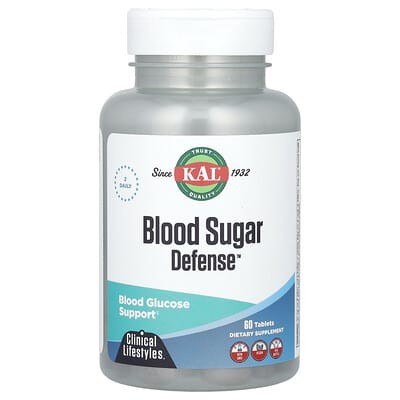

$23.19 $0.77 per serving


Product analysis
Blood Sugar Defense provides zinc and vitamin B6 to support normal nutrient processing and immune function. Those nutritional roles do not establish that the wider mixture improves blood sugar control.
AI assessment of the formula, label and price. How scoring works
Nutrient Quality40
Chromium polynicotinate is a favorable form, while the zinc chelate is less clearly specified. Several botanical preparations lack enough detail to judge their quality confidently.
Ingredient Transparency80
All listed amounts are disclosed, helping you compare the formula with other options. More than half of the ingredient forms are unspecified, limiting what you can tell about the preparations used.
Value For Money38
The zinc and chromium contributions offer limited value at the serving price, while fenugreek looks more moderate. Value for much of the remaining mixture is uncertain, so added ingredients do not establish added savings.
Customer Satisfaction76
Customers generally rate the product positively, with a review pool of hundreds. These ratings describe satisfaction rather than proving effectiveness or safety.
Product Focus50
The clearest support comes from the normal nutritional roles of zinc and vitamin B6. The broad mixture does not establish a dependable blood sugar benefit or an increase in energy burning.
- Format
Tablet - Container
- 60 Tablet(s)
- Per serving
- $0.77
- Customer rating
- 4.6 · 625 ratings
Goals

Impact
High effect
Vitamin B6 · 5 mgZinc · 15 mg
Vitamin B6 and zinc contribute to normal nutrient processing and enzyme function. Chromium and vanadium relate mainly to glucose and insulin outcomes in the supplied context, which are distinct from burning more energy. The blend does not establish a routine increase in whole-body energy expenditure, even where its declared amounts meet the saved comparisons.
How this product is rated for Metabolism Support
Ingredient fit63
The B vitamins provides the main connection to the goal. The supplied roles do not establish a routine rise in energy expenditure.
Goal fit
The B vitamins relate mainly to normal metabolic function; the formula also serves broader nutritional purposes.
Dose adequacy
Declared amounts provide partial coverage of the saved comparisons; meeting them does not demonstrate faster energy expenditure.
Pathways18
The limited connection concerns insulin-related metabolic processes, which do not by themselves demonstrate higher energy expenditure.
Depth
The limited connection concerns insulin-related metabolic processes, which do not by themselves demonstrate higher energy expenditure.
Breadth
No pathway reached the saved breadth threshold.
Evidence100
The B vitamins received evidence and preparation recognition in the saved findings. Physiological roles and metabolic markers should not be read as proof of increased energy expenditure.
Evidence strength
Zinc leads the saved evidence comparison, but its supported role and population limits still govern expected benefits.
Studied preparation
Included preparations matched the saved comparison; this does not establish that the finished formula increases metabolic rate.
Formulation logic100
The included ingredients met the saved amount threshold and had no missing required partner or identified configured conflict.
Partner coverage
No required partner was missing for the included ingredients; this does not establish an added benefit from combining them.
Conflicts
No configured ingredient conflict was identified in the supplied facts.
Effective doses
All included ingredients reached the saved minimum amount threshold; that threshold is a comparison rule, not proof of clinical effectiveness.

Impact
Lower effect
Zinc · 15 mg
Acetyl L-Carnitine Not classified
No linked studies yet.

Impact
Moderate effect
Zinc · 15 mg
Zinc at 15 mg supports normal immune-cell function and regulation. B6 adds nutritional support, with benefit depending on whether dietary intake already meets the body's needs.
How this product is rated for Immunity
Ingredient fit45
Relevant immune nutrients are part of a broader blend serving several purposes. The supplied amounts give partial support relative to the saved comparison amounts.
Goal fit
Relevant immune nutrients are part of a broader blend serving several purposes.
Dose adequacy
The supplied amounts give partial support relative to the saved comparison amounts.
Pathways40
The strongest saved contribution concerns lymphocyte function. One immune area reaches the saved coverage threshold; coverage remains selective.
Depth
The strongest saved contribution concerns lymphocyte function.
Breadth
One immune area reaches the saved coverage threshold; coverage remains selective.
Evidence100
Zinc provides the strongest evidence contribution in the saved assessment. The main practical benefit is supporting normal function rather than guaranteeing protection from infection. The assessed effective ingredients are accepted in the saved preparation assessment.
Evidence strength
Zinc provides the strongest evidence contribution in the saved assessment. The main practical benefit is supporting normal function rather than guaranteeing protection from infection.
Studied preparation
The assessed effective ingredients are accepted in the saved preparation assessment.
Formulation logic100
No configured ingredient conflict was identified. Both assessed contributors reach the saved minimum comparison threshold.
Partner coverage
The assessed ingredients can contribute alone or have their required partner.
Conflicts
No configured ingredient conflict was identified.
Effective doses
Both assessed contributors reach the saved minimum comparison threshold.

Impact
Moderate effect
Zinc · 15 mg
Zinc supports normal immune function, while B6 contributes to normal nerve processes and blood formation. These provide nutritional support, without implying improved blood sugar control or broad health benefits from the other ingredients.
How this product is rated for Everyday Health
Ingredient fit51
Everyday-health nutrients sit within a formula mainly serving a broader or more specific purpose. The assessed amounts provide partial alignment with the saved exposure comparisons.
Goal fit
Everyday-health nutrients sit within a formula mainly serving a broader or more specific purpose.
Dose adequacy
The assessed amounts provide partial alignment with the saved exposure comparisons.
Pathways43
The strongest assessed connection is one-carbon metabolism and blood formation, with moderate coverage. One assessed mechanism reaches the saved coverage threshold: one-carbon metabolism and blood formation. coverage: energy metabolism cofactors 21.4, one-carbon metabolism and blood formation 57.7, bone and mineral metabolism 0.0, antioxidant and immune defence 40.4, viscous fiber function 0.0, stress resilience and sleep 0.0, inflammation balance 0.0. shared rubric rule..
Depth
The strongest assessed connection is one-carbon metabolism and blood formation, with moderate coverage.
Breadth
One assessed mechanism reaches the saved coverage threshold: one-carbon metabolism and blood formation. coverage: energy metabolism cofactors 21.4, one-carbon metabolism and blood formation 57.7, bone and mineral metabolism 0.0, antioxidant and immune defence 40.4, viscous fiber function 0.0, stress resilience and sleep 0.0, inflammation balance 0.0. shared rubric rule..
Evidence72
Zinc provides the strongest saved evidence connection at the assessed amounts; the finding does not promise broad health improvement. The ingredients included in the saved effective-amount comparison meet its preparation criteria; no extra benefit from a named form is implied.
Evidence strength
Zinc provides the strongest saved evidence connection at the assessed amounts; the finding does not promise broad health improvement.
Studied preparation
The ingredients included in the saved effective-amount comparison meet its preparation criteria; no extra benefit from a named form is implied.
Formulation logic100
The assessed ingredients can stand alone or have the required partner present. No configured ingredient conflicts were identified. 2 of 2 assessed ingredients meet the saved minimum exposure comparison, which does not guarantee an effect.
Partner coverage
The assessed ingredients can stand alone or have the required partner present.
Conflicts
No configured ingredient conflicts were identified.
Effective doses
2 of 2 assessed ingredients meet the saved minimum exposure comparison, which does not guarantee an effect.

Impact
Moderate effect
Zinc · 15 mg
Zinc may help with shedding caused by low zinc levels. That benefit concerns correcting a deficiency; taking extra zinc when you already get enough has no demonstrated regrowth benefit.
How this product is rated for Hair Health
Ingredient fit37
Zinc supplies 15 mg per label serving. This amount alone does not predict hair regrowth. The hair benefit of zinc depends on deficiency.
Goal fit
Hair-related nutrients sit alongside other active ingredients whose hair benefits are unclear.
Dose adequacy
Zinc supplies 15 mg per label serving. This amount alone does not predict hair regrowth.
Pathways0
No specific contribution to the listed hair-growth mechanisms is identified; a deficiency-related role can still be relevant.
Depth
No specific contribution to the listed hair-growth mechanisms is identified; a deficiency-related role can still be relevant.
Breadth
The ingredient details do not support broad activity across the listed hair-growth mechanisms.
Evidence98
Zinc’s relevant benefit is correcting deficiency-related shedding, rather than routine regrowth when zinc levels are adequate. The relevant ingredient preparations match the available hair-related information; this does not guarantee regrowth.
Evidence strength
Zinc’s relevant benefit is correcting deficiency-related shedding, rather than routine regrowth when zinc levels are adequate.
Studied preparation
The relevant ingredient preparations match the available hair-related information; this does not guarantee regrowth.
Formulation logic100
The relevant ingredients have their required partners, with no particular conflict identified. Their amounts do not by themselves establish a regrowth benefit.
Partner coverage
The relevant ingredients do not require an additional missing partner for their stated roles.
Conflicts
No particular conflict between the ingredients is identified.
Effective doses
Zinc supplies 15 mg per label serving. This amount alone does not predict hair regrowth.
Ingredients
| Ingredient | Amount per serving | Score |
|---|---|---|
Vitamin B-6 (Pyridoxal 5-Phosphate Monohydrate) | 5 mg | |
Zinc (Zinc Amino Chelate) | 15 mg | |
Chromium (Chromium Polynicotinate) | 200 mcg | |
Cinnamon bark extract (Flavonoids) | 350 mg | |
Alpha Lipoic Acid | 200 mg | |
Indian Kino tree heartwood & bark extract | 200 mg | |
Gymnema leaf extract (Gymnemic Acids) | 200 mg | |
Prickly Pear | 100 mg | |
Fenugreek seed extract | 100 mg | |
Bitter Melon fruit extract | 100 mg | |
Blueberry | 100 mg | |
N-Acetyl L-Carnitine (Acetyl-L-Carnitine HCl) | 10 mg | |
Vanadyl Sulfate | 10 mg |
Chromium (Chromium Polynicotinate) · 200 mcg OverallScore70
Each serving provides 200 mcg of chromium as chromium polynicotinate, an organic form that is readily absorbed. The whole-product price is about $0.77 per 200 mcg of chromium and also includes 200 mg of alpha-lipoic acid.
How this ingredient is rated
Active Ingredient Quality & Bioavailability70
Chromium polynicotinate is an organic form that is readily absorbed. No recognized branded chromium source is identified in the saved facts.
Chromium Chemical Form
Chromium polynicotinate is an organic form that is readily absorbed.
Branded & Trademarked Sources
No recognized branded chromium source is identified in the saved facts.
Dose, Safety & Label Transparency85
A serving provides 200 mcg of chromium. The saved facts do not establish a separate weight for the chromium compound.
Elemental Chromium Dosage
A serving provides 200 mcg of chromium.
Label Transparency & Disclosure
The saved facts establish 200 mcg of chromium per serving but not a separate weight for its chromium compound.
Value40
The whole-product price works out to about $0.77 per 200 mcg of chromium. The evaluation also takes the 200 mg of alpha-lipoic acid into account.
Price per 200 mcg Chromium
The whole-product price works out to about $0.77 per 200 mcg of chromium. The evaluation also takes the 200 mg of alpha-lipoic acid into account.
Zinc (Zinc Amino Chelate) · 15 mg OverallScore46
Each serving provides 15 mg of zinc as an amino acid chelate, a form the evaluation regards less favorably. The whole-product serving costs about $0.77.
How this ingredient is rated
Active Ingredient Quality & Bioavailability40
Zinc is supplied as an amino acid chelate, which the evaluation regards less favorably.
Zinc Form Bioavailability
Zinc amino acid chelate is the listed form; the available information does not specify the particular amino acid.
Dose, Safety & Label Transparency61
The zinc amount is clearly specified at 15 mg per serving. The copper amount is unknown, so the zinc-to-copper balance cannot be assessed.
Elemental Dose Transparency
The serving lists 15 mg of elemental zinc and identifies its source form.
Zinc Dosage Safety & Effectiveness
A serving supplies 15 mg of zinc, a moderate amount in the evaluation’s comparison.
Zinc-to-Copper Mineral Balance
Copper amount is unknown, so no zinc-to-copper ratio can be calculated; unknown does not mean zero copper.
Value30
A whole-product serving costs about $0.77.
Price Per Serving Efficiency
The price is about $0.77 per serving of the whole product, including its other ingredients.
Fenugreek · 100 mg OverallScore63
Each serving lists 100 mg of fenugreek seed extract. The whole-product serving costs about $0.77.
How this ingredient is rated
Composition and Label Disclosure
No additional composition rules were evaluated.
Composition and Label Disclosure70
Available information identifies 100 mg of fenugreek seed extract per serving, but does not specify its saponin percentage.
Amount and Label Disclosure
Available information identifies 100 mg of fenugreek seed extract per serving, but does not specify its saponin percentage.
Commercial Price and Usability50
A whole-product serving costs about $0.77; that amount is not allocated to fenugreek alone.
Commercial Price per Labeled Serving
The price is about $0.77 per whole-product serving.
Alternative products
Report alternatives
Sources
Published studies used for the product analysis and the top-ranked studies for each ingredient and goal.
- Effectiveness of sodium bicarbonate and zinc chloride mouthwashes in the treatment of oral mucositis and quality of life in patients with cancer under chemotherapy.
- Zinc supplementation in young children with acute diarrhea in India.
- Associations of mortality with ocular disorders and an intervention of high-dose antioxidants and zinc in the Age-Related Eye Disease Study: AREDS Report No. 13.
- Effects of zinc and probiotic co-supplementation on inflammation, gastrointestinal symptoms, quality of life, and mood in irritable bowel syndrome patients.
- Effect of zinc sulfate supplementation on premenstrual syndrome and health-related quality of life: Clinical randomized controlled trial.
- The effects of minoxidil, 1% pyrithione zinc and a combination of both on hair density: a randomized controlled trial.
- Incubatory environment of the scalp impacts pre-emergent hair to affect post-emergent hair cuticle integrity.
- A comparison of hair quality and cosmetic acceptance following the use of two anti-dandruff shampoos.
- BMI and levels of zinc, copper in hair, serum and urine of Turkish male patients with androgenetic alopecia.
- Analysis of serum zinc and copper concentrations in hair loss.
- Nutrient supplementation for prevention of viral respiratory tract infections in healthy subjects: A systematic review and meta-analysis.
- Zinc supplementation reduces the incidence of acute lower respiratory infections in infants and preschool children: a double-blind, controlled trial.
- A randomized controlled trial of zinc supplementation in the treatment of acute respiratory tract infection in Thai children.
- The effect of zinc and vitamin A supplementation on immune response in an older population.
- The role of specific nutrients in preventing immune system and blood cell disorders: an umbrella review.
- Elevated intakes of supplemental chromium improve glucose and insulin variables in individuals with type 2 diabetes.
- Chromium Supplementation and the Effects on Metabolic Status in Women with Polycystic Ovary Syndrome: A Randomized, Double-Blind, Placebo-Controlled Trial.
- A Comprehensive insight into the effect of chromium supplementation on oxidative stress indices in diabetes mellitus: A systematic review.
- Comparison of nutritional supplements in improving glycolipid metabolism and endocrine function in polycystic ovary syndrome: a systematic review and network meta-analysis.
- [Chromium supplementation in patients with type 2 diabetes and high risk of type 2 diabetes: a meta-analysis of randomized controlled trials].