




Calcium Supportive
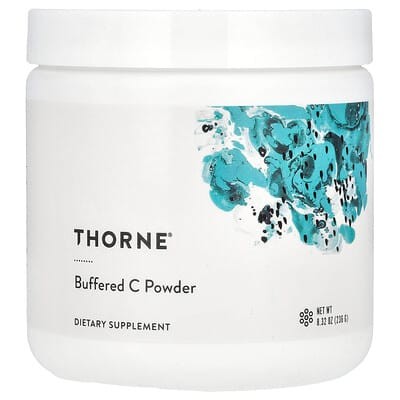
$29.00 $0.69 per serving
Product analysis
Thorne Buffered C Powder supplies 2.35 g of vitamin C with 350 mg each of magnesium and calcium per 5.6 g scoop for antioxidant and immune support. The mineral buffers are designed to make the powder gentler on the stomach, but the high vitamin C amount may still cause diarrhea.
AI assessment of the formula, label and price. How scoring works
Nutrient Quality47
Magnesium ascorbate is a useful form, while potassium ascorbate is a conventional source. Some calcium form details remain uncertain, making its overall absorption potential harder to establish.
Ingredient Transparency80
The total amounts and forms of all four nutrients are listed. The proportions of the calcium sources are not fully disclosed, which limits comparisons.
Value For Money94
The powder offers good value for vitamin C and both major minerals. The combined formula also provides a favorably priced potassium contribution.
Customer Satisfaction76
Customers generally rate the powder positively. More than 700 ratings provide a useful record of customer experiences.
Product Focus65
The formula combines vitamin C with buffering minerals, providing everyday antioxidant and mineral support. The four actives are relatively simple, but the range of intended uses makes it less focused than a single nutrient.
- Format
Powder - Container
- 8 Ounce(s)
- Per serving
- $0.69
- Customer rating
- 4.6 · 714 ratings
Goals

Impact
Highest effect
Magnesium · 350 mgCalcium · 350 mgVitamin C · 2.35 Gram(s)
Buffered C Powder offers nutritional bone support mainly through its minerals. Magnesium at 350 mg supports normal bone metabolism, while 350 mg calcium contributes bone mineral. Vitamin C at 2,350 mg supports collagen formation when intake is inadequate; the supplied facts do not support extra bone benefit from that large amount.
Magnesium Supportive
Vitamin C Supportive
Potassium Supportive

Impact
Highest effect
Magnesium · 350 mgVitamin C · 2.35 Gram(s)
Buffered C Powder offers a substantial combination of magnesium and vitamin C for everyday nutritional support when dietary supply is inadequate. Magnesium at 350 mg supports normal energy metabolism, while 2,350 mg vitamin C supports antioxidant and immune functions. Calcium at 350 mg adds a smaller contribution to mineral nutrition and bone maintenance; the large vitamin C amount does not indicate a larger everyday benefit.
Magnesium Supportive
Vitamin C Supportive

Impact
Highest effect
Potassium · 99 mgMagnesium · 350 mgVitamin C · 2.35 Gram(s)
Buffered C Powder offers a limited cardiovascular fit led by its 350 mg of elemental magnesium, which contributes to vascular tone. The 99 mg of potassium adds a smaller sodium-balance role and is well below the exposure underlying the supplied blood-pressure rationale. Its 2,350 mg of vitamin C supplies antioxidant functions, but the supplied facts give that role limited value for routine cardiovascular supplementation.
Magnesium Supportive
Potassium Supportive
Vitamin C Supportive

Impact
Limited evidence
Magnesium · 350 mg
Magnesium Supportive

Impact
High effect
Magnesium · 350 mgPotassium · 99 mg
Buffered C Powder has a narrow energy role when inadequate nutrient intake contributes to tiredness. Magnesium at 350 mg is the leading relevant ingredient because low intake can cause fatigue and weakness. Vitamin C at 2,350 mg adds a nutritional role because deficiency can cause fatigue and malaise. Potassium at 99 mg supplies an electrolyte, although that amount does not establish adequate replacement for a deficit.
Magnesium Supportive
Potassium Supportive

Impact
High effect
Magnesium · 350 mg
Buffered C Powder offers limited nutritional support for blood-pressure regulation, mainly from 350 mg of magnesium per serving. Magnesium has small and inconsistent blood-pressure effects. Potassium at 99 mg adds a smaller contribution whose relevance depends on dietary intake and baseline blood pressure.
Potassium Supportive
Magnesium Supportive
Ingredients
| Ingredient | Amount per serving | Score |
|---|---|---|
Vitamin C (Ascorbic Acid) | 2.35 Gram(s) | |
Calcium (Ascorbic Acid, Calcium Ascorbate) | 350 mg | |
Magnesium (Magnesium Ascorbate) | 350 mg | |
Potassium (Potassium Ascorbate) | 99 mg |
Calcium (Ascorbic Acid, Calcium Ascorbate) · 350 mg OverallScore52
Thorne Buffered C Powder offers a substantial calcium amount: 350 mg per serving. Calcium Ascorbate is named, but another calcium source and the proportions are unknown. The Other Ingredients panel is unavailable, so additives cannot be assessed. The low comparison price is $0.20 per 100 mg of calcium. A serving costs $0.69 for the full formula.
Magnesium (Magnesium Ascorbate) · 350 mg OverallScore74
Thorne Buffered C Powder offers good value: a serving supplies 350 mg of magnesium as magnesium ascorbate. The full formula costs $0.69 per serving, equivalent to $0.20 per 100 mg of magnesium.
Alternative products
Report alternatives
Sources
Published studies used for the product analysis and the top-ranked studies for each ingredient and goal.
- What is the impact of daily oral supplementation of vitamin D3 (cholecalciferol) plus calcium on the incidence of hip fracture in older people? A systematic review and meta-analysis.
- Calcium supplementation prevents seasonal bone loss and changes in biochemical markers of bone turnover in elderly New England women: a randomized placebo-controlled trial.
- The effects of calcium supplementation (milk powder or tablets) and exercise on bone density in postmenopausal women.
- The efficacy of calcium supplementation alone in elderly Thai women over a 2-year period: a randomized controlled trial.
- Calcium-enriched foods and bone mass growth in prepubertal girls: a randomized, double-blind, placebo-controlled trial.
- Association between Serum Magnesium and Fractures: A Systematic Review and Meta-Analysis of Observational Studies.
- Bioabsorbable Magnesium-Based Materials Potential and Safety in Bone Surgery: A Systematic Review.
- Vascularized bone grafting fixed by biodegradable magnesium screw for treating osteonecrosis of the femoral head.
- An update on magnesium and bone health.
- Sex-specific differences in the association of magnesium intake with femoral neck bone mineral density among older adults.
- Effect of potassium citrate on bone density, microarchitecture, and fracture risk in healthy older adults without osteoporosis: a randomized controlled trial.
- Long-term persistence of the urine calcium-lowering effect of potassium bicarbonate in postmenopausal women.
- Partial neutralization of the acidogenic Western diet with potassium citrate increases bone mass in postmenopausal women with osteopenia.
- Potassium citrate supplementation results in sustained improvement in calcium balance in older men and women.
- Effects of potassium chloride and potassium bicarbonate on endothelial function, cardiovascular risk factors, and bone turnover in mild hypertensives.
- Can Dietary Intake of Vitamin C-Oriented Foods Reduce the Risk of Osteoporosis, Fracture, and BMD Loss? Systematic Review With Meta-Analyses of Recent Studies.
- Dietary vitamin C intake and the risk of hip fracture: a dose-response meta-analysis.
- Smoking, antioxidant vitamins, and the risk of hip fracture.
- Micronutrients and the risk of hip fracture: Case-control study.
- Favorable effect of dietary vitamin C on bone mineral density in postmenopausal women (KNHANES IV, 2009): discrepancies regarding skeletal sites, age, and vitamin D status.