
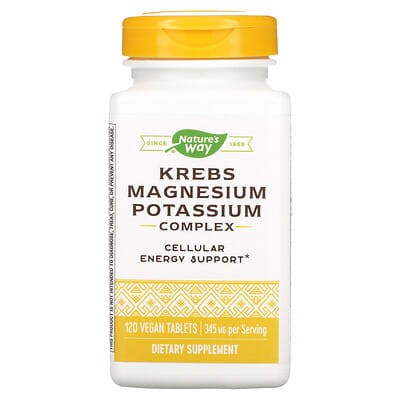
Krebs Magnesium Potassium Complex

Goals
$16.02 $0.26 per serving


Product analysis
Krebs Magnesium Potassium Complex mainly helps fill a magnesium gap, supporting normal energy use and mineral functions. The proportions of its magnesium forms are undisclosed, which makes the mixture harder to compare.
AI assessment of the formula, label and price. How scoring works
Nutrient Quality54
The magnesium mixture uses favorable forms, particularly malate. Their proportions are undisclosed, and potassium's form quality remains uncertain.
Ingredient Transparency65
Amounts are stated and both mineral sources are named. The split between magnesium lysinate and malate is missing, so the exact mixture cannot be checked.
Value For Money63
The magnesium forms offer favorable value at the product's serving cost. Their undisclosed proportions and the uncertain potassium comparison limit conclusions about the full mixture.
Customer Satisfaction83
Customer feedback is very positive. The sizable review pool makes that view less dependent on a few opinions.
Product Focus68
Magnesium provides the clearest nutritional role, especially when intake is low. The wider stress, hormone and heart-related uses have more limited or mixed support.
- Format
Tablet - Container
- 120 Tablet(s)
- Per serving
- $0.26
- Customer rating
- 4.8 · 923 ratings
Goals

Impact
High effect
Magnesium · 250 mg
Magnesium provides the main nutritional contribution, with 250 mg declared per serving. It can help fill a dietary gap and contributes to normal energy-related and mineral processes. The amount provides partial coverage of the saved comparison, without establishing additional general-health benefits when magnesium intake is already adequate.
How this product is rated for Everyday Health
Ingredient fit82
The included ingredients are focused on the supplied nutritional or general-health roles. Declared amounts provide partial coverage of the saved comparisons; this concerns nutrient availability rather than a proven clinical response.
Goal fit
The included ingredients are focused on the supplied nutritional or general-health roles.
Dose adequacy
Declared amounts provide partial coverage of the saved comparisons; this concerns nutrient availability rather than a proven clinical response.
Pathways50
The strongest connection is energy metabolism cofactors. This describes the main supplied functional connection. The findings are concentrated in one functional area.
Depth
The strongest connection is energy metabolism cofactors. This describes the main supplied functional connection.
Breadth
The findings are concentrated in one functional area.
Evidence86
The saved findings recognize evidence and preparation matches for the included ingredients. Nutritional availability and narrower outcomes do not establish routine broad health improvement.
Evidence strength
Magnesium leads the saved evidence comparison; its nutritional or indication-specific evidence does not establish broad benefits above adequate status.
Studied preparation
Included preparations matched the saved comparison, without establishing superiority of delivery or chemical form.
Formulation logic100
Included ingredients had no missing required partners or configured conflicts and reached the saved minimum amount threshold.
Partner coverage
No required partner was missing among the included ingredients; this does not establish synergy.
Conflicts
No configured ingredient conflict was identified in the supplied facts.
Effective doses
All included ingredients reached the saved minimum amount threshold; excluded low amounts are not necessarily nutritionally worthless.

Impact
High effect
Magnesium · 250 mg
Magnesium and potassium are relevant to blood pressure and vascular tone. Magnesium effects are small and inconsistent, while potassium findings depend on baseline intake and blood pressure. The 95 mg potassium serving is far below the elemental exposures in the cited trials, so its partial amount recognition does not establish a studied blood-pressure regimen or routine cardiovascular-event prevention.
How this product is rated for Heart Health
Ingredient fit76
The relevant ingredients are relatively focused on heart-health aspects. The counted amounts receive partial recognition overall, without establishing a clinically effective prevention regimen.
Goal fit
The relevant ingredients are relatively focused on heart-health aspects.
Dose adequacy
The counted amounts receive partial recognition overall, without establishing a clinically effective prevention regimen.
Pathways49
Electrolyte and vascular-tone balance is the strongest pathway, through the relevant mineral or taurine contributions. Only one evaluated pathway meets the breadth threshold.
Depth
Electrolyte and vascular-tone balance is the strongest pathway, through the relevant mineral or taurine contributions.
Breadth
Only one evaluated pathway meets the breadth threshold.
Evidence89
Magnesium leads the saved finding. The counted preparations receive recognition, without proving the same population, duration or clinical outcome.
Evidence strength
Magnesium leads the saved evidence finding; clinical interpretation remains specific to the ingredient and outcome.
Studied preparation
The counted preparations receive recognition, without proving the same population, duration or clinical outcome.
Formulation logic100
Each counted ingredient works independently or has its required partner; no extra combined benefit is established. No configured conflict was matched.
Partner coverage
Each counted ingredient works independently or has its required partner; no extra combined benefit is established.
Conflicts
No configured ingredient conflict was matched.
Effective doses
All counted ingredients meet the amount inclusion criterion, which is distinct from a clinically proven prevention threshold.

Impact
High effect
Magnesium · 250 mgPotassium · 95 mg
Magnesium can help fill a nutritional gap that causes fatigue and weakness. The declared magnesium amount contributes to the saved nutritional comparison. Additional intake does not establish an energy increase when magnesium status is adequate, and the declared forms do not inherit results from a different finished formula.
How this product is rated for Energy
Ingredient fit83
Magnesium has a relevant nutritional or fatigue-related connection, but the amount comparison cannot establish clinical benefit.
Goal fit
Magnesium provides the relevant connection, while the product's wider purposes affect its focus on energy.
Dose adequacy
The known quantities make a partial combined contribution to the saved comparison, rather than establishing a fatigue-treatment dose.
Pathways0
No contribution was recorded for the configured energy pathways; correction of nutrient-related fatigue is a separate role.
Depth
No contribution was recorded for the configured energy pathways; correction of nutrient-related fatigue is a separate role.
Breadth
None of the configured alertness, exercise-energy or stress-fatigue pathways received coverage.
Evidence88
Magnesium's relevant nutritional role concerns fatigue with low intake or deficiency, rather than added energy above adequacy.
Evidence strength
Magnesium's relevant nutritional role concerns fatigue with low intake or deficiency, rather than added energy above adequacy.
Studied preparation
The declared nutrient preparations are accepted in the saved finding; this does not show the complete product was clinically tested for fatigue.
Formulation logic100
The included ingredients require no additional partner in the saved findings, and no matching conflict was identified. Their minimum amount check is satisfied.
Partner coverage
No additional partner is required for the included ingredients under the saved findings.
Conflicts
No matching conflict was identified by the supplied checks.
Effective doses
All ingredients included in this check meet its minimum amount threshold; that finding does not prove routine fatigue relief.

Impact
Moderate effect
Magnesium · 250 mg
Magnesium may help you feel less stressed when low magnesium is part of the problem. Whether it gives lasting relief from everyday stress more broadly is unclear. The serving contains magnesium from lysinate and malate, but those forms and the declared amount don't by themselves guarantee a calming effect.
How this product is rated for Stress Relief
Ingredient fit65
Magnesium provides the main conditional connection to stress.
Goal fit
Magnesium provides the main conditional connection to stress.
Dose adequacy
Magnesium 250 mg per serving; amounts alone do not guarantee benefit.
Pathways20
The connection centers on magnesium and calming, with limited broader relevance.
Depth
The connection centers on magnesium and calming, with limited broader relevance.
Breadth
The ingredients have specific connections to stress-related processes; these do not guarantee broad relief.
Evidence76
Low magnesium is a relevant condition for a possible stress benefit.
Evidence strength
Low magnesium is a relevant condition for a possible stress benefit.
Studied preparation
The declared ingredients are compatible with the preparation context, without a guarantee of the same benefit.
Formulation logic100
The relevant ingredients require no additional partner identified here. No particular ingredient conflict was identified.
Partner coverage
No additional ingredient partner is required for the relevant ingredients.
Conflicts
No particular ingredient conflict is identified.
Effective doses
The relevant ingredient amounts are known; this does not make their possible benefits certain.

Impact
High effect
Potassium · 95 mgMagnesium · 250 mg
Magnesium and potassium contribute to vascular tone and blood-pressure-related functions. Magnesium findings are mixed, with greater plausibility when magnesium status is low or blood pressure is elevated; the declared lysinate and malate forms do not establish superior cardiovascular effects. Potassium findings depend on intake and population, and the 95 mg serving is well below exposures used in the supplied trials. Their shared function does not establish an extra combined benefit or prevention of cardiovascular events.
How this product is rated for Cardiovascular Support
Ingredient fit75
Both minerals are relevant, with partial serving amounts relative to their references.
Goal fit
Magnesium and potassium give the formula a clear connection to vascular support.
Dose adequacy
Both minerals contribute partially by amount, rather than meeting fully recognized references.
Pathways52
The contribution is concentrated in vascular tone and sodium balance.
Depth
The two minerals together provide the strongest coverage in vascular tone and sodium balance.
Breadth
Only vascular tone and sodium balance reach substantial coverage.
Evidence86
Potassium leads the saved evidence comparison, and both preparations are accepted.
Evidence strength
Potassium provides the strongest saved evidence contribution.
Studied preparation
Both declared mineral preparations pass the saved check.
Formulation logic100
The counted contributors have no unmet partner requirement, and no evaluated ingredient conflict was identified.
Partner coverage
Every counted contributor can act alone or has its required partner.
Conflicts
No evaluated ingredient conflict applies.
Effective doses
All counted contributors clear the saved minimum amount threshold.

Impact
High effect
Magnesium · 250 mg
Magnesium contributes to mineral intake, but the supplied hormone findings come from limited exercise-related conditions and do not establish a routine testosterone increase.
How this product is rated for Testosterone Support
Ingredient fit68
Magnesium account for the goal-related contribution. The declared amounts determine how much each contributes to the saved findings.
Goal fit
Magnesium is the ingredients counted toward this goal, within a formula also serving broader nutritional purposes.
Dose adequacy
Magnesium has an amount that partly meet the saved amount references; these references do not establish a proven testosterone dose.
Pathways60
The recorded pathway contribution is concentrated in free-testosterone availability, with no broad coverage across hormone mechanisms.
Depth
The saved findings concentrate on free-testosterone availability, but the supplied scientific context does not establish a dependable increase in free testosterone.
Breadth
Only free-testosterone availability received meaningful coverage; stress regulation and testicular testosterone synthesis did not.
Evidence74
The strongest relevant evidence comes from magnesium. The nutrient-specific limits remain important when interpreting these findings.
Evidence strength
Magnesium provides the strongest counted evidence, although the available hormone findings are limited to particular exercise conditions.
Studied preparation
Magnesium was accepted as matching studied preparations; this does not establish superiority of the listed forms.
Formulation logic100
The counted ingredients meet the minimum amount criterion and have no unmet partner requirement or triggered configured conflict.
Partner coverage
The counted ingredients have no unmet partner requirement in the supplied findings.
Conflicts
No configured ingredient conflict was triggered by the supplied amounts.
Effective doses
All counted ingredients meet the saved minimum amount criterion; meeting it does not prove a testosterone benefit.
Ingredients
| Ingredient | Amount per serving | Score |
|---|---|---|
Calories | 5 Calorie(s) | |
Total Carbohydrates | 1 Gram(s) | |
Magnesium (Magnesium Lysinate, Magnesium Malate) | 250 mg | |
Potassium (Potassium Citrate) | 95 mg |
Magnesium (Magnesium Lysinate, Magnesium Malate) · 250 mg OverallScore74
A serving provides 250 mg of magnesium from lysinate and malate, but their individual proportions are unknown. The whole-product serving costs about $0.27 and includes the other ingredients too.
How this ingredient is rated
Active Ingredient Quality & Bioavailability53
The magnesium comes from lysinate and malate, but the proportions are unknown. The saved facts do not establish a qualifying branded or fully chelated claim.
Magnesium Form & Absorption Potential
The contributions of lysinate and malate are unknown, limiting comparison of the mix.
Patented Materials & Chelation Quality
No qualifying magnesium-specific branded or fully chelated claim is recorded in the saved facts.
Dose, Safety & Label Transparency90
The serving states 250 mg of elemental magnesium. No qualifying cofactor is recorded in the saved facts.
Elemental Yield Transparency
The elemental magnesium amount is stated as 250 mg per serving.
Therapeutic Dosage Alignment
The evaluated serving supplies 250 mg of elemental magnesium.
Synergistic Formulation Logic
No qualifying cofactor is recorded in the saved facts.
Value84
The whole-product serving costs about $0.27. Unknown source proportions limit a precise comparison of its magnesium forms.
Price Per Elemental Quality
The price is about $0.27 per whole-product serving; the individual magnesium-source proportions are unknown.
Alternative products
Report alternatives
Sources
Published studies used for the product analysis and the top-ranked studies for each ingredient and goal.
- Association between Serum Magnesium and Fractures: A Systematic Review and Meta-Analysis of Observational Studies.
- Bioabsorbable Magnesium-Based Materials Potential and Safety in Bone Surgery: A Systematic Review.
- Vascularized bone grafting fixed by biodegradable magnesium screw for treating osteonecrosis of the femoral head.
- An update on magnesium and bone health.
- Sex-specific differences in the association of magnesium intake with femoral neck bone mineral density among older adults.
- Effect of potassium citrate on bone density, microarchitecture, and fracture risk in healthy older adults without osteoporosis: a randomized controlled trial.
- Long-term persistence of the urine calcium-lowering effect of potassium bicarbonate in postmenopausal women.
- Partial neutralization of the acidogenic Western diet with potassium citrate increases bone mass in postmenopausal women with osteopenia.
- Potassium citrate supplementation results in sustained improvement in calcium balance in older men and women.
- Effects of potassium chloride and potassium bicarbonate on endothelial function, cardiovascular risk factors, and bone turnover in mild hypertensives.
- Circulating and dietary magnesium and risk of cardiovascular disease: a systematic review and meta-analysis of prospective studies.
- Magnesium and the risk of cardiovascular events: a meta-analysis of prospective cohort studies.
- Quantitative Association Between Serum/Dietary Magnesium and Cardiovascular Disease/Coronary Heart Disease Risk: A Dose-Response Meta-analysis of Prospective Cohort Studies.
- Comparative Efficacy of Nutraceuticals on Endothelial Function: A Systematic Review and Network Meta-Analysis.
- Serum magnesium, mortality, and cardiovascular disease in chronic kidney disease and end-stage renal disease patients: a systematic review and meta-analysis.
- Sex-specific associations between sodium and potassium intake and overall and cause-specific mortality: a large prospective U.S. cohort study, systematic review, and updated meta-analysis of cohort studies.
- Potassium intake, stroke, and cardiovascular disease a meta-analysis of prospective studies.
- Blood pressure response to changes in sodium and potassium intake: a metaregression analysis of randomised trials.
- Twenty-Four-Hour Urinary Sodium and Potassium Excretion and Their Associations With Blood Pressure Among Adults in China: Baseline Survey of Action on Salt China.
- Dietary Sodium and Potassium Intake and Risk of Non-Fatal Cardiovascular Diseases: The Million Veteran Program.