
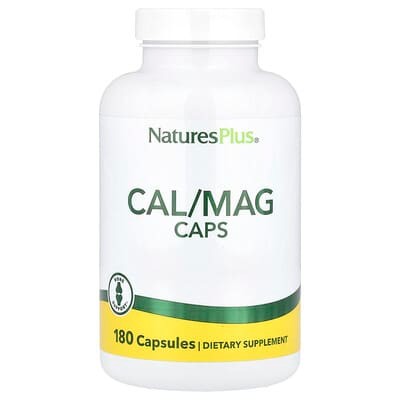

$22.02 $0.24 per serving

Product analysis
Cal/Mag Caps provides affordable calcium and magnesium for filling dietary gaps relevant to bone maintenance and normal energy processes. The mineral forms are clearly named, although that does not establish stronger health benefits.
AI assessment of the formula, label and price. How scoring works
Nutrient Quality63
The magnesium preparation compares more favorably than the calcium preparation for how readily it may be absorbed. Their amino acid descriptions do not establish better health outcomes.
Ingredient Transparency100
Both minerals have clearly disclosed amounts and forms. That makes their contributions easier to compare with other mineral supplements.
Value For Money87
The mineral combination offers favorable value for its calcium and magnesium content. Both ingredients are economical within their respective comparisons.
Customer Satisfaction81
Buyer feedback is strongly positive across several hundred ratings. The review base provides a useful picture of satisfaction without proving benefits.
Product Focus58
The two-mineral formula has a clear nutritional purpose, especially for filling gaps relevant to bones. Its broader connections to stress, hormones and cardiovascular function are less certain.
- Format
Capsule - Container
- 180 Capsule(s)
- Per serving
- $0.24
- Customer rating
- 4.8 · 683 ratings
Goals

Impact
High effect
Magnesium · 250 mgCalcium · 500 mg
Calcium supplies material for normal bone mineralization, while magnesium supports normal bone metabolism. The serving provides 500 mg elemental calcium and 250 mg elemental magnesium, useful amounts for filling dietary gaps. Their amino acid chelate descriptions do not establish superior bone outcomes. Additional benefit when intake is already adequate, or reliable fracture prevention from this serving, is not established.
How this product is rated for Bone Health
Ingredient fit75
Calcium and magnesium provide a clear nutritional connection to bone health, though the product is linked to several goals.
Goal fit
Calcium and magnesium provide a clear nutritional connection to bone health, though the product is linked to several goals.
Dose adequacy
Calcium and magnesium make partial amount contributions; 500 mg calcium is a practical gap-filling amount rather than a total daily target.
Pathways55
Bone mineral supply receives the strongest saved finding. These functional areas do not establish clinical bone outcomes.
Depth
Bone mineral supply is the strongest represented area in the saved finding.
Breadth
Mineral supply alone meets the criterion; the smaller calcium-regulation finding and other evaluated areas do not.
Evidence100
Calcium leads the saved evidence finding. The supporting evidence has nutritional, preparation or population limits and does not establish fracture prevention.
Evidence strength
Calcium supplies the leading saved evidence contribution; this is not a measure of clinical benefit.
Studied preparation
The retained ingredients receive preparation recognition in the saved finding, without establishing superiority or equivalent clinical outcomes across forms.
Formulation logic92
Calcium's partner requirement is not fully met, reducing that part of the finding; no evaluated conflict was identified.
Partner coverage
Calcium's partner requirement is not fully met in the saved finding.
Conflicts
No evaluated ingredient conflict was identified.
Effective doses
All ingredients retained in this finding meet the minimum amount criterion; that does not establish clinical effectiveness.

Impact
High effect
Magnesium · 250 mg
Calcium helps fill a dietary gap relevant to bone maintenance, and magnesium contributes across energy-related processes and mineral metabolism when intake is low. Both receive partial amount coverage in the saved comparison. Their soy amino-acid chelate names do not establish superior absorption or stronger health effects. Partial coverage does not imply a need for more, and supplementation does not establish extra benefit with adequate nutrition.
How this product is rated for Everyday Health
Ingredient fit79
Calcium and magnesium are counted with partial amount coverage.
Goal fit
The two minerals give the formula a focused nutritional purpose, alongside links to other goals.
Dose adequacy
Both minerals receive partial amount coverage without establishing that higher amounts would improve health.
Pathways50
Magnesium covers energy-related processes and mineral metabolism; calcium is tracked under nutrient sufficiency.
Depth
Energy-related nutrient processes have the strongest partial coverage.
Breadth
Only energy-related processes reach the coverage threshold.
Evidence86
Magnesium leads the evidence finding for conditional nutritional support.
Evidence strength
Magnesium supplies the leading evidence contribution without establishing extra benefit above adequate nutrition.
Studied preparation
Both mineral declarations receive full preparation recognition without a soy-chelate advantage.
Formulation logic100
Both minerals satisfy partner requirements and no configured conflict was found.
Partner coverage
Neither mineral lacks a required partner.
Conflicts
No configured ingredient conflict was matched.
Effective doses
Both minerals pass the minimum amount threshold.

Impact
Moderate effect
Magnesium · 250 mg
Magnesium may help with stress when your magnesium levels are low. Its main connection is to calming, but lasting relief from everyday stress more broadly remains uncertain. The declared magnesium source identifies what is present without guaranteeing absorption or a stronger calming effect.
How this product is rated for Stress Relief
Ingredient fit64
Magnesium provides a conditional connection to stress.
Goal fit
Magnesium provides a conditional connection to stress.
Dose adequacy
The selected serving provides 250 mg magnesium, compared with the 350 mg reference; this is not a prediction of benefit.
Pathways20
Magnesium relates mainly to calming nerve activity.
Depth
Magnesium relates mainly to calming nerve activity.
Breadth
Magnesium relates mainly to calming nerve activity.
Evidence76
Magnesium’s possible benefit is conditional, especially on low magnesium levels.
Evidence strength
Magnesium’s possible benefit is conditional, especially on low magnesium levels.
Studied preparation
The declared magnesium source is identified; this alone does not guarantee absorption or stress relief.
Formulation logic100
No particular ingredient conflict is identified.
Partner coverage
No required ingredient partner is missing.
Conflicts
No particular ingredient conflict is identified.
Effective doses
The selected serving provides 250 mg magnesium, compared with the 350 mg reference; this is not a prediction of benefit.

Impact
High effect
Magnesium · 250 mg
Magnesium supports electrolyte balance and blood-vessel tone, although blood-pressure effects are small and inconsistent.
How this product is rated for Heart Health
Ingredient fit64
Magnesium connect to heart-related functions. Some amounts provide only partial exposure relative to the supplied comparisons.
Goal fit
Magnesium provide the relevant connection; the product's broader ingredient and goal mix limits its focus.
Dose adequacy
Magnesium provide partial exposure compared with the supplied comparison ranges; this does not establish an ineffective dose.
Pathways45
The clearest connection is electrolyte and vascular-tone balance. Support is concentrated in that route.
Depth
The strongest represented route is electrolyte and vascular-tone balance, with support limited to the ingredients and amounts supplied.
Breadth
The findings cover one route, with limited breadth beyond that mechanism.
Evidence89
Magnesium supplies the strongest relevant support here, though blood-pressure results are inconsistent.
Evidence strength
Magnesium supplies the strongest relevant support here, though blood-pressure results are inconsistent.
Studied preparation
The eligible declared ingredients meet the supplied preparation comparison; this does not establish superiority over other forms.
Formulation logic100
The relevant ingredients do not require another partner, and no specified conflict was identified. The amount comparisons do not establish added benefit from combining ingredients.
Partner coverage
The relevant ingredients can contribute without an additional required partner; no extra combination benefit is established.
Conflicts
No specified ingredient conflict was identified in the supplied findings.
Effective doses
The ingredients included in this finding clear the supplied minimum exposure comparison; this is not a proven clinical efficacy threshold.

Impact
Moderate effect
Magnesium · 250 mg
Magnesium at 250 mg supports normal energy metabolism and helps meet nutritional needs. Its relevance to fatigue depends largely on whether intake is inadequate; calcium alongside it does not establish an additional energy effect.
How this product is rated for Energy
Ingredient fit64
Relevant energy-related ingredients are present alongside ingredients serving other needs. The relevant amounts provide a partial match to the supplied dose comparisons.
Goal fit
Relevant energy-related ingredients are present alongside ingredients serving other needs.
Dose adequacy
The relevant amounts provide a partial match to the supplied dose comparisons.
Pathways0
The saved findings show nutritional support without meaningful coverage of the listed energy mechanisms. The saved findings show limited reach across the different aspects of energy support.
Depth
The saved findings show nutritional support without meaningful coverage of the listed energy mechanisms.
Breadth
The saved findings show limited reach across the different aspects of energy support.
Evidence88
Magnesium provides the strongest relevant evidence at the assessed amount, with benefits dependent on nutritional status or clinical context. The qualifying ingredients match preparations represented in the supplied evidence.
Evidence strength
Magnesium provides the strongest relevant evidence at the assessed amount, with benefits dependent on nutritional status or clinical context.
Studied preparation
The qualifying ingredients match preparations represented in the supplied evidence.
Formulation logic100
The assessed ingredients can contribute on their own or have their required partner present. No ingredient conflicts were identified in the saved assessment. All assessed ingredients met the saved minimum amount criterion.
Partner coverage
The assessed ingredients can contribute on their own or have their required partner present.
Conflicts
No ingredient conflicts were identified in the saved assessment.
Effective doses
All assessed ingredients met the saved minimum amount criterion.

Impact
High effect
Magnesium · 250 mg
Magnesium supports vascular function and may influence arterial stiffness, although trial findings are inconsistent and benefits are more plausible with low magnesium status or elevated blood pressure. The 250 mg per serving provides a partial comparison with the saved amount comparison, without guaranteeing an effect. The supplied evidence does not establish broad cardiovascular-event prevention or superior effects from this magnesium form.
How this product is rated for Cardiovascular Support
Ingredient fit64
Magnesium provides the relevant vascular role within a formula also serving other nutritional goals.
Goal fit
Magnesium is the only reviewed contributor, alongside ingredients serving other goals.
Dose adequacy
The 250 mg magnesium serving provides a partial comparison with study exposure, without implying a measured proportional benefit.
Pathways43
Magnesium accounts for the vascular-tone finding; other cardiovascular pathways are not covered.
Depth
Magnesium provides the strongest saved coverage through vascular tone and sodium balance.
Breadth
Vascular tone is the only pathway reaching the saved coverage threshold.
Evidence79
Magnesium leads the evidence comparison; studies of arterial stiffness and blood pressure have yielded inconsistent results.
Evidence strength
Magnesium leads the evidence comparison; studies of arterial stiffness and blood pressure have yielded inconsistent results.
Studied preparation
Magnesium satisfies the saved preparation check, but no cardiovascular advantage is established for its particular salt or complex.
Formulation logic100
No required partners or ingredient conflicts were flagged, and the counted ingredients passed the amount check.
Partner coverage
The counted ingredients work independently or meet the saved partner requirements.
Conflicts
No ingredient conflicts were identified in the supplied checks.
Effective doses
Magnesium passes the saved minimum amount check; this is not a guarantee of clinical benefit.
Ingredients
| Ingredient | Amount per serving | Score |
|---|---|---|
Calcium (Calcium Soy Amino Acid Chelate/Complex) | 500 mg | |
Magnesium (Magnesium Soy Amino Acid Chelate) | 250 mg |
Calcium (Calcium Soy Amino Acid Chelate/Complex) · 500 mg OverallScore80
Each serving provides 500 mg of calcium. The listed source is calcium amino acid chelate.
How this ingredient is rated
Active Ingredient Quality & Bioavailability65
The source is identified as calcium amino acid chelate, and the calcium amount is declared separately from compound weight.
Calcium Form & Absorption Potential
The identified calcium source is calcium amino acid chelate.
Elemental Calcium Transparency
The saved facts identify 500 mg as calcium itself per serving, rather than the weight of the source compound.
Dose, Safety & Label Transparency84
Each serving provides 500 mg of calcium. A flow agent is recorded in the ingredient panel.
Absorption-Optimized Serving Dose
Each serving provides 500 mg of calcium.
Formulation Purity & Additives
The evaluated ingredient panel records a flow agent; its identity is not provided in the saved facts.
Value100
A serving costs about $0.24 for the whole product and provides 500 mg of calcium.
Price Per Serving Efficiency
The saved price is about $0.24 per whole-product serving.
Magnesium (Magnesium Soy Amino Acid Chelate) · 250 mg OverallScore72
A serving supplies 250 mg of magnesium. Its identified source is magnesium amino acid chelate.
How this ingredient is rated
Active Ingredient Quality & Bioavailability49
Magnesium Amino Acid Chelate is the identified magnesium source.
Magnesium Form & Absorption Potential
Magnesium Amino Acid Chelate is the identified magnesium source.
Patented Materials & Chelation Quality
The saved facts do not establish a qualifying branded material or a full-chelation or full-reaction claim.
Dose, Safety & Label Transparency90
A serving supplies 250 mg of magnesium. No positive amount of a qualifying cofactor is recorded in the saved facts.
Elemental Yield Transparency
The elemental magnesium amount is declared as 250 mg per serving.
Therapeutic Dosage Alignment
A serving provides 250 mg of magnesium.
Synergistic Formulation Logic
No positive amount of a qualifying vitamin B6, vitamin D or boron cofactor is recorded in the saved facts.
Value80
The whole-product serving costs about $0.24.
Price Per Elemental Quality
The whole-product serving costs about $0.24.
Alternative products
Report alternatives
Sources
Published studies used for the product analysis and the top-ranked studies for each ingredient and goal.
- What is the impact of daily oral supplementation of vitamin D3 (cholecalciferol) plus calcium on the incidence of hip fracture in older people? A systematic review and meta-analysis.
- Calcium supplementation prevents seasonal bone loss and changes in biochemical markers of bone turnover in elderly New England women: a randomized placebo-controlled trial.
- The effects of calcium supplementation (milk powder or tablets) and exercise on bone density in postmenopausal women.
- The efficacy of calcium supplementation alone in elderly Thai women over a 2-year period: a randomized controlled trial.
- Calcium-enriched foods and bone mass growth in prepubertal girls: a randomized, double-blind, placebo-controlled trial.
- Association between Serum Magnesium and Fractures: A Systematic Review and Meta-Analysis of Observational Studies.
- Bioabsorbable Magnesium-Based Materials Potential and Safety in Bone Surgery: A Systematic Review.
- Vascularized bone grafting fixed by biodegradable magnesium screw for treating osteonecrosis of the femoral head.
- An update on magnesium and bone health.
- Sex-specific differences in the association of magnesium intake with femoral neck bone mineral density among older adults.
- Circulating and dietary magnesium and risk of cardiovascular disease: a systematic review and meta-analysis of prospective studies.
- Magnesium and the risk of cardiovascular events: a meta-analysis of prospective cohort studies.
- Quantitative Association Between Serum/Dietary Magnesium and Cardiovascular Disease/Coronary Heart Disease Risk: A Dose-Response Meta-analysis of Prospective Cohort Studies.
- Comparative Efficacy of Nutraceuticals on Endothelial Function: A Systematic Review and Network Meta-Analysis.
- Serum magnesium, mortality, and cardiovascular disease in chronic kidney disease and end-stage renal disease patients: a systematic review and meta-analysis.
- Magnesium-L-threonate improves sleep quality and daytime functioning in adults with self-reported sleep problems: A randomized controlled trial.
- Total magnesium intake and risk of frailty in older women.
- Red blood cell magnesium and chronic fatigue syndrome.
- Exercise, magnesium and immune function.
- Perioperative systemic magnesium to minimize postoperative pain: a meta-analysis of randomized controlled trials.