


Zinc Supportive
$27.06 $0.60 per serving
Product analysis
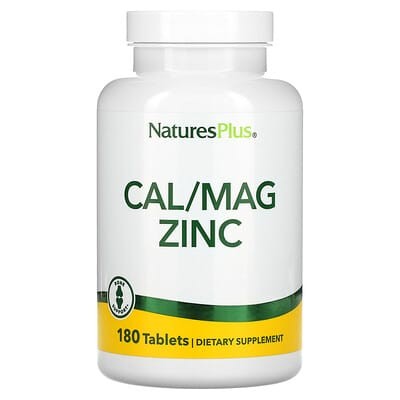
NaturesPlus Cal/Mag Zinc provides concentrated mineral support for bones, with 1,000 mg of calcium and 500 mg of magnesium per four tablets. The same serving supplies 75 mg of zinc, well above the adult upper intake level; prolonged use may deplete copper, making it a poor choice for routine mineral supplementation.
AI assessment of the formula, label and price. How scoring works
Nutrient Quality49
The amino acid chelates give the formula a reasonable magnesium source, while calcium is of moderate form quality and the zinc includes sulfate. The large calcium amount may not be fully absorbed at once.
Ingredient Transparency100
All three mineral amounts and their main named forms are disclosed. That makes it easy to identify the core ingredients.
Value For Money83
The concentrated mineral quantities offer good value compared with similar products. Zinc is especially inexpensive by weight, although a low price does not justify the excessive amount.
Customer Satisfaction82
The average customer rating is very positive. The large number of ratings provides a meaningful indication of buyer satisfaction.
Product Focus68
The three minerals form a coherent bone-support combination, with many additional nutrient-related uses. The broad range of possible goals does not mean the high zinc amount will improve results.
- Format
Tablet - Container
- 180 Tablet(s)
- Per serving
- $0.60
- Customer rating
- 4.7 · 1,300 ratings
Goals

Impact
Highest effect
Magnesium · 500 mgZinc · 75 mg
Cal/Mag Zinc provides nutritional support relevant to immunity, but its 75 mg of zinc without copper is a material concern in the supplied assessment. Zinc supports normal immune-cell function, while the large amount does not imply greater immune benefit once nutritional needs are met. The accompanying 500 mg of magnesium contributes to nutritional adequacy, with limited direct support for a routine immunity benefit.
Magnesium Supportive

Impact
High effect
Magnesium · 500 mg
Cal/Mag Zinc offers a limited cardiovascular fit centered on magnesium. Its 500 mg of magnesium as magnesium amino acid chelate is relevant to vascular tone, although findings on arterial stiffness and blood pressure are inconsistent.
Magnesium Supportive

Impact
Highest effect
Magnesium · 500 mgZinc · 75 mg
Cal/Mag Zinc has limited support for raising testosterone in routine use. Its 75 mg of zinc can support testosterone when correcting zinc deficiency, but the high amount without copper raises a copper-deficiency concern. Magnesium at 500 mg has limited, context-dependent hormone evidence.
Zinc Disputed
Magnesium Disputed

Impact
Highest effect
Magnesium · 500 mgCalcium · 1000 mgZinc · 75 mg
Cal/Mag Zinc offers concentrated mineral intake support for normal bone health. Calcium at 1,000 mg supplies material for mineralization, while 500 mg magnesium supports normal bone metabolism. Zinc at 75 mg supplies a bone-related enzyme cofactor; the large declared amount does not imply a larger skeletal benefit.
Calcium Supportive
Magnesium Supportive
Zinc Supportive

Impact
Moderate effect
Magnesium · 500 mg
Cal/Mag Zinc has a narrower energy role through magnesium support when intake is inadequate. The 500 mg magnesium serving supports normal energy metabolism, relevant because low magnesium can cause fatigue and weakness.
Magnesium Supportive

Impact
Highest effect
Magnesium · 500 mgZinc · 75 mg
Cal/Mag Zinc provides substantial mineral amounts, but its 75 mg zinc serving without copper raises a documented risk of copper deficiency. Magnesium supplies 500 mg for normal energy metabolism and bone-and-mineral functions. Calcium adds 1,000 mg toward bone nutrition, while zinc contributes to normal immune-related functions. The zinc concern materially weakens its routine everyday-health fit.
Magnesium Supportive
Zinc Supportive
Ingredients
| Ingredient | Amount per serving | Score |
|---|---|---|
Calcium (Calcium Amino Acid Chelate) | 1000 mg | |
Magnesium (Magnesium Amino Acid Chelate) | 500 mg | |
Zinc (Zinc Amino Acid Chelate) | 75 mg |
Calcium (Calcium Amino Acid Chelate) · 1000 mg OverallScore59
NaturesPlus Cal/Mag Zinc provides inexpensive calcium, but its 1000 mg per serving is a high single dose. The calcium comes from calcium amino acid chelate. Some of the calcium may not be absorbed in one dose. A flow agent is listed. At $0.05 per 100 mg of calcium, the price offers moderate value. A serving costs $0.53 for the full formula.
Magnesium (Magnesium Amino Acid Chelate) · 500 mg OverallScore66
NaturesPlus Cal/Mag Zinc is a reasonable magnesium choice: a serving provides 500 mg of elemental magnesium. The magnesium is Magnesium Amino Acid Chelate. Good value at $0.11 per 100 mg magnesium, with $0.53 per serving of the full formula.
Zinc (Zinc Amino Acid Chelate) · 75 mg OverallScore45
NaturesPlus Cal/Mag Zinc provides 75 mg zinc per serving with zinc amino acid chelate named and zinc sulfate listed in Other Ingredients. Their contributions to the zinc total are unknown. The 75 mg serving exceeds the adult upper intake level; prolonged use can affect copper levels. The copper amount is unknown. At $0.070 per 10 mg zinc, the zinc is good value; $0.53 per serving pays for the full formula.
Alternative products
Report alternatives
Sources
Published studies used for the product analysis and the top-ranked studies for each ingredient and goal.
- What is the impact of daily oral supplementation of vitamin D3 (cholecalciferol) plus calcium on the incidence of hip fracture in older people? A systematic review and meta-analysis.
- Calcium supplementation prevents seasonal bone loss and changes in biochemical markers of bone turnover in elderly New England women: a randomized placebo-controlled trial.
- The effects of calcium supplementation (milk powder or tablets) and exercise on bone density in postmenopausal women.
- The efficacy of calcium supplementation alone in elderly Thai women over a 2-year period: a randomized controlled trial.
- Calcium-enriched foods and bone mass growth in prepubertal girls: a randomized, double-blind, placebo-controlled trial.
- Association between Serum Magnesium and Fractures: A Systematic Review and Meta-Analysis of Observational Studies.
- Bioabsorbable Magnesium-Based Materials Potential and Safety in Bone Surgery: A Systematic Review.
- Vascularized bone grafting fixed by biodegradable magnesium screw for treating osteonecrosis of the femoral head.
- An update on magnesium and bone health.
- Sex-specific differences in the association of magnesium intake with femoral neck bone mineral density among older adults.
- Increased incidence of fractures in middle-aged and elderly men with low intakes of phosphorus and zinc.
- Zinc Supplementation Increases Procollagen Type 1 Amino-Terminal Propeptide in Premenarcheal Girls: A Randomized Controlled Trial.
- Randomized controlled trial of prenatal zinc supplementation and fetal bone growth.
- The effects of zinc supplementation on serum zinc, alkaline phosphatase activity and fracture healing of bones.
- Is Zinc an Important Trace Element on Bone-Related Diseases and Complications? A Meta-analysis and Systematic Review from Serum Level, Dietary Intake, and Supplementation Aspects.
- Circulating and dietary magnesium and risk of cardiovascular disease: a systematic review and meta-analysis of prospective studies.
- Magnesium and the risk of cardiovascular events: a meta-analysis of prospective cohort studies.
- Quantitative Association Between Serum/Dietary Magnesium and Cardiovascular Disease/Coronary Heart Disease Risk: A Dose-Response Meta-analysis of Prospective Cohort Studies.
- Comparative Efficacy of Nutraceuticals on Endothelial Function: A Systematic Review and Network Meta-Analysis.
- Serum magnesium, mortality, and cardiovascular disease in chronic kidney disease and end-stage renal disease patients: a systematic review and meta-analysis.