No linked studies yet.
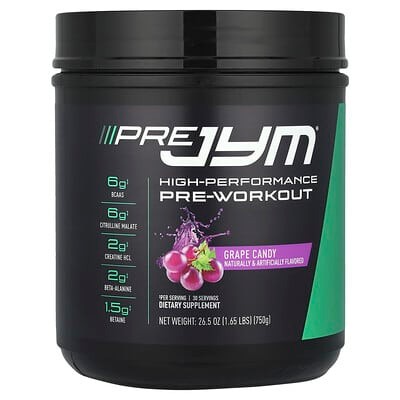
High-Performance Pre-Workout Grape Candy
Product analysis
High-Performance Pre-Workout Grape Candy centers on caffeine for short-term alertness and exercise performance. Most ingredient preparations are unspecified, making it harder to compare the mix with tested supplements.
AI assessment of the formula, label and price. How scoring works
Nutrient Quality22
Most ingredient forms are not disclosed, including several central workout ingredients. The quality of the few named extracts also cannot be established confidently.
Ingredient Transparency66
All listed amounts are stated, helping with serving comparisons. Nearly all ingredient forms are omitted, leaving the preparations difficult to compare.
Value For Money34
The full serving cost is less favorable when judged for caffeine, Alpha-GPC or huperzine alone. Value for most other ingredients remains uncertain.
Customer Satisfaction78
Customer ratings are positive. A moderately sized review pool gives a useful view of buyer satisfaction.
Product Focus48
Caffeine provides the clearest short-term support for alertness and exercise performance, while beta-alanine needs repeated use. The high caffeine serving may cause jitteriness or anxiety, and the creatine preparation cannot be assumed equivalent to commonly studied monohydrate.
- Format
Powder - Container
- 26 Ounce(s)
- Per serving
- $1.66
- Also available
High-Performance Pre-Workout Tangerine$48.99- Customer rating
- 4.6 · 878 ratings
Goals
Caffeine can support acute exercise performance, most consistently endurance. Beta-alanine contributes toward repeated loading for intense efforts lasting about one to four minutes, while citrulline malate has mixed evidence for resistance repetitions. Taurine has a small running-specific signal, and betaine’s training evidence is mixed. Creatine HCl does not establish equivalence to monohydrate, and its presence does not confirm monohydrate’s benefits.
How this product is rated for Fitness
Ingredient fit68
Goal fit
Dose adequacy
Pathways100
Depth
Breadth
Evidence88
Evidence strength
Studied preparation
Formulation logic100
Partner coverage
Conflicts
Effective doses
Caffeine can increase alertness and reduce sleepiness. This is an acute stimulant effect, rather than more cellular fuel or treatment of persistent fatigue. Beta-alanine supports selected high-intensity exercise only after repeated supplementation over weeks. Citrulline malate has limited strength-endurance evidence, while creatine HCl does not inherit monohydrate's demonstrated effects. The isolated amino acids and small potassium amount do not establish routine energy improvement.
How this product is rated for Energy
Ingredient fit67
Goal fit
Dose adequacy
Pathways80
Depth
Breadth
Evidence92
Evidence strength
Studied preparation
Formulation logic100
Partner coverage
Conflicts
Effective doses
No linked studies yet.

Caffeine at 300 mg is the clearest link to short-term alertness and attention. Creatine relates to brain energy, while Alpha-GPC and huperzine relate to acetylcholine signalling, but their preparations and the tyrosine evidence limit confidence in broader work benefits. The caffeine amount also triggers the saved caution for a higher stimulant serving.
How this product is rated for Productivity Boost
Ingredient fit58
Goal fit
Dose adequacy
Pathways60
Depth
Breadth
Evidence58
Evidence strength
Studied preparation
Formulation logic93
Partner coverage
Conflicts
Effective doses
No linked studies yet.
Caffeine can produce a modest, temporary rise in resting metabolic rate. The declared 300 mg per serving does not establish a larger or longer-lasting response, and durable fat loss is unproven. Creatine supports high-intensity exercise rather than a demonstrated stand-alone metabolism boost. Taurine findings concern glucose-related markers in adults with type 2 diabetes, rather than calorie expenditure.
How this product is rated for Metabolism Support
Ingredient fit55
Goal fit
Dose adequacy
Pathways77
Depth
Breadth
Evidence92
Evidence strength
Studied preparation
Formulation logic100
Partner coverage
Conflicts
Effective doses
Creatine can support muscle energy and resistance-training adaptation with repeated use, although lean-mass changes can partly reflect water. Betaine has limited, inconsistent evidence for body-composition and muscle-size benefits. Caffeine can improve acute strength, power or endurance, but those effects do not establish lasting muscle growth. The 2000 mg creatine serving offers less exposure than the full comparison amount, and preparation identity matters.
How this product is rated for Muscle Gain
Ingredient fit74
Goal fit
Dose adequacy
Pathways60
Depth
Breadth
Evidence72
Evidence strength
Studied preparation
Formulation logic93
Partner coverage
Conflicts
Effective doses
No linked studies yet.

Caffeine at 300 mg may modestly increase energy expenditure and accounts for most of the saved support. Creatine at 2 g adds a smaller body-composition contribution, with possible water-related lean-mass changes. Neither contribution predicts sustained weight loss for an individual.
How this product is rated for Weight Loss
Ingredient fit50
Goal fit
Dose adequacy
Pathways48
Depth
Breadth
Evidence62
Evidence strength
Studied preparation
Formulation logic100
Partner coverage
Conflicts
Effective doses
Ingredients
| Ingredient | Amount per serving | Score |
|---|---|---|
Calories | 70 Calorie(s) | |
Sodium | 100 mg | |
Total Carbohydrates | 2 Gram(s) | |
Calcium | 40 mg | |
Potassium | 36 mg | |
Creatine HCl | 2 Gram(s) | |
Beta-Alanine | 2 Gram(s) | |
Betaine | 1.5 Gram(s) | |
Taurine | 1 Gram(s) | |
Alpha-Glyceryl Phosphoryl Choline | 150 mg | |
Citrulline Malate | 6 Gram(s) | |
Beet (Beta vulgaris) root extract | 500 mg | |
L-Leucine | 3 Gram(s) | |
L-Isoleucine | 1.5 Gram(s) | |
L-Valine | 1.5 Gram(s) | |
L-Tyrosine | 1.5 Gram(s) | |
Caffeine Anhydrous | 300 mg | |
Huperzine A (Toothed Clubmoss extract) | 50 mcg | |
BioPerine (Black Pepper Fruit Extract) | 5 mg |
How this ingredient is rated
Active Ingredient Quality & Bioavailability60
Source and Standardization Clarity
Dose, Safety & Label Transparency88
Huperzine A Dosage Efficacy
Cycling Guidance and Transparency
Value20
Price per 100mcg of Huperzine A
How this ingredient is rated
Active Ingredient Quality & Bioavailability40
Advanced Bioavailability and Release Profiles
Dose, Safety & Label Transparency92
Caffeine Dose Transparency
Dosage Efficacy and Safety Margin
Secondary Stimulant Disclosure and Risk
Value10
Price Per Serving vs. Collection Median
How this ingredient is rated
Active Ingredient Quality & Bioavailability51
Sodium Source Purity & Quality
Bioavailability of Supporting Electrolytes
Trace Mineral Complex & Buffering Forms
Dose, Safety & Label Transparency57
Sodium Dosage for Athletic Replenishment
Ingredient Label Transparency
Artificial Color and Sweetener Disclosure
Value50
Price Per Serving vs. Collection Median
Alternative products
Sources
Published studies used for the product analysis and the top-ranked studies for each ingredient and goal.

- Activity of Choline Alphoscerate on Adult-Onset Cognitive Dysfunctions: A Systematic Review and Meta-Analysis.
- Comparative study of choline alfoscerate as a combination therapy with donepezil: A mixed double-blind randomized controlled and open-label observation trial.
- Effects of choline alfoscerate on cognitive function and quality of life in type 2 diabetes: A double-blind, randomized, placebo-controlled trial.
- Acute Alpha-Glycerylphosphorylcholine Supplementation Enhances Cognitive Performance in Healthy Men.
- Cognitive improvement in mild to moderate Alzheimer's dementia after treatment with the acetylcholine precursor choline alfoscerate: a multicenter, double-blind, randomized, placebo-controlled trial.
- Oral creatine monohydrate supplementation improves brain performance: a double-blind, placebo-controlled, cross-over trial.
- Creatine in Huntington disease is safe, tolerable, bioavailable in brain and reduces serum 8OH2'dG.
- Creatine supplementation and cognitive performance in elderly individuals.
- Effects of high-load, velocity-intentional variable resistance training combined with creatine supplementation on neuroplasticity, oxidative stress, inflammation, physical function, cognitive performance and quality of life in older adults: A randomized, double-blind, placebo-controlled trial.
- Single-Dose Creatine Reduces Sleep Deprivation-Induced Deterioration in Cognitive Performance.
- Huperzine a in the treatment of Alzheimer's disease and vascular dementia: a meta-analysis.
- [Clinical efficacy and safety of huperzine Alpha in treatment of mild to moderate Alzheimer disease, a placebo-controlled, double-blind, randomized trial].
- Huperzine A associated with improved early postoperative cognitive function after neurosurgery under general anesthesia: a randomized clinical trial.
- Treatment with Huperzine A improves cognition in vascular dementia patients.
- Huperzine-A response to cognitive impairment and task switching deficits in patients with Alzheimer's disease.
- Combined L-carnosine and L-tyrosine supplementation as an ergogenic strategy for physical and cognitive performance under fatigue in professional football players.
- Effect of tyrosine supplementation on clinical and healthy populations under stress or cognitive demands--A review.
- Influence of nutritional tyrosine on cognition and functional connectivity in healthy old humans.
- Dietary Tyrosine Intake (FFQ) Is Associated with Locus Coeruleus, Attention and Grey Matter Maintenance: An MRI Structural Study on 398 Healthy Individuals of the Berlin Aging Study-II.
- Baseline-dependent effect of dopamine's precursor L-tyrosine on working memory gating but not updating.