
Nutrient quality
Useful zinc salts and a robust amount fit short-term immune support. Missing copper and unstandardized elderberry reduce suitability for routine long-term use.
.
 Pure Formulas Pure Formulas | $ 16.22 | |
 Amazon Amazon | $ 14.95 | |
 iHerb iHerb | $ 16.22 | |
 Vitacost Vitacost | $ 16.59 |
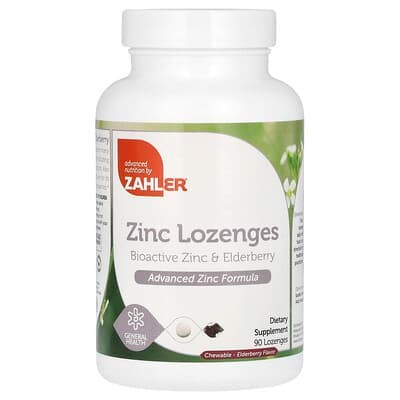
Zinc is the clear focus, with citrate and gluconate listed as the supplied forms. A 25 mg serving is substantial, while 100 mg of elderberry powder adds only a secondary botanical component.
The two zinc entries repeat the same amount rather than explaining how much comes from each form. The listed liquid format also conflicts with the lozenge product name, reducing confidence in the supplied label data.
Low serving cost and a generous count make it practical for short-term or occasional use. Copper is absent, so continuous long-term use is less balanced than the straightforward zinc positioning suggests.
Useful zinc salts and a robust amount fit short-term immune support. Missing copper and unstandardized elderberry reduce suitability for routine long-term use.
.The main totals and zinc forms are disclosed without a hidden blend. The form split, elderberry potency, full directions, and inactive ingredients remain incomplete.
.The average customer rating is strong. A large rating base makes the average dependable, while specific review experiences were not supplied.
.Serving economics are highly favorable. Formula quality supports good practical value.
.
Natural astaxanthin provides targeted retinal antioxidant support and may help eye strain linked to prolonged screen use. Human evidence is promising for visual fatigue but less comprehensive than multi-nutrient macular formulas.
The algae source and substantial amount are clearly disclosed in a fat-containing softgel. The focused formula offers strong antioxidant depth but does not cover macular pigments, minerals, or omega fatty acids.

Zinc citrate and gluconate provide a well-absorbed amount that may support testosterone when zinc status is low. Elderberry is aimed at immune support and does not add a credible endocrine pathway.
The lozenge is simple and the total zinc amount is clear. Long-term daily use without copper may gradually reduce copper status.

Zinc citrate and gluconate support immune readiness, while elderberry adds narrow short-term immune support. The elderberry powder lacks extract or active-marker standardization, so its contribution is uncertain.
Two separate 25 mg zinc entries make the total amount unclear despite naming both forms. If those entries are additive, the zinc amount exceeds the usual adult upper limit and may reduce copper status with continued use.

Zinc supports foundational immune, enzyme, antioxidant, and tissue-repair functions. The formula focuses mainly on zinc-dependent pathways, with limited added mineral breadth.
The 50 mg zinc amount exceeds the adult tolerable upper intake level and is poorly suited to routine long-term use. A daily 50 mg zinc amount exceeds the adult upper limit and may cause nausea or copper deficiency with extended use.

Zinc at 25 mg can correct deficiency-related shedding and supports follicle cell division and protein synthesis. Extra zinc is unlikely to improve hair when status is adequate.
Two zinc forms are listed with the same amount, making the intended total unclear. Prolonged daily use at this amount can reduce copper absorption and contribute to copper deficiency.

Zinc citrate and gluconate support normal skin integrity, while elderberry adds general antioxidant compounds. The mineral amount and forms are disclosed.
The lozenge is designed for immune use rather than a skin outcome, and no copper is included to balance repeated higher zinc intake. No collagen, vitamin C, hydration active, or targeted photoprotective ingredient broadens the formula.
| Ingredient | Amount per serving |
|---|---|
Zinc (Zinc Citrate, Zinc Gluconate) | 25 mg |
European Elder, Powder | 100 mg |
Zinc citrate and gluconate are effective organic salts delivered in a lozenge suited to rapid dissolution. The listed 25 mg amount fits the robust daily range, although the label presentation does not state the underlying compound weights. Favorable serving economics and a single-lozenge dose make it practical for short-term immune-focused use.
The elderberry is a modest-dose plain powder with no extract concentration or active-marker standardization. Its actual weight is clearly disclosed, and the low serving cost supports good value for that amount. The listed zinc contribution is high for routine daily use, so long-term use deserves extra care.
Published studies used for the product analysis and the top-ranked studies for each ingredient and goal.