
Nutrient quality
Vitamin D3 adds meaningful support to a clearly quantified fish-oil core. The omega-3 dose is modest and oil-quality documentation remains sparse.
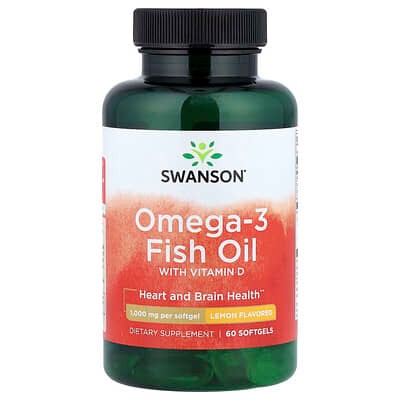
.
 iHerb iHerb | $ 7.29 | |
| iHerb | $ 7.29 |
The formula supplies 180 mg EPA and 120 mg DHA per serving, giving a moderate omega-3 dose. Both key omega-3s are quantified, so the active amount is easy to assess.
The serving fits people who want a moderate daily omega-3 amount for cardiovascular support and anti-inflammatory support. Vitamin D3 adds 25 mcg per serving, which may be useful for people who want both nutrients in one routine. The amount of active omega-3 provided per serving also compares favorably with the product cost.
The label does not identify the omega-3 molecular form or provide independent purity and oxidation test results, so important quality details remain uncertain. The softgel(s) format may be convenient for routine use, but the disclosed facts do not establish freshness or contaminant control.
Vitamin D3 adds meaningful support to a clearly quantified fish-oil core. The omega-3 dose is modest and oil-quality documentation remains sparse.
.Active amounts are individually disclosed, and no proprietary blend hides the supplied doses. Complete use directions, excipients, and some source or quality details remain unavailable.
.Supplied aggregate data indicate very strong satisfaction with a large response base. Specific comments are absent, so recurring complaints and purpose-specific experiences cannot be verified.
.Low relative cost and a meaningful vitamin D3 addition create good value. The modest omega-3 concentration limits formula strength.
.
EPA, DHA, and vitamin D provide complementary support for inflammation resolution and immune signaling. The fatty acids are individually disclosed, and vitamin D3 is supplied at a meaningful amount.
The omega-3 concentration is modest, so the single serving may not provide the depth used in many purpose-specific regimens. Even so, the transparent combination covers more than one relevant mechanism without crowding the formula.

EPA and DHA provide direct lipid and membrane support, while vitamin D3 adds a secondary cardiovascular nutrient. The formula is relevant but too lightly concentrated for strong triglyceride-focused use.
Only 300 mg of combined EPA and DHA is supplied from the fish oil serving. Fish species are named, but molecular form, oxidation protection, and independent purity testing are not disclosed.
| Ingredient | Amount per serving |
|---|---|
Calories | 10 Calorie(s) |
Total Fat | 1 Gram(s) |
Saturated Fat | 0.5 Gram(s) |
Trans Fat | 0 Gram(s) |
Polyunsaturated Fat | 0.5 Gram(s) |
Monounsaturated Fat | 0 Gram(s) |
Cholesterol | 5 mg |
Vitamin D3 | 25 mcg |
Omega-3 Fish Oil | 1000 mg |
Eicosapentaenoic Acid | 180 mg |
Docosahexaenoic Acid | 120 mg |
The oil form is unspecified, EPA concentration is low, and no antioxidant protection is disclosed. EPA is modest in absolute terms but maintains the preferred balance over DHA, while no contaminant testing is mentioned. A very low serving cost produces competitive cost efficiency for the EPA delivered.
The combined 300 mg EPA and DHA amount provides a low maintenance dose at about 30% of the fish oil, indicating low concentration. The molecular form, purification method, and independent testing are not stated. Disclosed actives provide good cost efficiency, though the missing quality details remain important.
The serving combines 120 mg of DHA with 180 mg of EPA from identified anchovy and menhaden sources. DHA form is not disclosed, omega-3 concentration is low, and no protective antioxidant or contaminant-testing claim is supplied. The low serving cost leads to moderate cost efficiency per gram of DHA, while vitamin D3 adds separate nutritional value.
Published studies used for the product analysis and the top-ranked studies for each ingredient and goal.