
Nutrient quality
EPA and DHA fit the intended use and are present without excessive dosing. Their modest combined amount and low share of total fish oil limit the formula’s strength.
.
 iHerb iHerb | $ 10.99 |
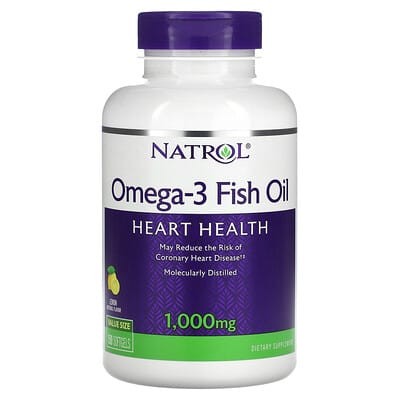
One softgel supplies 180 mg EPA and 120 mg DHA from 1,000 mg fish oil. That traditional low-concentration profile is better for basic intake than for a high-dose goal.
Both fatty acids are clearly disclosed, making the active amount easy to calculate. Fish species, molecular form, purification, contaminant testing, and oxidation protection are not supplied.
The long bottle supply and very low serving cost are practical strengths. Reaching a targeted cardiovascular or inflammatory amount would require several softgels and reduce that convenience.
EPA and DHA fit the intended use and are present without excessive dosing. Their modest combined amount and low share of total fish oil limit the formula’s strength.
.EPA and DHA amounts are clear and no proprietary blend is present. Important quality details and inactive softgel ingredients are absent from the supplied data.
.The aggregate rating is strong and supported by a very large review count. No detailed feedback is available to establish recurring negatives or purpose-specific results.
.Low bottle and serving costs make the formula accessible for basic intake. Reaching a more substantial EPA and DHA amount would require multiple softgels, reducing effective-serving value.
.
EPA and DHA directly support lipid balance, inflammatory signaling, and cardiovascular cell membranes. Their combined amount is modest, so the product is better suited to basic intake than targeted triglyceride support.
Both fatty acids are clearly listed, but molecular form, fish source, purification, and oxidation controls are absent. Reaching a higher active omega-3 intake would require several softgels.

EPA and DHA directly support the production of inflammation-resolving signaling molecules, giving the fish oil a strong mechanistic fit. Individual active amounts are clearly listed.
Only 300 mg of EPA and DHA is supplied from 1000 mg of fish oil, which is modest for targeted anti-inflammatory use. The molecular form, purification method, independent testing, source species, and antioxidant protection are not disclosed.
| Ingredient | Amount per serving |
|---|---|
Calories | 10 Calorie(s) |
Total Fat | 1 Gram(s) |
Saturated Fat | 0 Gram(s) |
Trans Fat | 0 Gram(s) |
Polyunsaturated Fat | 0.5 Gram(s) |
Monounsaturated Fat | 0 Gram(s) |
Cholesterol | 10 mg |
Omega-3 Fish Oil | 1000 mg |
Eicosapentaenoic Acid | 180 mg |
Docosahexaenoic Acid | 120 mg |
The EPA dose is modest, so it may suit basic intake better than people seeking a concentrated EPA supplement. EPA is present at an EPA-focused ratio to DHA, but the oil provides a low EPA concentration and does not identify its molecular form. Cost efficiency is favorable, while missing antioxidant and independent purity details weaken confidence in oil quality.
The formula clearly lists EPA and DHA, but their combined 300 mg amount is a low dose and represents a small share of the fish oil. Important quality details are missing, including the molecular form, purification method, independent testing, fish species, and antioxidant protection. Cost efficiency per gram of active EPA and DHA is excellent, though reaching a higher intake would require several softgels.
The softgel provides only 120 mg of DHA, so it is underpowered for a DHA-focused supplement. The fish oil is low in combined EPA and DHA, while its chemical form, antioxidant protection, species source, and contaminant testing are not disclosed. Cost per gram of DHA is favorable, but reaching a meaningful dose would require multiple softgels.
Published studies used for the product analysis and the top-ranked studies for each ingredient and goal.