
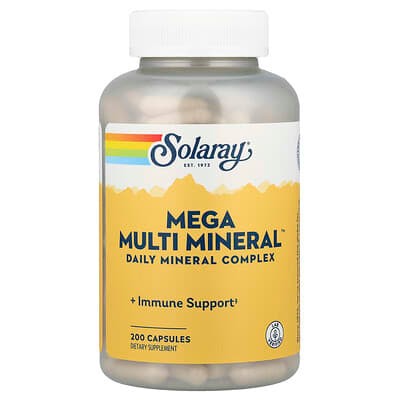

$17.69 $0.35 per serving


Product analysis
Mega Multi Mineral brings a wide range of minerals together, with favorable value for several core components. Missing source proportions leave the iodine quality unclear, while boron is expensive for the amount provided.
AI assessment of the formula, label and price. How scoring works
Nutrient Quality44
Magnesium and manganese use favorable forms, with calcium offering a more moderate choice. Iodine source proportions and some other forms remain unclear, so quality varies across the mixture.
Ingredient Transparency76
All amounts and most forms are disclosed, making the label relatively easy to compare. Two forms and two relevant composition details remain unspecified.
Value For Money61
Several core minerals offer favorable value, including calcium, magnesium and manganese. Boron is expensive for its amount, and value for some other components remains uncertain.
Customer Satisfaction88
Customer ratings are strongly positive across a large review pool. They offer a useful satisfaction signal without establishing the intended benefits.
Product Focus43
The combination has moderate support for a wide range of intended benefits. Its broad scope makes it less targeted than a supplement built around one goal.
- Format
Capsule - Container
- 200 Capsule(s)
- Per serving
- $0.35
- Also available
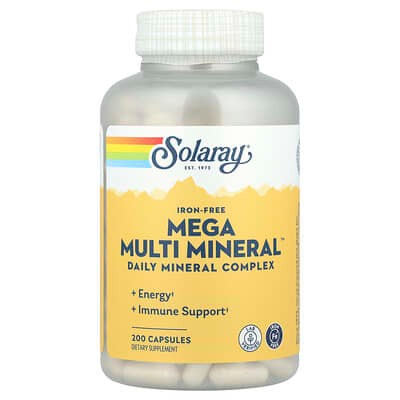 Iron-Free Mega Multi Mineral$20.79
- Customer rating
- 4.7 · 4,473 ratings
Goals

Impact
Moderate effect
Magnesium · 500 mg
Magnesium may help with stress if your magnesium levels are low. Zinc also has a conditional connection to anxiety that depends on nutritional status and particular health circumstances. These possible benefits don't mean that a broad mineral blend will reliably provide lasting relief from everyday stress.
How this product is rated for Stress Relief
Ingredient fit48
Magnesium may help with stress when magnesium levels are low.
Goal fit
Magnesium has a relevant connection to stress, alongside ingredients with other purposes.
Dose adequacy
Each serving provides 500 mg Magnesium; the amount alone does not predict how much stress relief you'll feel.
Pathways50
The main ingredient connections concern neural calming. These connections don't predict a specific amount of relief.
Depth
The main connection concerns neural calming, with the ingredient-specific limitations still applying.
Breadth
The ingredient roles extend beyond a single response, but they don't guarantee broad relief from stress.
Evidence76
Magnesium may help with stress when magnesium levels are low.
Evidence strength
Magnesium may help with stress when magnesium levels are low.
Studied preparation
The relevant declared preparations are compatible with the ingredient information; this does not guarantee a benefit.
Formulation logic100
No required ingredient partner is missing, and no particular ingredient conflict is identified.
Partner coverage
No required partner is missing for the relevant ingredients.
Conflicts
No particular ingredient conflict is identified.
Effective doses
Each serving provides 500 mg Magnesium; the amount alone does not predict how much stress relief you'll feel.

Impact
Highest effect
Magnesium · 500 mgBoron · 1 mgSelenium · 50 mcgZinc · 15 mg
Calcium can help fill a dietary gap important for maintaining bones. Iron helps correct a low intake that can lead to anaemia and fatigue. Iodine helps fill a gap that can impair thyroid function. Higher amounts do not establish extra benefit once intake is adequate.
How this product is rated for Everyday Health
Ingredient fit73
The known ingredients have a broader relationship to the retained nutritional functions. Some amounts fall below the comparison references or remain unresolved.
Goal fit
Relevant nutrients sit within a broader formulation, reducing its focus on the retained general-health functions.
Dose adequacy
The retained amounts provide partial or unresolved coverage of the saved comparison references, rather than demonstrating complete nutritional intake.
Pathways100
The strongest retained connection is energy metabolism cofactors. Several nutritional functions contribute.
Depth
The strongest retained connection is energy metabolism cofactors, based on the known ingredient amounts.
Breadth
Several nutritional functions meet the saved coverage threshold, giving a broad contribution across the retained functions.
Evidence86
Magnesium provides the strongest retained evidence. The supplied context supports nutritional availability or limited population-specific findings, without establishing broad health improvements beyond adequate intake.
Evidence strength
Magnesium supplies the strongest retained evidence. Its supplied context limits expectations to nutritional or population-specific outcomes.
Studied preparation
The retained preparations match the saved criteria; no superiority of chemical form or delivery is established.
Formulation logic100
The supplied checks identify no configured conflict or missing required partner. The retained amount thresholds remain comparison references rather than treatment doses.
Partner coverage
The retained ingredients have no missing required partner under the saved criteria; this does not establish an added combination benefit.
Conflicts
No configured ingredient conflict was identified from the supplied amounts.
Effective doses
The retained amounts meet the saved minimum comparison threshold, which is not proof of a clinical effective dose.

Impact
High effect
Magnesium · 500 mgZinc · 15 mgSelenium · 50 mcg
Zinc supports normal immune-cell function, and selenium contributes to normal immune function and antioxidant processes. Copper and iron can help restore immune responses impaired by low intake or deficiency. More of these nutrients does not establish additional immune benefit after nutritional needs are met. Magnesium's supplied context does not establish a routine immunity outcome despite its saved contribution.
How this product is rated for Immunity
Ingredient fit56
The relevant ingredients have a connection to immune support, with the strength of their amount findings varying by nutrient.
Goal fit
The formula includes relevant immune ingredients alongside ingredients aimed at other uses, which makes its immune focus less concentrated.
Dose adequacy
The declared amounts provide partial coverage of the saved comparisons; unresolved amounts cannot establish a contribution.
Pathways43
The strongest saved connection is lymphocyte function and immune regulation.
Depth
The strongest saved connection is lymphocyte function and immune regulation.
Breadth
The saved findings concentrate on one immune area, with limited breadth elsewhere.
Evidence100
The main support concerns normal nutrient functions, with any respiratory benefit limited to the specific evidence described above.
Evidence strength
Zinc leads the saved evidence finding; normal immune function does not itself establish infection prevention.
Studied preparation
The saved findings accept the relevant preparations; this does not imply that one nutrient form gives greater immune benefit.
Formulation logic100
The recognized ingredients meet the partner checks, and no configured conflict was found. Amount uncertainties still limit ingredients whose quantities are unresolved.
Partner coverage
The recognized ingredients do not require an additional partner for the roles considered here.
Conflicts
No configured ingredient conflict was identified from the available facts; this does not establish overall safety.
Effective doses
The recognized ingredients reach the saved amount threshold; that threshold is a comparison point, not proof of clinical effectiveness.

Impact
High effect
Zinc · 15 mgMagnesium · 500 mg
Iodine and selenium support thyroid hormone function, while magnesium and zinc contribute to normal energy-related and enzyme processes. Iron can help restore heat production impaired by iron-deficiency anaemia. These roles depend on nutritional status and do not demonstrate extra energy expenditure when intake is adequate; the small chromium and vanadium amounts add no supported thermogenic effect.
How this product is rated for Metabolism Support
Ingredient fit68
The minerals provides the main connection to the goal. The supplied roles do not establish a routine rise in energy expenditure.
Goal fit
The minerals relate mainly to normal metabolic function; the formula also serves broader nutritional purposes.
Dose adequacy
Declared amounts provide partial coverage of the saved comparisons; meeting them does not demonstrate faster energy expenditure.
Pathways0
No thermogenic pathway received a contribution from this formula.
Depth
No thermogenic pathway received a contribution from this formula.
Breadth
No pathway reached the saved breadth threshold.
Evidence100
The minerals received evidence and preparation recognition in the saved findings. Physiological roles and metabolic markers should not be read as proof of increased energy expenditure.
Evidence strength
Zinc leads the saved evidence comparison, but its supported role and population limits still govern expected benefits.
Studied preparation
Included preparations matched the saved comparison; this does not establish that the finished formula increases metabolic rate.
Formulation logic100
The included ingredients met the saved amount threshold and had no missing required partner or identified configured conflict.
Partner coverage
No required partner was missing for the included ingredients; this does not establish an added benefit from combining them.
Conflicts
No configured ingredient conflict was identified in the supplied facts.
Effective doses
All included ingredients reached the saved minimum amount threshold; that threshold is a comparison rule, not proof of clinical effectiveness.

Impact
High effect
Magnesium · 500 mg
Magnesium supports electrolyte balance and vessel tone, with limited and inconsistent blood-pressure effects. Potassium has conditional blood-pressure support depending on baseline intake and blood pressure, but the small serving amount does not reproduce studied exposure. Selenium can address deficiency-related heart disease, with no cardiovascular prevention benefit established in selenium-replete adults.
How this product is rated for Heart Health
Ingredient fit50
Magnesium, Potassium, Selenium provide the included contribution, with partial coverage of the comparison amounts.
Goal fit
Magnesium, Potassium, Selenium contribute alongside ingredients directed at other uses.
Dose adequacy
The included amounts partly cover the saved comparison ranges, which describe exposure rather than proven treatment doses.
Pathways60
The strongest recorded connection is electrolyte and vascular-tone balance, with full coverage of the comparison range.
Depth
The strongest recorded connection is electrolyte and vascular-tone balance, with full coverage of the comparison range.
Breadth
Electrolyte and vascular-tone balance reached the coverage threshold; the remaining configured pathways did not.
Evidence89
Magnesium provides the strongest included evidence, within the limits of its studied outcomes and populations.
Evidence strength
Magnesium provides the strongest included evidence, within the limits of its studied outcomes and populations.
Studied preparation
The included preparations were matched to studied material, within the limits of the outcomes and populations studied.
Formulation logic100
No configured ingredient conflict was identified. The included ingredients can stand alone or have their required partner present.
Partner coverage
The included ingredients can stand alone or have their required partner present.
Conflicts
No configured ingredient conflict was identified.
Effective doses
All included ingredients clear the saved minimum amount threshold; this does not guarantee a noticeable clinical benefit.

Impact
Moderate effect
Potassium · 59 mgMagnesium · 500 mgSelenium · 50 mcg
Mega Multi Mineral supplies 500 mg magnesium, 59 mg potassium, and 50 mcg selenium per serving, alongside many minerals without reviewed goal profiles. Its recorded support centers on blood-vessel tone; potassium leads the evidence link, while selenium has a limited role and no nutrient deficiency is inferred.
How this product is rated for Cardiovascular Support
Ingredient fit45
Magnesium, potassium, and selenium match reviewed marker links, but many additional minerals have no reviewed cardiovascular role.
Goal fit
The three credited minerals fit the goal, while twelve other listed minerals dilute focus without reviewed profiles.
Dose adequacy
Magnesium reaches its configured plateau; potassium at 59 mg and selenium at 50 mcg provide partial dose coverage.
Pathways60
The formula's strongest coverage is for vascular tone and sodium balance, with little breadth across other markers.
Depth
Magnesium and potassium provide the strongest coverage for vascular tone and sodium balance.
Breadth
Only the vascular-tone pathway has credited coverage among the target pathways.
Evidence86
Potassium has the strongest effective-ingredient evidence link, but the supplied trial context depends on dietary intake.
Evidence strength
Potassium has the highest effective-dose evidence ceiling; the supplied research context does not establish personal intake or suitability.
Studied preparation
All three credited minerals are represented in studied preparations at effective amounts.
Formulation logic100
The credited minerals need no missing partners, no conflict is recorded, and all reach the minimum dose threshold.
Partner coverage
Each credited mineral works alone or has its required partner.
Conflicts
No matched caffeine, stimulant, or high-sodium conflict appears in the supplied facts.
Effective doses
Magnesium, potassium, and selenium all clear the minimum dose threshold used here.
Ingredients
| Ingredient | Amount per serving | Score |
|---|---|---|
Calcium (Calcium Amino Acid Chelate Complex) | 1000 mg | |
Iron (Iron Amino Acid Chelate Complex) | 18 mg | |
Phosphorus (Potassium Phosphate) | 22 mg | |
Iodine (Kelp, Potassium Iodide) | 225 mcg | |
Magnesium (Magnesium Amino Acid Chelate Complex) | 500 mg | |
Zinc (Zinc Amino Acid Chelate Complex) | 15 mg | |
Selenium (L-Selenomethionine) | 50 mcg | |
Copper (Copper Amino Acid Chelate Complex) | 0.5 mg | |
Manganese (Manganese Amino Acid Chelate Complex) | 5 mg | |
Chromium (Chromium Polynicotinate) | 50 mcg | |
Molybdenum | 50 mcg | |
Potassium (Potassium Chloride, Potassium Phosphate) | 59 mg | |
Boron (Boric Acid) | 1 mg | |
Vanadium (Vanadium Amino Acid Chelate) | 25 mcg | |
Glutamic Acid Hydrochloride | 50 mg |
Manganese (Manganese Amino Acid Chelate Complex) · 5 mg OverallScore84
A serving lists 5 mg of manganese as an amino acid chelate. The specific amino acid is unavailable in the saved facts, limiting form comparisons.
How this ingredient is rated
Active Ingredient Quality & Bioavailability70
The source is described as an amino acid chelate; the saved facts do not specify which amino acid.
Manganese Chemical Form
The source is described as an amino acid chelate; the saved facts do not specify which amino acid.
Dose, Safety & Label Transparency100
The selected serving lists 5 mg of elemental manganese.
Manganese Dosage Efficacy & Safety
The selected serving lists 5 mg of elemental manganese.
Elemental Weight Disclosure
The 5 mg amount is declared for manganese itself.
Value80
The whole-product serving costs about $0.35.
Price per Serving vs. Median
The whole-product serving costs about $0.35.
Iodine (Kelp, Potassium Iodide) · 225 mcg OverallScore73
Each serving provides 225 mcg iodine from sources including potassium iodide. The other chemical form and the proportions of the sources are unknown.
How this ingredient is rated
Active Ingredient Quality & Bioavailability42
Potassium iodide is identified alongside an unresolved iodine form, with no known proportions. A marine source is also recorded.
Iodine Form & Bioavailability
Potassium iodide is identified alongside an unresolved iodine form, with no known proportions.
Marine Source Purity & Sourcing
A marine source is recorded, but the saved facts do not identify a qualifying organic or geographic sourcing marker.
Dose, Safety & Label Transparency100
The saved facts specify 225 mcg iodine per serving, and the amount falls within the evaluation’s adult safety benchmark.
Dosage Efficacy for Daily Support
The evaluation considers 225 mcg iodine per serving consistent with general daily support.
Dosage Safety & Upper Limits
The 225 mcg serving amount does not exceed the evaluation’s adult upper-limit benchmark; total intake is not assessed.
Elemental Iodine Transparency
The saved facts give an elemental iodine amount of 225 mcg per serving.
Value80
The whole-product serving costs about $0.35.
Price Per Effective Serving
The whole-product serving costs about $0.35.
Glutamic Acid · 50 mg OverallScore82
Each serving lists 50 mg of glutamic acid hydrochloride, a moderate amount of the compound. The amount of free glutamic acid is unknown; the form is not identified as L-glutamic acid.
How this ingredient is rated
Active Ingredient Quality & Bioavailability70
The recorded glutamic acid hydrochloride form does not specify the L-isomer. The hydrochloride form aligns with the digestive use identified in the evaluation.
Isomer Specificity (L-Form)
The ingredient is listed as glutamic acid hydrochloride without specifying whether it is the L-form.
Chemical Form Suitability
The hydrochloride form aligns with the digestive use identified in the evaluation.
Dose, Safety & Label Transparency86
The serving lists 50 mg of glutamic acid hydrochloride; the corresponding free glutamic acid amount is unknown.
Supplemental Dosage Adequacy
50 mg of the hydrochloride compound per serving is a moderate amount; the amount of free glutamic acid is unknown.
Label Disclosure & Transparency
The 50 mg per serving identifies the hydrochloride compound's weight, not the amount of free glutamic acid.
Value100
At about $0.35 per whole-product serving, the price is lower in this comparison and covers the entire product.
Price per Serving Efficiency
At about $0.35 per whole-product serving, the price is lower in this comparison and covers the entire product.
Alternative products
Report alternatives
Sources
Published studies used for the product analysis and the top-ranked studies for each ingredient and goal.
- [Comparative study of the urinary excretion of boron, calcium, magnesium and phosphorus in postmenopausal women with and without osteoporosis].
- Effect of dietary boron on mineral, estrogen, and testosterone metabolism in postmenopausal women.
- The relationship between boron and magnesium status and bone mineral density in the human: a review.
- Effects of boron supplementation on bone mineral density and dietary, blood, and urinary calcium, phosphorus, magnesium, and boron in female athletes.
- Metabolic responses of postmenopausal women to supplemental dietary boron and aluminum during usual and low magnesium intake: boron, calcium, and magnesium absorption and retention and blood mineral concentrations
- What is the impact of daily oral supplementation of vitamin D3 (cholecalciferol) plus calcium on the incidence of hip fracture in older people? A systematic review and meta-analysis.
- Calcium supplementation prevents seasonal bone loss and changes in biochemical markers of bone turnover in elderly New England women: a randomized placebo-controlled trial.
- The effects of calcium supplementation (milk powder or tablets) and exercise on bone density in postmenopausal women.
- The efficacy of calcium supplementation alone in elderly Thai women over a 2-year period: a randomized controlled trial.
- Calcium-enriched foods and bone mass growth in prepubertal girls: a randomized, double-blind, placebo-controlled trial.
- The Association between Dietary and Circulating Copper Levels and Osteoporosis: a Scoping Review.
- Association between dietary copper, iron, zinc, selenium intake and osteopenia or osteoporosis in elderly hypertensive patients: a retrospective cohort study.
- Associations of dietary copper intake with total bone mineral density and lumbar spine bone mineral density in American adults.
- The association between dietary mineral intake and bone mineral density: a cross-sectional study.
- Association between dietary copper intake and bone mineral density in children and adolescents aged 8-19 years: A cross-sectional study.
- Association between Serum Magnesium and Fractures: A Systematic Review and Meta-Analysis of Observational Studies.
- Bioabsorbable Magnesium-Based Materials Potential and Safety in Bone Surgery: A Systematic Review.
- Vascularized bone grafting fixed by biodegradable magnesium screw for treating osteonecrosis of the femoral head.
- An update on magnesium and bone health.
- Sex-specific differences in the association of magnesium intake with femoral neck bone mineral density among older adults.