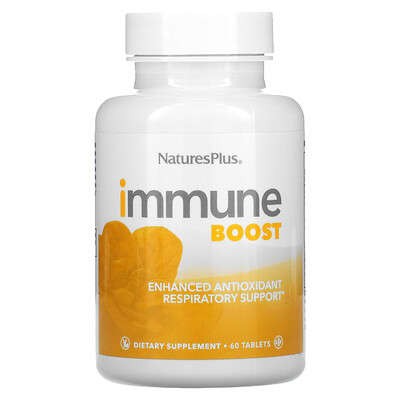
Immune Boost

Immune Boost

NaturesPlus4.8 (185 ratings)
Format:Tablet Quantity: 60 Tablet(s) · 30 servings
Goals
$27.16 $0.90 per serving

About this product

The clearest use is filling immune-relevant nutrient gaps, rather than obtaining stronger effects from large amounts. Vitamins A and D, zinc and selenium contribute to normal immune functions, while vitamin C supports immune-cell activity and collagen formation. Extra intake does not establish added benefit once nutritional needs are met.

Disclosure is useful for the central nutrients: vitamin C is listed as 1,000 mg ascorbic acid and zinc as 30 mg gluconate. The vitamin C is not identified as a non-acidic preparation, and the 125 mcg vitamin D serving is high enough to warrant checking the intended daily intake. Copper information is unavailable, leaving the zinc-to-copper balance uncertain.

NAC at 600 mg adds a distinct ingredient, but findings from glycine-and-NAC combinations cannot be assigned to NAC alone here. The wider hair, hormone, metabolism and longevity aims also go beyond the clearest nutritional support. Relatively high cost for the vitamin C, zinc and selenium makes the value of the full combination harder to justify for a simple nutrient gap.

Who is it for
  • Adults with identified nutrient gaps who have reviewed the high vitamin D amount
  • People wanting the specific nutrient-and-NAC combination rather than vitamin C alone
Best for
  • Meeting low intakes relevant to normal immune function

Pros

  • Clearly identifies zinc gluconate
  • Quantifies all the main active ingredients
  • Keeps the core immune-nutrition combination relatively focused

Cons

  • Copper information is unavailable
  • NAC alone cannot inherit findings from glycine-and-NAC combinations
  • Relatively high cost for the main nutrients
  • Broader hormone and longevity effects remain uncertain

Warnings

  • The 125 mcg vitamin D serving warrants review before ongoing use or combination with other vitamin D products.
  • The 1,000 mg ascorbic acid serving may be a poor fit if acidic supplements upset your stomach.
  • Check total selenium before adding to the 200 mcg already supplied; excessive selenium can contribute to hair loss.


Product analysis

62 out of 100

Immune Boost may help cover nutrient gaps relevant to normal immune function, with vitamin C offering modest support for shorter colds during regular use. The formula is relatively expensive for several of its main nutrients.

AI assessment of the formula, label and price. How scoring works

Nutrient Quality49

The identified zinc form is a favorable quality feature. Other comparisons remain uncertain, and the NAC preparation is not specified.

Ingredient Transparency94

Ingredient amounts and most forms are clearly listed. The missing NAC preparation detail limits a complete comparison.

Value For Money28

The vitamin C, zinc and selenium content have relatively unfavorable cost comparisons. Value for the other ingredients remains uncertain.

Customer Satisfaction75

Customer ratings are very positive, but the review pool is relatively modest. They do not establish immune protection or the other proposed benefits.

Product Focus74

The clearest purpose is filling nutritional gaps relevant to normal immune function. The high vitamin D amount does not establish extra benefit or suitability for everyone.

Format
Tablet
Container
60 Tablet(s)
Per serving
$0.90
Customer rating
4.8 · 185 ratings
Report analysis

Goals

Immunity
Impact
Highest effect
A- Ingredient FitA+ PathwaysA+ EvidenceA+ Formulation Logic
Vitamin C · 1000 mgZinc · 30 mgVitamin A · 900 mcg RAEVitamin D · 125 mcgSelenium · 200 mcg
Study evidence
Selenium Mixed 37 studies
Vitamin A Supportive 107 studies
Vitamin C Supportive 53 studies
Vitamin D Supportive 85 studies
Zinc Supportive 73 studies
Impact
Highest effect
A- Ingredient FitC- PathwaysB+ EvidenceA+ Formulation Logic
Vitamin D · 125 mcg
Study evidence
Selenium Supportive 27 studies
Vitamin C Supportive 30 studies
Vitamin D Supportive 50 studies
Zinc Supportive 10 studies
Impact
Highest effect
B+ Ingredient FitB+ PathwaysA EvidenceA+ Formulation Logic
Vitamin D · 125 mcgVitamin C · 1000 mg
Study evidence
Selenium Supportive 34 studies
Vitamin C Supportive 50 studies
Vitamin D Supportive 101 studies
Zinc Supportive 64 studies
Everyday Health
Impact
Highest effect
A- Ingredient FitB+ PathwaysB+ EvidenceA+ Formulation Logic
Vitamin D · 125 mcgSelenium · 200 mcgZinc · 30 mgVitamin C · 1000 mg
Study evidence
Selenium Supportive 70 studies
Vitamin C Supportive 56 studies
Vitamin D Supportive 115 studies
Zinc Supportive 60 studies
Impact
High effect
B Ingredient FitF PathwaysA EvidenceA+ Formulation Logic
Zinc · 30 mgVitamin D · 125 mcg
Study evidence
Selenium No effect 16 studies
Vitamin D Supportive 56 studies
Zinc Disputed 7 studies
Impact
Moderate effect
A- Ingredient FitC PathwaysC- EvidenceA+ Formulation Logic
Study evidence
Selenium Adverse 1 study
Vitamin C Supportive 1 study
Vitamin D Supportive 8 studies
Zinc No effect 1 study

Ingredients

IngredientAmount per servingScore
Vitamin A (Beta-Carotene)
900 mcg RAE
Vitamin C (Ascorbic Acid)
1000 mg 52
Vitamin D3 (Cholecalciferol)
125 mcg
Zinc (Zinc Gluconate)
30 mg 65
Selenium (Selenomethionine)
200 mcg 63
N-Acetyl-Cysteine
600 mg
Gluten Free Adults 18–50 Vegetarian
Report overview
D+ Active Ingredient Quality & BioavailabilityA+ Dose, Safety & Label TransparencyF Value
+2
Each serving provides 200 mcg of selenium, and the cost per 200 mcg is very high. That is an amount commonly used in trials for antioxidant and thyroid support. It uses Selenomethionine.
How this ingredient is rated

Active Ingredient Quality & Bioavailability53

It uses Selenomethionine.
Selenium Chemical Form
It uses Selenomethionine.
Form Transparency & Isomer Specificity
The label names Selenomethionine, but does not specify an L isomer.

Dose, Safety & Label Transparency100

The 200 mcg serving is an amount commonly used in trials for antioxidant and thyroid support. The amount is below 400 mcg, leaving room for selenium from food.
Dosage Efficacy Sweet Spot
The 200 mcg serving is an amount commonly used in trials for antioxidant and thyroid support.
Safety Margin & UL Adherence
The amount is below 400 mcg, leaving room for selenium from food.

Value10

The cost per 200 mcg of selenium is very high.
Price per 200 mcg Serving
The cost per 200 mcg of selenium is very high.
B+ Active Ingredient Quality & BioavailabilityC+ Dose, Safety & Label TransparencyF Value
+2
A serving provides 30 mg of zinc at a high cost per serving. It uses zinc gluconate. The copper amount is unknown, so the zinc-to-copper balance is unclear.
How this ingredient is rated

Active Ingredient Quality & Bioavailability80

It uses zinc gluconate.
Zinc Form Bioavailability
It uses zinc gluconate.

Dose, Safety & Label Transparency67

A serving provides 30 mg of zinc. The copper amount is unknown, so the zinc-to-copper balance is unclear.
Elemental Dose Transparency
The elemental zinc amount and source are stated.
Zinc Dosage Safety & Effectiveness
A serving provides 30 mg of zinc.
Zinc-to-Copper Mineral Balance
The copper amount is unknown, so the zinc-to-copper balance is unclear.

Value30

The cost per serving is high.
Price Per Serving Efficiency
The cost per serving is high.
F Active Ingredient Quality & BioavailabilityA Dose, Safety & Label TransparencyF Value
Each serving provides 1000 mg of vitamin C at a high cost per gram, based on the full serving price. It uses ascorbic acid. Ascorbic acid is unbuffered.
How this ingredient is rated

Active Ingredient Quality & Bioavailability30

The vitamin C uses ascorbic acid. Ascorbic acid is unbuffered.
Vitamin C Chemical Form & Delivery System
The vitamin C uses ascorbic acid.
Gastric Comfort & pH Balance
Ascorbic acid is unbuffered.

Dose, Safety & Label Transparency91

The serving contains 1000 mg of vitamin C. The vitamin C amount and its ascorbic acid form are stated. No flagged sweeteners or artificial colors are recorded in the available ingredient information.
Optimal Dosage Targeting
A serving provides 1000 mg of vitamin C.
Purity & Excipient Quality
No flagged sweeteners or artificial colors are recorded in the available ingredient information.
Mineral & Source Transparency
The vitamin C amount and its ascorbic acid form are stated.

Value20

The cost per gram of vitamin C is high; it uses the full serving price.
Price per Gram of Vitamin C
The cost per gram of vitamin C is high; it uses the full serving price.
Report alternatives

Sources

Published studies used for the product analysis and the top-ranked studies for each ingredient and goal.

  1. Associations of selenium status with all-cause and cause-specific mortality: a systematic review and meta-analysis of cohort studies.
    Cui Z; Xie R; Lu X; Schomburg L; Brenner H; Schöttker B · Redox biology · 2025
    Meta-analysis95 participants20 studies pooledEveryday Health forSelenium
  2. Dietary Antioxidants, Circulating Antioxidant Concentrations, Total Antioxidant Capacity, and Risk of All-Cause Mortality: A Systematic Review and Dose-Response Meta-Analysis of Prospective Observational Studies.
    Jayedi A; Rashidy-Pour A; Parohan M; Zargar MS; Shab-Bidar S · Advances in nutrition (Bethesda, Md.) · 2019
    Meta-analysis507,251 participants41 studies pooledEveryday Health forSelenium
  3. The efficacy and safety of selenium supplementation versus placebo in the treatment of Graves' orbitopathy: A systematic review and meta-analysis of randomised controlled trials.
    Sharabati I; Qafesha RM; Hindawi MD; Amro S; Ayesh BM · Clinical endocrinology · 2024
    Meta-analysis4 studies pooledEveryday Health Eye Health forSelenium
  4. Associations of plasma metal concentrations with the risks of all-cause and cardiovascular disease mortality in Chinese adults.
    Shi L; Yuan Y; Xiao Y; Long P; Li W; Yu Y; Liu Y; Liu K; Wang H; Zhou L; Yang H; Li X; He M; Wu T · Environment international · 2021
    Cohort study6,155 participantsEveryday Health forSelenium
  5. Updates on clinical studies of selenium supplementation in radiotherapy.
    Puspitasari IM; Abdulah R; Yamazaki C; Kameo S; Nakano T; Koyama H · Radiation oncology (London, England) · 2015
    Systematic review16 studies pooledEveryday Health forSelenium
  6. Dietary intake and blood concentrations of antioxidants and the risk of cardiovascular disease, total cancer, and all-cause mortality: a systematic review and dose-response meta-analysis of prospective studies.
    Aune D; Keum N; Giovannucci E; Fadnes LT; Boffetta P; Greenwood DC; Tonstad S; Vatten LJ; Riboli E; Norat T · The American journal of clinical nutrition · 2019
    Meta-analysis69 studies pooledEveryday Health forVitamin C
  7. Scientific Opinion on the substantiation of a health claim related to vitamin C and increasing non haem iron absorption pursuant to Article 14 of Regulation (EC) No 1924/2006.
    EFSA Panel on Dietetic Products, Nutrition and Allergies (NDA) · EFSA journal. European Food Safety Authority · 2026
    Guideline / consensusEveryday Health forVitamin C
  8. Vitamin C Depletion and All-Cause Mortality in Renal Transplant Recipients.
    Sotomayor CG; Eisenga MF; Gomes Neto AW; Ozyilmaz A; Gans ROB; Jong WHA; Zelle DM; Berger SP; Gaillard CAJM; Navis GJ; Bakker SJ · Nutrients · 2018
    Cohort study598 participantsEveryday Health forVitamin C
  9. Associations of Serum Biomarkers of Fruit and Vegetable Intake With the Risk of Cause-Specific Mortality and All-Cause Mortality: A National Prospective Cohort Study.
    Pu L; Zhang R; Wang X; Zhao T; Sun H; Han L · Frontiers in nutrition · 2022
    Cohort study12,530 participantsEveryday Health forVitamin C
  10. Relation between plasma ascorbic acid and mortality in men and women in EPIC-Norfolk prospective study: a prospective population study. European Prospective Investigation into Cancer and Nutrition.
    Khaw KT; Bingham S; Welch A; Luben R; Wareham N; Oakes S; Day N · Lancet (London, England) · 2001
    Cohort study19,496 participantsEveryday Health forVitamin C
  11. Vitamin D supplementation for prevention of mortality in adults.
    Bjelakovic G; Gluud LL; Nikolova D; Whitfield K; Wetterslev J; Simonetti RG; Bjelakovic M; Gluud C · The Cochrane database of systematic reviews · 2014
    Meta-analysis95,286 participants159 studies pooledEveryday Health forVitamin D
  12. Effect of vitamin D on gastrointestinal symptoms and health-related quality of life in irritable bowel syndrome patients: a randomized double-blind clinical trial.
    Abbasnezhad A; Amani R; Hajiani E; Alavinejad P; Cheraghian B; Ghadiri A · Neurogastroenterology and motility · 2018
    Randomized trial90 participantsEveryday Health forVitamin D
  13. The impact of vitamin D administration on mortality in COVID-19 patients: a systematic review and meta-analysis of randomized controlled trials.
    Kow CS; Ramachandram DS; Hasan SS; Wong Z; Thiruchelvam K · Inflammopharmacology · 2024
    Meta-analysis2,495 participants19 studies pooledEveryday Health forVitamin D
  14. Vitamin D Status and Mortality: A Systematic Review of Observational Studies.
    Heath AK; Kim IY; Hodge AM; English DR; Muller DC · International journal of environmental research and public health · 2019
    Systematic review84 studies pooledEveryday Health forVitamin D
  15. Meta-analysis of long-term vitamin D supplementation on overall mortality.
    Zheng Y; Zhu J; Zhou M; Cui L; Yao W; Liu Y · PloS one · 2014
    Meta-analysis42 studies pooledEveryday Health forVitamin D
  16. Effectiveness of sodium bicarbonate and zinc chloride mouthwashes in the treatment of oral mucositis and quality of life in patients with cancer under chemotherapy.
    Mohammadi F; Oshvandi K; Kamallan SR; Khazaei S; Ranjbar H; Ahmadi-Motamayel F; Gillespie M; Jenabi E; Vafaei SY · Nursing open · 2022
    Randomized trial144 participantsEveryday Health forZinc
  17. Zinc supplementation in young children with acute diarrhea in India.
    Sazawal S; Black RE; Bhan MK; Bhandari N; Sinha A; Jalla S · The New England journal of medicine · 1995
    Randomized trial937 participantsEveryday Health forZinc
  18. Associations of mortality with ocular disorders and an intervention of high-dose antioxidants and zinc in the Age-Related Eye Disease Study: AREDS Report No. 13.
    Clemons TE; Kurinij N; Sperduto RD; AREDS Research Group · Archives of ophthalmology (Chicago, Ill. : 1960) · 2004
    Randomized trial4,753 participantsEveryday Health forZinc
  19. Effects of zinc and probiotic co-supplementation on inflammation, gastrointestinal symptoms, quality of life, and mood in irritable bowel syndrome patients.
    Rezazadegan M; Soheilipour M; Amani R · Scientific reports · 2026
    Randomized trial84 participantsEveryday Health forZinc
  20. Effect of zinc sulfate supplementation on premenstrual syndrome and health-related quality of life: Clinical randomized controlled trial.
    Siahbazi S; Behboudi-Gandevani S; Moghaddam-Banaem L; Montazeri A · The journal of obstetrics and gynaecology research · 2018
    Randomized trial142 participantsEveryday Health forZinc