
Nutrient quality
The formula offers partial support but has a dose or purpose-alignment limitation. Form uncertainty or weak secondary amounts reduce confidence in its practical contribution.
 Pure Formulas Pure Formulas | $ 15.45 | |
 Amazon Amazon | $ 0.00 | |
 iHerb iHerb | $ 16.76 |
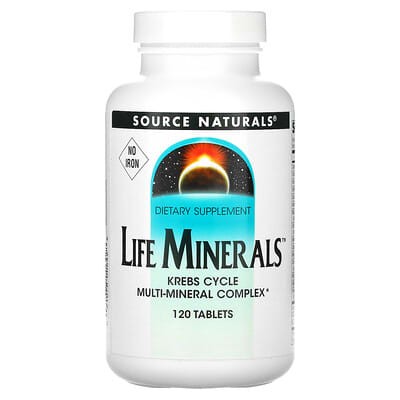
One tablet supplies calcium, magnesium, zinc, selenium, copper, manganese, chromium, molybdenum, potassium, iodine, and boron. Several nutrients use citrate, malate, selenomethionine, or chelated forms that strengthen the mineral core.
The same nutrient totals are repeated across multiple source forms, making the label easy to overcount. Vitamin D is only 50 IU and horsetail silica only 1 mg, so neither provides meaningful coverage.
The 120-serving bottle is economical and convenient for broad mineral intake. It is not a targeted detoxification product, and users should judge it as a general mineral supplement instead.
The formula offers partial support but has a dose or purpose-alignment limitation. Form uncertainty or weak secondary amounts reduce confidence in its practical contribution.
Most active amounts are shown, but duplicated form entries make dose allocation less clear. Full use directions and a complete inactive-ingredient list are also not supplied.
The aggregate satisfaction signal is strong and the supplied volume is moderate. No specific experience details are supplied to assess repeated complaints or purpose-related outcomes.
The serving provides favorable value for the disclosed core actives. Minor form or targeting limitations keep the category comparison from being fully settled.

Selenium, molybdenum, active B vitamins, and antioxidants provide useful detoxification cofactors. Trace cofactors reach nutritional amounts, but hidden botanicals cannot be checked for effective dosing.
A proprietary blend and general-purpose nutrient design prevent the formula from functioning as a focused liver product. The micronutrients are broadly compatible, though the hidden blend makes the intended detox strategy unclear.
| Ingredient | Amount per serving |
|---|---|
Total Carbohydrates | 1 Gram(s) |
Vitamin C (Manganese Ascorbate, Zinc Ascorbate) | 20 mg |
Vitamin D3 (Cholecalciferol) | 50 IU |
Vitamin B6 (Pyridoxine Hydrochloride) | 2.5 mg |
Calcium (Calcium Alpha-Ketoglutarate, Calcium Citrate, Calcium Fumarate, Calcium Malate, Calcium Succinate) | 120 mg |
Iodine (Potassium Iodide) | 40 mcg |
Magnesium (Magnesium Alpha-Ketoglutarate, Magnesium Citrate, Magnesium Fumarate, Magnesium Malate, Magnesium Succinate) | 114 mg |
Zinc (OptiZinc, Zinc Ascorbate) | 7.6 mg |
Selenium (L-Selenomethionine, Sodium Selenite) | 50 mcg |
Copper (Copper Sebacate) | 500 mcg |
Manganese (Manganese Ascorbate, Manganese Citrate, Manganese Succinate) | 2.3 mg |
Chromium (ChromeMate) | 80 mcg |
Molybdenum (Molybdenum Amino Acid Chelate) | 80 mcg |
Potassium (Potassium Alpha-Ketoglutarate, Potassium Citrate, Potassium Fumarate, Potassium Malate, Potassium Succinate) | 24 mg |
Silica (Horsetail extract) | 1 mg |
Boron (Boron Amino Acid Chelate) | 750 mcg |
A blend of manganese ascorbate, citrate, and succinate provides soluble organic mineral forms. The 2.3 mg elemental amount is appropriate for maintenance and is disclosed clearly. A very low serving cost makes the broad mineral formula especially efficient.
The 80 mcg dose meets the lower end of the collection target and stays well within the adult safety limit. Its amino acid chelate label does not identify the ligand or a verified branded molybdenum source. The very low serving cost provides good value despite uncertainty about chelation quality.
Chromium polynicotinate is a highly bioavailable organic form. The 80 mcg serving is a maintenance-level amount below the preferred metabolic-support range, and the label gives only one chromium weight. The cost per standardized chromium amount is competitive.
Published studies used for the product analysis and the top-ranked studies for each ingredient and goal.