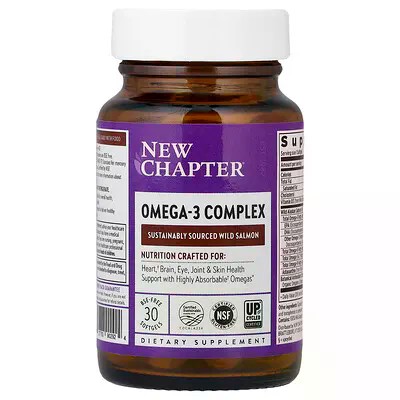
Relevant fish oil in a convenient format, but missing EPA and DHA amounts make the effective dose impossible to verify. Quality and stability details are also sparse.
Relevant fish oil in a convenient format, but missing EPA and DHA amounts make the effective dose impossible to verify. Quality and stability details are also sparse.
Fish oil is relevant to cardiovascular and inflammatory balance, but total oil weight is not the same as active omega-3 content. The 1000 mg serving cannot be matched to an effective EPA or DHA intake because neither fatty acid is quantified.
One softgel supplies the listed serving, which keeps daily use simple. Molecular form, fish species, purification, and independent quality verification are not supplied.
A named antioxidant stability blend may help protect the oil, but its individual ingredients are not disclosed. A better-disclosed option would be easier to dose for either stated goal.
thumb_upPros
Lists 1000 mg of total fish oil
One softgel supplies the listed serving, which keeps daily use simple
Ingredient choice aligns with cardiovascular support
Fish oil is relevant to inflammatory balance
thumb_downCons
EPA and DHA amounts are not disclosed
Active omega-3 concentration cannot be calculated
Molecular form and purification details are absent
Proprietary antioxidant blend hides its individual components
warningWarnings
Avoid use if you have a fish allergy.
Omega-3 oils can add to bleeding risk with anticoagulant or antiplatelet medicines; review combined use with a clinician.
Do not assume the total oil amount equals an effective EPA or DHA dose.
scienceNutrient quality
53
Moderate impact
Wild Alaskan salmon is a specific source, but EPA, DHA, molecular form, and purification details are absent. The total oil amount is disclosed, but EPA and DHA yields are missing, so effective dose cannot be verified, while missing EPA and DHA yields prevent confirmation of potency.
scienceIngredient transparency
38
Lower impact
The salmon-oil amount is shown, but EPA and DHA yields are not disclosed. A proprietary stability blend and missing quality details further reduce transparency.
thumb_upCustomer satisfaction
68
High impact
The aggregate rating is favorable, and the substantial review count supports confidence. No detailed feedback is supplied, so repeated complaints and purpose fit cannot be judged.
workspace_premiumValue for money
26
Situational impact
A named salmon source and antioxidant system provide some quality context. Missing EPA and DHA amounts plus a hidden stability blend prevent reliable value assessment.
A-
Goal FitD-
Strength of SupportD-
CoverageC+
Formula Quality
Vitamin D · 1.25 mcgFish Oil · 1000 mg
Salmon oil is relevant to inflammatory balance because its EPA and DHA can influence lipid mediators. The 1,000 mg oil amount is clear, but the actual EPA and DHA yields are not provided.
Without fatty-acid amounts, the serving cannot be compared with effective anti-inflammatory omega-3 doses. The product is fish-derived and is unsuitable for people with a fish allergy, while the proprietary antioxidant blend does not disclose its ingredients.
scienceStudy evidence
SupportiveMixedNo effectAdverse
Fish Oil Supportive star star_border star_border star_border star_border 68 studies
4015120
Vitamin D Supportive star star_border star_border star_border star_border 101 studies
5921192
scienceIngredients
Ingredient
Amount per serving
Calories
10 Calorie(s)
Total Fat
1 Gram(s)
Cholesterol
10 mg
Vitamin D3 (wild Alaskan Salmon Oil)
1.25 mcg
Wild Alaskan Salmon Oil
1000 mg
Botanical Antioxidant Stability System (B.A.S.S.) Proprietary Blend
F
Active Ingredient Quality & BioavailabilityF
Dose, Safety & Label TransparencyF
Value
Wild Alaskan salmon provides a clearly identified source, and a named antioxidant stability system may help protect the oil. The label does not identify the molecular form, purification method, independent testing, or EPA and DHA amounts. Active potency and value therefore cannot be verified for fish-oil use.
<p>Clearly listed EPA and DHA provide a substantial active omega-3 amount, while mixed tocopherols add oxidation support. It is more informative and substantially dosed than the original salmon-oil formula with no stated EPA or DHA yield. Molecular form, fish source, purification method, and independent testing remain unclear.</p>
<p>Clearly listed EPA and DHA provide a substantial active omega-3 amount, and natural vitamin E adds oxidation support. It is more informative and substantially dosed than the original salmon-oil formula with no stated EPA or DHA yield. Oil form, fish species, purification, and independent testing are not supplied.</p>
<p>A concentrated, EPA-forward formula clearly states both EPA and DHA amounts. It is more informative and substantially dosed than the original salmon-oil formula with no stated EPA or DHA yield. Molecular form, antioxidant protection, fish species, and independent purity testing are not supplied.</p>
<p>Clearly listed EPA and DHA make its active omega-3 content easier to assess in a budget-oriented fish-oil replacement. Its serving cost is lower than the original salmon-oil formula with no stated EPA or DHA yield. The active amount is modest, and molecular form, species, oxidation protection, purification, and independent testing are not supplied.</p>
<p>A triglyceride form and a clearly listed combined EPA-plus-DHA amount improve dose and absorption disclosure in a budget-oriented fish-oil replacement. Its serving cost is lower than the original salmon-oil formula with no stated EPA or DHA yield. The active amount is modest, and individual fatty-acid, source, purity, and oxidation details are missing.</p>
<p>Vitamin E adds oxidation support to a focused fish-oil concentrate in a budget-oriented fish-oil replacement. Its serving cost is lower than the original salmon-oil formula with no stated EPA or DHA yield. EPA, DHA, molecular form, source species, purification, and independent testing are not supplied.</p>
<p>A substantial stated omega-fatty-acid amount from named small fish provides useful potency for the recurring cost. It improves active-fatty-acid disclosure and value relative to the original salmon-oil formula with no stated EPA or DHA yield. Ethyl-ester delivery and duplicated DHA lines make absorption and the EPA-to-DHA balance less clear.</p>
<p>Clearly listed EPA and DHA plus vitamin D3 provide useful breadth at a low recurring cost. It improves active-fatty-acid disclosure and value relative to the original salmon-oil formula with no stated EPA or DHA yield. The active omega-3 amount is modest, while molecular form, oxidation protection, purification, and independent testing are unknown.</p>
<p>Individually listed EPA and DHA join borage, flax, olive, canola, and safflower oils in a broad, economical blend. It improves active-fatty-acid disclosure and value relative to the original salmon-oil formula with no stated EPA or DHA yield. The marine omega-3 amount is modest, and its molecular form is not supplied.</p>
flagReport alternatives
schoolSources
Published studies used for the product analysis and the top-ranked studies for each ingredient and goal.