
Nutrient quality
The Griffonia source and time-release design are useful, though extract standardization is absent. The 5-HTP amount matches a common standard serving, while missing extract standardization limits source-potency confidence.
 iHerb iHerb | $ 20.97 | |
 Vitacost Vitacost | $ 20.97 | |
 Amazon Amazon | $ 24.99 |
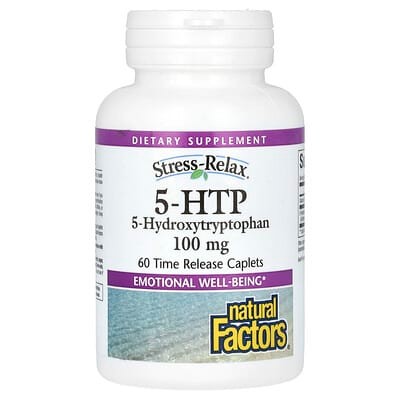
A standard 100 mg 5-HTP serving gives the formula a clear and focused role in serotonin-related mood and sleep support. The amount matches the practical middle ground represented in the supplied goal analyses without pushing into a high-strength serving.
Griffonia simplicifolia is identified as the source, although no active standardization percentage is supplied. The tablet(s) format is convenient, but it does not add a disclosed release or absorption feature.
The small calcium addition does not materially broaden the product’s main purpose. Value is reasonable for a focused 5-HTP serving. It best fits adults seeking a straightforward middle-dose option for mood or sleep support.
The Griffonia source and time-release design are useful, though extract standardization is absent. The 5-HTP amount matches a common standard serving, while missing extract standardization limits source-potency confidence.
Every listed active amount is disclosed, and no proprietary blend hides dosing. Complete directions, inactive ingredients, and some source or standardization details remain unavailable.
The aggregate rating is favorable, and the very large review count makes it stable. No detailed feedback is supplied, so repeated complaints and purpose fit cannot be judged.
A standard amount and time-release design provide good practical value. Dicalcium phosphate adds little nutritional value, and extract standardization is missing.

The time-release caplet supplies a standard, clearly disclosed amount. It provides 100 mg of 5-HTP from Griffonia simplicifolia for a defined sleep-related pathway.
The extract lacks standardization and sleep-specific evidence is less consistent than for direct circadian support. 5-HTP can dangerously raise serotonin activity with SSRIs, MAO inhibitors, or other serotonin-modulating medicines.

5-HTP is a direct serotonin precursor with plausible mood relevance, and the 100 mg amount provides a commonly used introductory serving. Human evidence for mood improvement is limited by small and inconsistent trials, so it should not be treated as a substitute for established care.
The Griffonia source and exact active amount are clearly disclosed, while added calcium has no meaningful mood role. Combining 5-HTP with SSRIs, SNRIs, MAO inhibitors, tramadol, or other serotonergic drugs can raise the risk of serotonin toxicity.

Time-release 5-HTP may support appetite control and carbohydrate-craving management through serotonin production.
The 100 mg amount is clearly disclosed and the time-release caplet provides a focused delivery approach. People using SSRIs, MAO inhibitors, or other serotonin-raising medicines should avoid combining them with 5-HTP without specific clinical guidance because serotonin can rise too far.

5-HTP may support emotional well-being through serotonin production, but it is not a direct or reliably proven stress-relief treatment. The 100 mg amount may be more useful for mood or sleep-related stress than for immediate calm.
Griffonia is named as the source, and the time-release format may provide steadier delivery. The extract lacks a standardization percentage, and combining 5-HTP with SSRIs, SNRIs, MAO inhibitors, tramadol, or other serotonin-raising drugs may increase the risk of serotonin toxicity.
| Ingredient | Amount per serving |
|---|---|
Calcium (Dicalcium Phosphate) | 70 mg |
5-HTP (Griffonia simplicifolia) | 100 mg |
Time-release delivery and the standard target dose make this a practical 5-HTP option. The Griffonia source is disclosed, but the lack of a standardization percentage leaves some uncertainty about extract consistency. The supplied label data do not show a warning for SSRIs or other serotonin-modulating medicines, which matters because combining them with 5-HTP may raise the risk of serotonin toxicity.
Published studies used for the product analysis and the top-ranked studies for each ingredient and goal.