
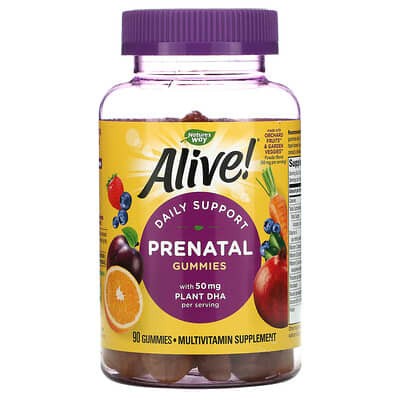
Nutrient quality
Folate, iodine, and basic vitamins provide partial prenatal coverage. Missing iron, low DHA and choline, conventional forms, and numerous undosed powders leave major weaknesses.
.
 Vitacost Vitacost | $ 21.73 | |
 Pure Formulas Pure Formulas | $ 16.83 | |
| Vitacost | $ 21.73 | |
 iHerb iHerb | $ 21.59 | |
 Walmart Walmart | $ 15.82 | |
 Amazon Amazon | $ 20.24 |
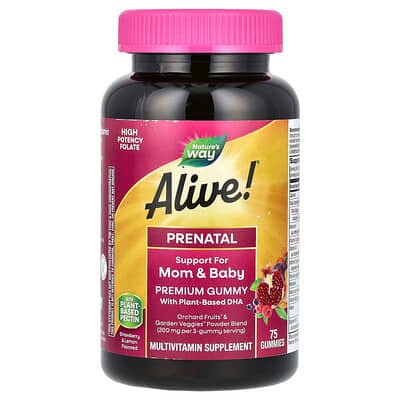
The three-gummy serving provides vitamin D3, folate, iodine, zinc, B vitamins, and 75 mg of algal DHA. It offers a fish-free omega source and more vitamin C than the standard version.
Iron is absent, and 22 mg choline remains far below a meaningful prenatal contribution. The 200 mg produce blend is divided among many ingredients, while 5 grams of added sugar reduces nutrient density.
The gummy format may help adherence, but the serving count and cost are less favorable than the simpler version. It best fits users who have separate plans for iron, choline, and additional DHA.
Folate, iodine, and basic vitamins provide partial prenatal coverage. Missing iron, low DHA and choline, conventional forms, and numerous undosed powders leave major weaknesses.
.Core nutrient and blend totals are stated, but individual produce-powder doses remain unavailable. Usage directions and non-active ingredients are absent, leaving label detail incomplete.
.The listed average rating is favorable and supported by a large review count. Specific feedback is missing, so repeated complaints and prenatal-use experience remain uncertain.
.The larger produce blend does not address the missing iron or low DHA and choline. Added sugar and a short serving count make the premium positioning difficult to justify.
.
The prenatal gummy supplies B vitamins, iodine, and other nutrients involved in normal energy metabolism, but it is not a targeted fatigue or stamina formula. The B12 amount remains modest for energy-focused supplementation despite broader prenatal coverage.
No stimulant, direct mitochondrial specialty active, or adaptogen provides a second energy pathway. Added sugar and a large fruit-and-vegetable blend create broad label appeal without disclosed functional amounts for its many components.
| Ingredient | Amount per serving |
|---|---|
Calories | 35 Calorie(s) |
Total Carbohydrates | 8 Gram(s) |
Total Sugars | 5 Gram(s) |
Added Sugars | 5 Gram(s) |
Vitamin A | 650 mcg |
Vitamin C | 120 mg |
Vitamin D3 | 22.5 mcg |
Vitamin E | 19 mg |
Thiamine | 0.7 mg |
Riboflavin | 0.8 mg |
Niacin | 18 mg |
Vitamin B6 | 3 mg |
Folate | 600 mcg DFE |
Folic Acid | 360 mcg |
Vitamin B12 | 4.2 mcg |
Biotin | 35 mcg |
Pantothenic Acid | 3.5 mg |
Choline | 22 mg |
Iodine | 290 mcg |
Zinc | 3.3 mg |
Sodium | 30 mg |
Orchard Fruits & Garden Veggies Powder Blend | 200 mg |
Orange powder | 0 NP |
Blueberry powder | 0 NP |
Carrot powder | 0 NP |
Plum powder | 0 NP |
Pomegranate powder | 0 NP |
Strawberry powder | 0 NP |
Pear powder | 0 NP |
Apple powder | 0 NP |
Beet, Powder | 0 NP |
Raspberry powder | 0 NP |
Pineapple, Powder | 0 NP |
Pumpkin powder | 0 NP |
Cherry powder | 0 NP |
Cauliflower powder | 0 NP |
Grape powder | 0 NP |
Banana powder | 0 NP |
Cabbage powder | 0 NP |
Tomato powder | 0 NP |
Acai powder | 0 NP |
Asparagus powder | 0 NP |
Brussels Sprout powder | 0 NP |
Cranberry, Powder | 0 NP |
Cucumber powder | 0 NP |
Pea powder | 0 NP |
Broccoli powder | 0 NP |
Spinach, Powder | 0 NP |
Docosahexaenoic Acid | 75 mg |
The potassium iodide form provides a transparent 290 mcg dose that is well aligned with routine iodine support. The three-gummy serving remains below the upper intake level, but its added sugar and broad nutrient blend make it less efficient than a focused iodine product. Its per-serving cost is moderate without the specified selenium or L-tyrosine cofactors that would justify a value boost.
The folate amount is in the preferred daily range and is transparently shown in dietary folate equivalents. Synthetic folic acid offers lower biological readiness than methylfolate, while the vitamin B12 amount remains below the preferred co-supplementation level. The serving cost is near the collection median and provides limited folate-specific value for a basic form.
Choline form quality cannot be assessed because the chemical source is not disclosed. The clearly stated 22 mg amount is too low for meaningful standalone support. A three-unit serving adds burden, but value is poor for the choline delivered.
Published studies used for the product analysis and the top-ranked studies for each ingredient and goal.