
Nutrient quality
A substantial ashwagandha amount supports the intended use. Missing standardization and duplicated totals reduce quality confidence.
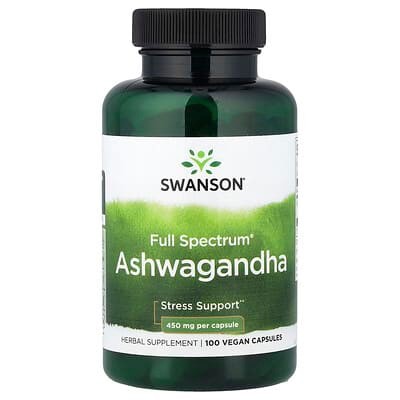
.
 iHerb iHerb | $ 11.09 | |
| iHerb | $ 11.09 | |
 Amazon Amazon | $ 7.79 |
The serving provides ashwagandha reported as two separate 900 mg entries. The title says 450 mg while the ingredient data repeat 900 mg twice, creating a major dose conflict.
Ashwagandha is commonly used to support stress-related well-being and may also fit sleep or mood goals.
Plant part, extract status, and withanolide standardization are also absent, so both identity and potency remain uncertain. Safety considerations are important because the herb may cause drowsiness or stomach upset and can interact with several health conditions and medicines.
A substantial ashwagandha amount supports the intended use. Missing standardization and duplicated totals reduce quality confidence.
.The label provides an ashwagandha amount. Duplicate totals and missing form detail make the dose difficult to interpret.
.The supplied average rating is very strong. No specific review comments were supplied, so repeated negative experiences cannot be assessed.
.A low serving cost and substantial listed amount provide strong value. Duplicate totals and unspecified potency are meaningful trade-offs.
.
Ashwagandha directly supports the stress-management side of testosterone support, and the stated daily amount may be useful. Human evidence is promising, but the label does not identify the plant part, extract ratio, or withanolide level.
The single-ingredient design is focused and avoids filler, yet it does not cover foundational nutrient or free-hormone pathways. Potency uncertainty keeps it from being a more dependable choice for this goal.

Ashwagandha is directly relevant to stress relief because it may support the body's adaptation to ongoing pressure and help moderate the stress response. Human evidence is reasonably supportive, though benefits depend on the extract and dose used.
The daily amount is disclosed, but the label does not identify the plant part, extract type, or withanolide standardization. A focused single-ingredient formula avoids unnecessary additions, yet its uncertain potency makes the likely stress-relief contribution hard to predict.

Ashwagandha may support a steadier mood by helping the body manage stress, but it does not directly supply neurotransmitter precursors or broad brain nutrients. Human evidence is more consistent for stress reduction than for mood regulation itself.
The daily amount is clearly listed, yet the label omits the plant part, extract type, and withanolide standardization. A focused formula avoids unnecessary ingredients, but unclear potency limits confidence in how reliably it may affect mood.

Ashwagandha may support fitness indirectly through stress adaptation and recovery rather than through a direct power or endurance pathway. Evidence for athletic benefits is promising but less established than for core performance ingredients such as creatine.
The daily amount is clearly stated, yet the label does not identify the plant part, extract type, or standardization. A focused single-ingredient formula avoids unnecessary padding, but the unclear potency limits confidence that it will make a meaningful training contribution.

Ashwagandha may support cognition indirectly by easing stress-related mental fatigue and brain fog. The clearly stated daily amount gives the formula a plausible foundation, but the lack of a standardized extract limits confidence in its strength.
The single-ingredient approach is focused and free from obvious padding. However, it covers only the stress pathway and does not provide direct support for memory, neurotransmitters, or cerebral circulation.

Ashwagandha may support general well-being through stress adaptation, but it does not fill common nutrient gaps or cover several foundational health systems. Evidence is more relevant to stress-related outcomes than to broad long-term health maintenance.
The daily amount is clearly disclosed, yet the label leaves the plant part, extract type, and withanolide content unknown. A simple single-ingredient formula avoids unnecessary padding, but its narrow coverage and uncertain potency limit its value as a general health foundation.
| Ingredient | Amount per serving |
|---|---|
Ashwagandha | 900 mg |
The label provides a clearly stated daily amount but does not identify the plant part or a standardized extract, leaving potency and extract quality uncertain. The daily amount falls just below the usual range for plain root powder, and no absorption aid is included. Its low cost offers basic value, though the limited ingredient detail makes effectiveness harder to judge.
Published studies used for the product analysis and the top-ranked studies for each ingredient and goal.