
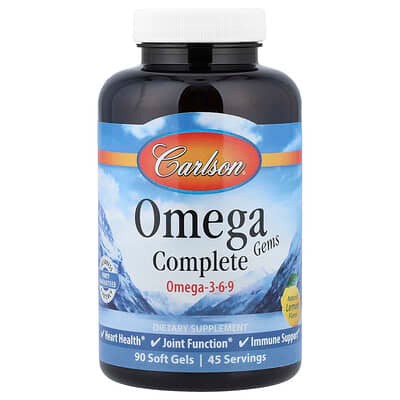
Nutrient quality
The mixed fish and borage oils offer broad fatty-acid coverage, but the omega-3 amount is modest and molecular-form details are incomplete. Prominent vitamin E and secondary fats add breadth without strong targeted depth.
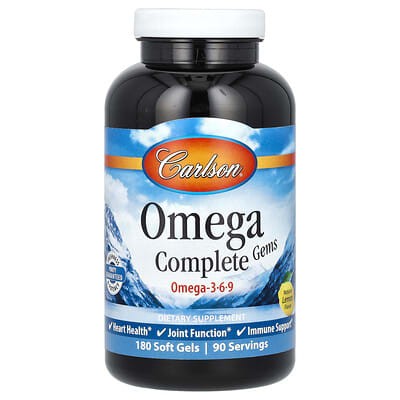
 iHerb iHerb | $ 68.00 |
EPA and DHA provide direct marine omega-3 support, while borage oil adds omega-6 fatty acids and oleic acid broadens the lipid profile. Vitamin D may support general cardiovascular health, but the formula is less focused than a concentrated EPA-and-DHA product.
Individual fatty-acid amounts are listed, which improves transparency. The EPA and DHA molecular forms are not shown, gamma-linolenic acid is not quantified separately, and the vitamin E amount is high enough to shape the safety profile.
Adults specifically seeking a mixed fatty-acid formula may appreciate the all-in-one design. Those taking blood thinners or already using vitamin D or vitamin E should avoid unnecessary overlap and consider a simpler fish oil.
The mixed fish and borage oils offer broad fatty-acid coverage, but the omega-3 amount is modest and molecular-form details are incomplete. Prominent vitamin E and secondary fats add breadth without strong targeted depth.
EPA and DHA have amounts, but GLA and several source details are not quantified clearly. Blank entries, missing daily directions, and absent inactive ingredients weaken transparency.
The supplied aggregate rating is favorable and supported by a useful review volume. Detailed feedback is unavailable, so repeated complaints and fit with the intended use cannot be judged.
The formula provides weak practical value for its key fatty-acid content. Secondary fats, hidden blends, or limited target depth weaken category competitiveness.

Clearly disclosed EPA and DHA provide direct lipid and inflammatory support with strong human evidence. The combined active amount is a low daily dose rather than a therapeutic triglyceride-focused serving, while the added omega-6 does not strengthen the cardiovascular purpose.
The oil source is named, but molecular form, purification method, and independent testing are not disclosed. Vitamin E helps protect the oil from oxidation, yet the formula needs more EPA and DHA for deeper cardiovascular contribution.
| Ingredient | Amount per serving |
|---|---|
Calories | 30 Calorie(s) |
Total Fat | 3 Gram(s) |
Protein | 1 Gram(s) |
Vitamin D | 50 mcg |
Vitamin E | 134 mg |
Norwegian Fish Oil concentrate | 666 mg |
Total Omega-3 Fatty Acids | 400 mg |
Eicosapentaenoic Acid | 266 mg |
Docosahexaenoic Acid | 134 mg |
Omega-6 Fatty Acids | 400 mg |
Oleic Acid | 300 mg |
Norwegian fish oil and borage seed oil provide identifiable sources, but extraction methods are not listed. A 300 mg oleic acid serving offers solid potency with direct label disclosure. D-alpha tocopherol supports oxidation stability, and cost efficiency is good for the delivered amount.
Borage seed oil provides a recognized GLA source, but the label reports only total omega-6 rather than the GLA amount. The serving supplies a meaningful omega-6 amount, while the missing extraction method leaves processing quality uncertain. The two-softgel serving has moderate cost efficiency and does not provide a complete fatty-acid breakdown.
EPA makes up a moderate share of the oil and clearly exceeds DHA, but the molecular form is not identified. The EPA amount is meaningful rather than high for targeted use. Vitamin E offers limited oxidation protection, while contaminant testing is not stated.
Published studies used for the product analysis and the top-ranked studies for each ingredient and goal.