
Nutrient quality
An EPA-forward maintenance dose from named small fish gives the formula clear purpose. Missing molecular-form, antioxidant, purification, and testing details limit quality confidence.
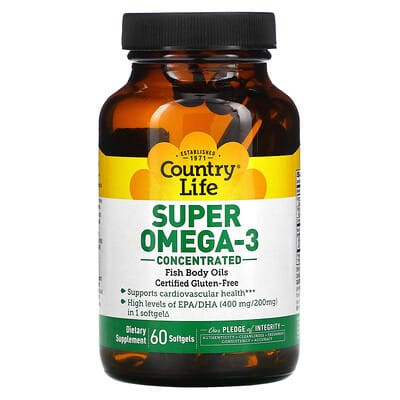
.
 iHerb iHerb | $ 17.09 |
The formula supplies 400 mg EPA and 200 mg DHA per serving, giving a meaningful omega-3 dose. Both key omega-3s are quantified, so the active amount is easy to assess.
The serving fits people who want a moderate daily omega-3 amount for anti-inflammatory support and cardiovascular support. The amount of active omega-3 provided per serving also compares favorably with the product cost.
The label does not identify the omega-3 molecular form or provide independent purity and oxidation test results, so important quality details remain uncertain. The softgel(s) format may be convenient for routine use, but the disclosed facts do not establish freshness or contaminant control.
An EPA-forward maintenance dose from named small fish gives the formula clear purpose. Missing molecular-form, antioxidant, purification, and testing details limit quality confidence.
.Active amounts are individually disclosed, and no proprietary blend hides the supplied doses. Complete use directions, excipients, and some source or quality details remain unavailable.
.Supplied aggregate data indicate very strong satisfaction with a moderate response base. Specific comments are absent, so recurring complaints and purpose-specific experiences cannot be verified.
.Useful potency and named small-fish sourcing support good value. Missing quality verification prevents a stronger premium case.
.
EPA and DHA provide targeted support for triglyceride management and inflammatory balance. The combined amount is useful, though lower than high-potency fish-oil formulas.
EPA, DHA, total oil, and fish species are clearly disclosed. Fish-derived oil can trigger an allergic reaction in people with fish allergy, and higher-dose use warrants attention with anticoagulant or antiplatelet therapy.

EPA and DHA provide a clear maintenance amount for pro-resolving inflammatory pathways. Small-fish sourcing is a useful quality feature, and the active concentration is respectable.
The amount is less intensive than stronger anti-inflammatory fish-oil servings. Molecular form, purification, antioxidant protection, and independent testing are not disclosed.
| Ingredient | Amount per serving |
|---|---|
Calories | 10 Calorie(s) |
Total Fat | 1 Gram(s) |
Polyunsaturated Fat | 1 Gram(s) |
Cholesterol | 5 mg |
Marine Lipid Oil concentrate | 1000 mg |
Eicosapentaenoic Acid | 400 mg |
Docosahexaenoic Acid | 200 mg |
The molecular form is unspecified; ePA density is moderately concentrated, and no protective antioxidant is listed. The serving provides a standard EPA amount with a clearly EPA-centric ratio. No purification or third-party verification is shown, while normalized cost is favorable.
Small-fish sourcing is a strength, but molecular form and purification are not disclosed. EPA and DHA are transparent at a maintenance dose and high concentration. Active-dose value is good, though no antioxidant stabilizer is shown.
The DHA chemical form is not identified, leaving bioavailability uncertain. The 200 mg DHA serving is below the collection's moderate-dose threshold. No protective antioxidant is listed, and anchovy, mackerel, and sardine oil lacks explicit third-party purity verification.
Published studies used for the product analysis and the top-ranked studies for each ingredient and goal.