

$26.34 $0.87 per serving

Product analysis
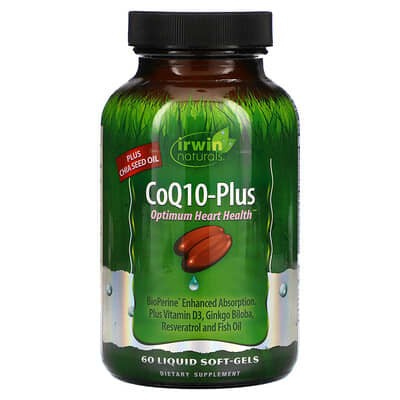
CoQ10-Plus combines CoQ10 with plant extracts and fish-oil fats for possible support of heart-related functions. The small amounts of several added ingredients and unclear preparations limit what the broader mix can be expected to contribute.
AI assessment of the formula, label and price. How scoring works
Nutrient Quality20
Most preparations are not identified clearly enough to compare ingredient quality. The mixed ingredient description also leaves uncertainty about the full composition.
Ingredient Transparency66
Many amounts are stated, but some ingredients are grouped in a mixed description without a clear individual breakdown. Most precise forms are missing, although some component proportions are disclosed.
Value For Money29
The cost looks high for the amounts of CoQ10, EPA and DHA supplied. Value from several other ingredients remains uncertain, so the broad mix does not establish an economical purchase.
Customer Satisfaction74
Customer ratings are very favorable. The modest feedback volume gives a limited view of satisfaction without proving heart or cognitive benefits.
Product Focus41
The clearest possible contribution concerns selected heart-related markers from CoQ10. The many wider aims around energy, attention and brain health have mixed support or rely on small ingredient amounts.
- Format
Softgel - Container
- 60 Liquid(s)
- Per serving
- $0.87
- Customer rating
- 4.8 · 133 ratings
Goals

Impact
Moderate effect
Vitamin D · 25 mcgFish Oil · 700 mgCoenzyme Q-10 · 100 mg
CoQ10 supports mitochondrial processes and has limited preparation-specific evidence for fatigue. The 100 mg declaration lacks a specified redox form, so its match to researched ubiquinone or ubiquinol remains uncertain.
Vitamin D findings concern deficient adults rather than reliable routine energy improvement. Fish oil adds no established fatigue benefit simply from its 700 mg total mass.
How this product is rated for Energy
Ingredient fit39
The ingredients provide a partial connection to energy support, with amounts considered separately from normal nutrient roles.
Goal fit
The relevant ingredients sit within a formula with several intended uses, giving a partial specific match to energy support.
Dose adequacy
The assessed amounts provide a partial match to the saved exposure comparisons.
Pathways8
The strongest connection in the saved findings is mitochondrial energy production, with partial coverage.
Depth
The strongest connection in the saved findings is mitochondrial energy production, with partial coverage.
Breadth
None of the specified energy mechanisms reaches the saved coverage threshold.
Evidence86
The saved evidence finding is led by the assessed ingredients, with limits related to nutritional status and preparation identity.
Evidence strength
Vitamin D leads the saved evidence comparison among ingredients meeting the amount criterion. The expected benefit remains limited by nutritional status or the research scope.
Studied preparation
Preparation matching is incomplete in the saved findings, including Coenzyme Q-10.
Formulation logic100
The saved assessment flags no missing required partners or ingredient conflicts; some amounts may still be small or unresolved.
Partner coverage
The assessed ingredients can stand alone or have the partners required by the saved assessment.
Conflicts
No configured ingredient conflicts were flagged.
Effective doses
2 of 2 assessed ingredients meet the saved minimum amount criterion. Meeting that criterion does not establish an energy benefit.

Impact
Lower effect
Coenzyme Q-10 · 100 mgVitamin D · 25 mcg

Impact
Moderate effect
Vitamin D · 25 mcgCoenzyme Q-10 · 100 mgFish Oil · 700 mgHawthorn · 200 mg
CoQ10-Plus lists 100 mg CoQ10, 200 mg hawthorn extract, and 126 mg EPA per serving, with the clearest route through endothelial nitric-oxide function. DHA and resveratrol are below the amounts counted here, and many other actives are outside this goal. Marker support does not establish event prevention.
How this product is rated for Cardiovascular Support
Ingredient fit48
CoQ10, hawthorn, and EPA are among the relevant actives, but many other ingredients are outside this cardiovascular goal.
Goal fit
Several active ingredients connect to this goal, while nine other actives and many linked goals dilute focus.
Dose adequacy
The amounts counted here are disclosed; DHA and resveratrol are below their minimum comparison amounts.
Pathways53
Endothelial nitric-oxide function has the clearest support, with only partial triglyceride and vascular-tone coverage.
Depth
Nitric-oxide function is the most covered route, led by CoQ10.
Breadth
Only nitric-oxide function reaches the level needed to count as covered.
Evidence88
CoQ10 has the strongest evidence among the counted ingredients, and their forms are represented in studies.
Evidence strength
CoQ10 has the strongest evidence here, but stronger evidence is available for another ingredient in this goal.
Studied preparation
Four ingredients at relevant amounts use forms represented in studies.
Formulation logic100
The ingredients counted for this goal work alone or with their partners, and no conflict trigger is matched.
Partner coverage
Each ingredient counted for this goal works alone or has its needed partner.
Conflicts
The saved ingredients trigger no cardiovascular conflict penalty.
Effective doses
All four ingredients counted for this goal reach the minimum amounts used here.

Impact
High effect
Coenzyme Q-10 · 100 mgEPA (Eicosapentaenoic Acid) · 126 mgVitamin D · 25 mcg
Coenzyme Q10 has limited evidence for vascular, blood-pressure and lipid markers in small, selected populations. Its declared active amount provides the main relevant contribution here, without establishing a superior delivery form or fewer cardiovascular events. Hawthorn's specific clinical extract findings do not establish the same effects for this preparation.
How this product is rated for Heart Health
Ingredient fit50
The relevant ingredient identities and declared amounts determine their contribution; a broader formula does not establish broader heart benefits.
Goal fit
Relevant ingredients sit within a broader formula that also serves other purposes.
Dose adequacy
The declared amounts give partial exposure coverage, with some contributing less than others compared with the supplied reference amounts.
Pathways57
The main represented route is endothelial nitric-oxide function, with limited breadth beyond it.
Depth
The strongest represented route is endothelial nitric-oxide function; its biological connection does not itself establish fewer cardiovascular events.
Breadth
Endothelial nitric-oxide function is substantially represented; other routes have limited or absent coverage.
Evidence98
The evidence concerns specific vascular markers and selected populations, with limited inference about routine prevention.
Evidence strength
Coenzyme Q-10 supplies the leading evidence contribution, restricted to its relevant population and measured outcome.
Studied preparation
The contributing preparations are accepted as studied in the supplied findings, without establishing that this product reproduces a complete trial regimen.
Formulation logic100
The contributing ingredients have no missing required partners or configured conflicts.
Partner coverage
The contributing ingredients do not have missing required partners in the supplied findings.
Conflicts
No configured ingredient conflict was identified in the supplied facts.
Effective doses
All contributing ingredients meet the saved minimum amount criterion; this does not make that criterion a proven clinical dose.
DHA (Docosahexaenoic Acid) Not classified
No linked studies yet.

Impact
Moderate effect
Vitamin D · 25 mcg
Ginkgo at 120 mg has mixed findings for attention and concentration. DHA and EPA evidence concerns repeated intake rather than immediate focus, while vitamin D's nutritional role does not establish sharper attention when needs are met.
How this product is rated for Mental Focus
Ingredient fit49
Focus share 26.7 from 2 credited ingredients and 11 off-goal actives (Capsicum, Chia Oil, Citrus (unspecified), Coenzyme Q-10, Fish Oil, Flavonoid, Ginger, Hawthorn, Hibiscus, Resveratrol, Triterpene (unspecified)); link focus 48.1 from 11 linked goals. Goal focus = 70% × share + 30% × link focus The saved amount assessment is moderate; unresolved individual amounts limit the assessed contribution.
Goal fit
Focus share 26.7 from 2 credited ingredients and 11 off-goal actives (Capsicum, Chia Oil, Citrus (unspecified), Coenzyme Q-10, Fish Oil, Flavonoid, Ginger, Hawthorn, Hibiscus, Resveratrol, Triterpene (unspecified)); link focus 48.1 from 11 linked goals. Goal focus = 70% × share + 30% × link focus
Dose adequacy
The saved amount assessment is moderate; unresolved individual amounts limit the assessed contribution.
Pathways44
The strongest assessed area is cerebral energy supply, with moderate coverage. 1 of 3 target areas meet the saved coverage threshold.
Depth
The strongest assessed area is cerebral energy supply, with moderate coverage.
Breadth
1 of 3 target areas meet the saved coverage threshold.
Evidence69
Vitamin D is the strongest evidence contributor at an eligible amount in the saved findings. The eligible ingredients match preparations accepted in the saved assessment.
Evidence strength
Vitamin D is the strongest evidence contributor at an eligible amount in the saved findings.
Studied preparation
The eligible ingredients match preparations accepted in the saved assessment.
Formulation logic100
The assessed ingredients can contribute alone or have their required partners. No configured ingredient conflicts were identified in the supplied facts. 2 of 2 assessed ingredients meet the saved minimum amount threshold.
Partner coverage
The assessed ingredients can contribute alone or have their required partners.
Conflicts
No configured ingredient conflicts were identified in the supplied facts.
Effective doses
2 of 2 assessed ingredients meet the saved minimum amount threshold.
DHA (Docosahexaenoic Acid) Not classified
No linked studies yet.

Impact
Moderate effect
Vitamin D · 25 mcg
DHA contributes to normal brain function and supplies part of nerve-cell structure. The declared 84 mg is a modest nutritional contribution and is too low to count in the saved findings. Ginkgo has not reliably slowed cognitive decline, while the small resveratrol amount and vitamin D provide no established broad cognitive enhancement.
How this product is rated for Brain Health
Ingredient fit49
The saved findings recognize several relevant ingredients, alongside a broader set of actives that makes the formula less focused on brain health.
Goal fit
The saved findings recognize several relevant ingredients, alongside a broader set of actives that makes the formula less focused on brain health.
Dose adequacy
Declared amounts provide partial support against the saved benchmarks, rather than establishing a proven effective cognitive dose.
Pathways43
The saved findings concentrate on brain energy metabolism; this assigned connection is not proof of improved cognition. Only one assessed process reaches substantial coverage, leaving the overall connection narrow.
Depth
The saved findings concentrate on brain energy metabolism; this assigned connection is not proof of improved cognition.
Breadth
Only one assessed process reaches substantial coverage, leaving the overall connection narrow.
Evidence80
Vitamin D leads the saved evidence comparison, although the supplied context does not support broad cognitive enhancement in unselected adults.
Evidence strength
Vitamin D leads the saved evidence comparison, although the supplied context does not support broad cognitive enhancement in unselected adults.
Studied preparation
The included preparations are accepted in the saved findings, without implying a superior nutrient form or broad cognitive benefit.
Formulation logic100
No required ingredient partner is missing. No assessed ingredient conflict was found.
Partner coverage
Included ingredients have no required partner missing in the saved findings.
Conflicts
No assessed ingredient conflict was found.
Effective doses
All included ingredients meet the saved minimum amount for inclusion; this is not a universal effective cognitive dose.
DHA (Docosahexaenoic Acid) Not classified
No linked studies yet.
Ingredients
| Ingredient | Amount per serving | Score |
|---|---|---|
Calories | 15 Calorie(s) | |
Total Fat | 1 Gram(s) | |
Cholesterol | 5 mg | |
Total Carbohydrates | 1 Gram(s) | |
Protein | 1 Gram(s) | |
Vitamin D3 (Cholecalciferol) | 25 mcg | |
Fish Oil (Anchovy, Sardine) | 700 mg | |
Eicosapentaenoic Acid | 126 mg | |
Docosahexaenoic Acid | 84 mg | |
Hawthorn Berry Extract (Crataegus oxyacantha Berry Extract) | 200 mg | |
Ginkgo leaf extract | 120 mg | |
Chia Seed Oil | 100 mg | |
Coenzyme Q-10 | 100 mg | |
Cayenne, Powder | 60 mg | |
Gotu Kola Whole Herb Extract | 60 mg | |
Triterpenes | 6 mg | |
Citrus (Citrus spp.) fruit extract | 50 mg | |
Bioflavonoids | 25 mg | |
Hibiscus Flower Extract (Hibiscus sabdariffa Flower Extract) | 50 mg | |
Resveratrol (Japanese Knotweed root extract) | 10 mg | |
BioPerine Complex | 6 mg | |
BioPerine (Black Pepper Fruit Extract) | 0 NP | |
Ginger Rhizome Extract (Gingerols) | 0 NP |
Coenzyme Q-10 · 100 mg OverallScore32
A serving provides 100 mg of CoQ10. The evaluation flags an additive of concern, but the saved facts do not identify it.
How this ingredient is rated
Active Ingredient Quality & Bioavailability28
The CoQ10 form is not identified in the saved facts. An absorption enhancer is also recorded.
Molecular Form: Ubiquinol vs. Ubiquinone
The saved facts do not identify whether the CoQ10 is ubiquinol or ubiquinone, so form-specific absorption cannot be assessed.
Formulation & Absorption Enhancers
The evaluation records black pepper extract or BioPerine as an absorption enhancer; its effect is not independently established.
Dose, Safety & Label Transparency42
The 100 mg amount is stated, but an additive is flagged by the evaluation.
Clinical Dosage Alignment
The recorded amount is 100 mg of CoQ10 per serving.
Label Transparency & Fillers
The CoQ10 amount is stated, but the evaluation flags an additive of concern that is not identified in the saved facts.
Value20
The whole-product serving costs about $0.88, a high price in the comparison.
Price Per Effective Serving
The whole-product serving costs about $0.88, a high price in the comparison.
Flavonoid · 25 mg OverallScore53
Each serving declares 25 mg of flavonoid ingredient. The whole-product price works out to about $3.51 per 100 mg of that declared ingredient, relatively high for the amount.
How this ingredient is rated
Active Ingredient Quality & Bioavailability35
The flavonoid preparation and active-marker concentration are not established in the available facts. A secondary absorption-enhancing ingredient is identified, without establishing its effect on flavonoids.
Standardization and Active Marker Disclosure
The available facts do not establish a flavonoid marker percentage, extract ratio, or raw-powder source.
Bioavailability and Delivery Technology
The evaluation identifies a secondary absorption-enhancing ingredient; its effect on flavonoid absorption is not established here.
Dose, Safety & Label Transparency82
The declared flavonoid ingredient amount is 25 mg per serving; it does not establish individual compound amounts.
Declared Flavonoid Ingredient Amount
Each serving declares 25 mg of flavonoid ingredient.
Label Transparency and Blend Clarity
The 25 mg aggregate amount per serving is disclosed; individual flavonoid amounts are not established.
Value30
The whole-product price works out to about $3.51 per 100 mg of declared flavonoid ingredient.
Price per 100mg Declared Flavonoid Ingredient
The whole-product price works out to about $3.51 per 100 mg of declared flavonoid ingredient.
Ginkgo · 120 mg OverallScore50
Each serving lists 120 mg of ginkgo leaf extract. The available facts do not include flavone or terpene percentages, limiting comparison of extract composition.
How this ingredient is rated
Composition and Label Disclosure0
The available facts do not include flavone or terpene percentages, limiting comparison of extract composition. No matching ginkgolic-acid limit is recorded in the available facts.
Marker and Preparation Disclosure
The available facts do not include flavone or terpene percentages, limiting comparison of extract composition.
Declared Ginkgolic Acid Limit
No matching ginkgolic-acid limit is recorded in the available facts; its concentration remains unknown.
Composition and Label Disclosure100
Each serving lists 120 mg of ginkgo leaf extract.
Individual Preparation Amount Disclosure
Each serving lists 120 mg of ginkgo leaf extract.
Commercial Price and Usability
No price comparison is included in the evaluation.
Alternative products
Report alternatives
Sources
Published studies used for the product analysis and the top-ranked studies for each ingredient and goal.
- Efficacy and adverse effects of ginkgo biloba for cognitive impairment and dementia: a systematic review and meta-analysis.
- Efficacy of Ginkgo biloba extract EGb 761® in dementia with behavioural and psychological symptoms: A systematic review.
- Ginkgo biloba extract EGb 761 is safe and effective in the treatment of mild dementia - a meta-analysis of patient subgroups in randomised controlled trials.
- Ginkgo biloba extract EGb 761® improves cognition and overall condition after ischemic stroke: Results from a pilot randomized trial.
- Ginkgo biloba extract EGb 761® in dementia with neuropsychiatric features: a randomised, placebo-controlled trial to confirm the efficacy and safety of a daily dose of 240 mg.
- Vitamin D and brain health: an observational and Mendelian randomization study.
- The association between vitamin D and cognition: a systematic review.
- Vitamin D Status and Rates of Cognitive Decline in a Multiethnic Cohort of Older Adults.
- Vitamin D insufficiency and cognitive impairment in Asians: a multi-ethnic population-based study and meta-analysis.
- Vitamin D status predicts new brain magnetic resonance imaging activity in multiple sclerosis.
- Effects of Coenzyme Q10 Supplementation on Lipid Profiles in Adults: A Meta-analysis of Randomized Controlled Trials.
- Six-month supplementation with high dose coenzyme Q10 improves liver steatosis, endothelial, vascular and myocardial function in patients with metabolic-dysfunction associated steatotic liver disease: a randomized double-blind, placebo-controlled trial.
- The effect of coenzyme Q10 on morbidity and mortality in chronic heart failure: results from Q-SYMBIO: a randomized double-blind trial.
- [Coenzyme Q-10 in the treatment of patients with chronic heart failure and reduced left ventricular ejection fraction: systematic review and meta-analysis].
- Effect of coenzyme Q10 in Europeans with chronic heart failure: A sub-group analysis of the Q-SYMBIO randomized double-blind trial.
- Marine Omega-3 Supplementation and Cardiovascular Disease: An Updated Meta-Analysis of 13 Randomized Controlled Trials Involving 127 477 Participants.
- Impact of omega-3 fatty acids on hypertriglyceridemia, lipidomics, and gut microbiome in patients with type 2 diabetes.
- A systematic review of fish-oil supplements for the prevention and treatment of hypertension.
- Effects of fish oil-derived fatty acids on suboptimal cardiovascular health: A multicenter, randomized, double-blind, placebo-controlled trial.
- Effect of High-Dose Marine Omega-3 Fatty Acids on Atherosclerosis: A Systematic Review and Meta-Analysis of Randomized Clinical Trials.