
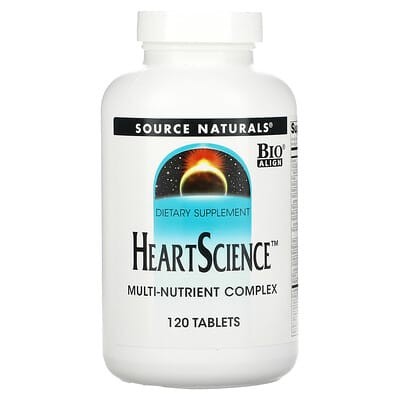

$41.36 $2.06 per serving


Product analysis
Heart Science supplies nutrients involved in normal heart and blood-vessel function, with benefits most plausible when dietary intake is low. Its broad mixture includes several ingredients below the amounts used for the more targeted benefits, making the combination harder to justify.
AI assessment of the formula, label and price. How scoring works
Nutrient Quality33
Vitamin B6 and selenium are clear strengths in ingredient form, while magnesium oxide compares less favorably for absorption. Unclear forms and mixed preparations limit conclusions about much of the remaining blend.
Ingredient Transparency65
Ingredient amounts are listed, but only about half of the forms are identified. Missing component proportions make the complex blends harder to judge.
Value For Money27
Most of the assessed ingredients provide weak value for the amount supplied. Paying for the broad mixture adds little value when the main interest is one targeted ingredient.
Customer Satisfaction70
Customer ratings are strongly positive. The size of the review pool affects how settled that picture is, and ratings do not establish effectiveness.
Product Focus0
The mixture has nutritional links to heart health, but its many additions spread it across a wide range of purposes. Several targeted ingredients do not match the amounts or preparations behind their suggested uses.
- Format
Tablet - Container
- 120 Tablet(s)
- Per serving
- $2.06
- Customer rating
- 4.6 · 159 ratings
Goals

Impact
High effect
Folate · 800 mcgVitamin B12 · 500 mcgMagnesium · 300 mgSelenium · 200 mcgTaurine · 500 mgVitamin C · 1000 mg
B vitamins supply nutrients used in normal energy metabolism and blood formation. Magnesium contributes to normal energy and mineral functions. Vitamin C, Selenium supply nutrients involved in normal immune and antioxidant functions. The nutritional contributions are most useful when intake is low; extra benefit with adequate intake is not established.
How this product is rated for Everyday Health
Ingredient fit60
Magnesium and the other relevant nutrients provide the main connection to general health. Additional actives make the formula less focused on this goal.
Goal fit
Relevant nutrients contribute to general health, alongside other actives with less direct support for this goal.
Dose adequacy
The relevant amounts provide partial nutritional contributions relative to the saved comparison amounts.
Pathways100
The strongest area is energy metabolism cofactors. Contributions also reach the saved coverage level across energy metabolism cofactors, one-carbon metabolism and blood formation, bone and mineral metabolism, antioxidant and immune defence.
Depth
The strongest supported area is energy metabolism cofactors, through the relevant nutrient contributions.
Breadth
The supported areas reaching the saved coverage level are energy metabolism cofactors, one-carbon metabolism and blood formation, bone and mineral metabolism, antioxidant and immune defence.
Evidence84
Magnesium provides the strongest supported contribution. The supplied context limits routine expectations to filling nutritional gaps rather than improving outcomes in adequately nourished adults.
Evidence strength
Magnesium provides the strongest supported contribution here; usefulness remains conditional on the relevant nutritional or population context.
Studied preparation
Some relevant preparations match the saved findings, while these do not: Coenzyme Q10, Taurine.
Formulation logic98
The relevant ingredients can contribute independently, and no configured conflict was found. Their presence together does not establish an added combination benefit.
Partner coverage
The relevant ingredients can contribute independently or have their required partners present; no extra combination benefit is established.
Conflicts
No configured ingredient conflict was identified in the supplied findings.
Effective doses
Some relevant ingredients fall below the saved amount threshold: Vitamin B3 (Niacin).
Coenzyme Q10 Not classified
No linked studies yet.

Impact
High effect
Coenzyme Q-10 · 60 mgFolate · 800 mcgMagnesium · 300 mgVitamin B12 · 500 mcgTaurine · 500 mg
B12 supports nerve function when deficiency is corrected, while vitamin C supports normal collagen formation when intake is inadequate. Magnesium's limited functional findings concern exercising older women, especially with low intake. Resveratrol has mixed cognition findings, and this preparation does not establish equivalence to the trans-resveratrol used in the positive postmenopausal-women trial.
How this product is rated for Longevity
Ingredient fit52
The ingredient focus and declared amounts provide a partial match to the saved references. The relevant roles remain limited to the specific outcomes described above.
Goal fit
The formula includes ingredients for other uses, leaving a mixed focus on aging-related outcomes.
Dose adequacy
The recognized amounts broadly approach the saved references, with remaining limitations in amount or preparation.
Pathways80
The strongest saved finding concerns antioxidant defence. The recognized breadth is limited across the other aging-related processes.
Depth
The strongest saved contribution concerns antioxidant defence, describing ingredient roles rather than proven slowing of aging.
Breadth
More than one pathway reaches the saved coverage threshold, without establishing benefits across every aging-related process.
Evidence97
Magnesium leads the saved evidence finding. The population, outcome and preparation limits described above still apply.
Evidence strength
Magnesium supplies the leading saved evidence finding, subject to its specific population and outcome limitations.
Studied preparation
The saved findings recognize preparation matches for qualifying ingredients, without extending the evidence to broader aging outcomes.
Formulation logic97
The recognized ingredients have their required partners or work independently, and no matched conflict was recorded. Amount limitations remain relevant.
Partner coverage
The recognized ingredients work independently or have their required partner; no extra combination benefit is established.
Conflicts
No matched ingredient conflict was recorded in the supplied calculation.
Effective doses
All recognized ingredients meet the saved amount threshold, a calculation reference rather than proof of anti-aging benefit.

Impact
Moderate effect
Vitamin C · 1000 mgResveratrol · 40 mgCopper · 750 mcgSelenium · 200 mcgProline · 400 mgN-Acetyl Glucosamine · 100 mgVitamin E · 20 mg
Vitamin C and copper contribute to normal collagen formation and structure, alongside lysine and proline as connective-tissue building blocks. CoQ10, selenium and resveratrol connect the blend to antioxidant defence, the strongest saved area. Preparation differences and unresolved vitamin amounts limit how directly the reviewed skin findings apply.
How this product is rated for Skin Health
Ingredient fit44
The relevant skin nutrients sit within a formula that also serves other purposes. The assessed amounts provide partial dose coverage.
Goal fit
The relevant skin nutrients sit within a formula that also serves other purposes.
Dose adequacy
The assessed amounts provide partial dose coverage.
Pathways50
The strongest saved contribution concerns antioxidant defence related to UV exposure, with substantial coverage. One skin pathway is substantially covered, giving a focused rather than broad contribution.
Depth
The strongest saved contribution concerns antioxidant defence related to UV exposure, with substantial coverage.
Breadth
One skin pathway is substantially covered, giving a focused rather than broad contribution.
Evidence95
Vitamin C provides the strongest evidence contribution among the assessed ingredients, within the reviewed outcome limits. Coenzyme Q-10, Lysine differs from the preparation used for the reviewed findings; other assessed preparations have better support.
Evidence strength
Vitamin C provides the strongest evidence contribution among the assessed ingredients, within the reviewed outcome limits.
Studied preparation
Coenzyme Q-10, Lysine differs from the preparation used for the reviewed findings; other assessed preparations have better support.
Formulation logic93
7 of 10 assessed ingredients reach meaningful amounts in the saved assessment. Below that level: Vitamin B3 (Niacin), Vitamin A, Vitamin E. No ingredient conflict was identified in the saved assessment.
Partner coverage
The assessed ingredients can contribute alone or have the relevant partner present.
Conflicts
No ingredient conflict was identified in the saved assessment.
Effective doses
7 of 10 assessed ingredients reach meaningful amounts in the saved assessment. Below that level: Vitamin B3 (Niacin), Vitamin A, Vitamin E.

Impact
High effect
Magnesium · 300 mgCoenzyme Q-10 · 60 mgVitamin B12 · 500 mcgVitamin B6 · 50 mgTaurine · 500 mgFolate · 800 mcg
Magnesium has a limited connection to blood-pressure support, with small and inconsistent effects. Its declared elemental amount contributes to the saved comparison. Particular forms do not establish a superior cardiovascular effect. Taurine has limited blood-pressure evidence in adults with prehypertension; this 500 mg serving is below the studied 1.6 g daily exposure. CoQ10 adds limited vascular evidence. Folate and B vitamins affect homocysteine without establishing fewer cardiac events, while generic hawthorn and small quercetin amounts do not reproduce the relevant clinical preparations or exposures.
How this product is rated for Heart Health
Ingredient fit55
Magnesium, taurine and CoQ10 provides relevant connections within a broader formula. Declared amounts and preparation identities vary in how well they match the supplied evidence.
Goal fit
The relevant ingredients share the formula with ingredients aimed at other goals.
Dose adequacy
The counted amounts meet the saved comparisons to differing degrees.
Pathways100
The saved findings span vascular lining function, vascular-tone balance and homocysteine clearance. This coverage does not establish event prevention.
Depth
Electrolyte and vascular-tone balance is a strongest tracked area, alongside homocysteine clearance.
Breadth
Vascular lining function, vascular-tone balance and homocysteine clearance reach the breadth comparison.
Evidence98
CoQ10 has limited selected-population evidence for vascular, blood-pressure and lipid measures, without establishing routine cardiovascular-event prevention.
Evidence strength
CoQ10 has limited selected-population evidence for vascular, blood-pressure and lipid measures, without establishing routine cardiovascular-event prevention.
Studied preparation
The saved findings accept the counted preparations, without demonstrating special benefits from their forms.
Formulation logic100
The counted ingredients need no additional partner for their saved contributions. No configured ingredient conflict was matched.
Partner coverage
The counted ingredients work alone or have the required partner in the saved findings.
Conflicts
No configured ingredient conflict was matched.
Effective doses
All counted ingredients reach the saved minimum amount comparison.

Impact
Moderate effect
Coenzyme Q-10 · 60 mgVitamin E · 20 mgTaurine · 500 mgVitamin C · 1000 mg
Vitamin C at 1000 mg and selenium at 200 mcg support antioxidant defenses, with smaller contributions from CoQ10 and other antioxidant ingredients. Bromelain at 500 mg and taurine at 500 mg add possible support through inflammation-related enzyme activity and signalling, although their human findings are context dependent.
Magnesium at 300 mg can help address inadequate intake, which can contribute to low-grade inflammation. The broad mixture does not make these contributions equally reliable, and several other ingredients are present in small amounts or preparations unlike those studied.
How this product is rated for Inflammation
Ingredient fit47
The formula serves many needs, so only part of it is focused on inflammation support. The relevant amounts provide a partial match to the supplied dose comparisons.
Goal fit
The formula serves many needs, so only part of it is focused on inflammation support.
Dose adequacy
The relevant amounts provide a partial match to the supplied dose comparisons.
Pathways60
Oxidative and mitochondrial stress is the main area of support, with strong coverage in the saved findings. The saved findings show meaningful coverage of 1 aspect of inflammation support.
Depth
Oxidative and mitochondrial stress is the main area of support, with strong coverage in the saved findings.
Breadth
The saved findings show meaningful coverage of 1 aspect of inflammation support.
Evidence83
Taurine provides the strongest relevant human evidence at the assessed amount, although practical benefits depend on context. Most qualifying ingredients match preparations represented in the supplied evidence; some preparation differences remain.
Evidence strength
Taurine provides the strongest relevant human evidence at the assessed amount, although practical benefits depend on context.
Studied preparation
Most qualifying ingredients match preparations represented in the supplied evidence; some preparation differences remain.
Formulation logic97
The assessed ingredients can contribute on their own or have their required partner present. No ingredient conflicts were identified in the saved assessment. Some assessed ingredients had small or undisclosed amounts, including Vitamin E.
Partner coverage
The assessed ingredients can contribute on their own or have their required partner present.
Conflicts
No ingredient conflicts were identified in the saved assessment.
Effective doses
Some assessed ingredients had small or undisclosed amounts, including Vitamin E.
N-Acetyl Glucosamine Not classified
No linked studies yet.

Impact
High effect
Arginine · 500 mgPotassium · 99 mgMagnesium · 300 mgCoenzyme Q-10 · 60 mgL-Carnitine · 400 mgSelenium · 200 mcgVitamin B12 · 500 mcgVitamin B6 · 50 mgVitamin E · 20 mgTaurine · 500 mgFolate · 800 mcgNiacin · 500 mgHawthorn · 200 mgVitamin C · 1000 mg
Magnesium may support vascular function, although trial results for blood pressure and arterial stiffness are inconsistent. Taurine has promising blood-pressure findings in adults with prehypertension, but its 500 mg per serving is below the 1.6 g daily study amount. CoQ10 offers limited vascular-marker support at a partial study exposure. Thiamin and selenium are relevant to deficiency-related heart function; B-vitamin homocysteine roles do not establish prevention of cardiovascular events.
How this product is rated for Cardiovascular Support
Ingredient fit55
The broad formula includes cardiovascular-related nutrients alongside many ingredients directed at other goals. Amounts provide uneven support; low or unresolved quantities limit several potential contributions.
Goal fit
The broad formula includes cardiovascular-related nutrients alongside many ingredients directed at other goals.
Dose adequacy
Amounts provide uneven support; low or unresolved quantities limit several potential contributions.
Pathways100
Vascular tone and sodium balance is the strongest route in the saved findings. Several routes receive substantial coverage, including vascular tone and sodium balance; these are functional or marker findings, not event-prevention evidence.
Depth
Vascular tone and sodium balance is the strongest route in the saved findings.
Breadth
Several routes receive substantial coverage, including vascular tone and sodium balance; these are functional or marker findings, not event-prevention evidence.
Evidence88
Taurine leads the saved evidence finding, based on limited prehypertension blood-pressure findings. The saved findings recognize preparations of ingredients with included amounts as studied; this does not make all forms or clinical outcomes interchangeable.
Evidence strength
Taurine leads the saved evidence finding, based on limited prehypertension blood-pressure findings.
Studied preparation
The saved findings recognize preparations of ingredients with included amounts as studied; this does not make all forms or clinical outcomes interchangeable.
Formulation logic96
Included ingredients have no missing required partners or listed formulation conflicts. Some unresolved amounts limit the amount finding.
Partner coverage
Included ingredients work independently or have the required partner; no additional combination benefit is established.
Conflicts
No listed formulation conflict was identified.
Effective doses
Most included ingredients meet the amount criterion; unresolved niacin and vitamin E quantities limit the remainder.
Ingredients
| Ingredient | Amount per serving | Score |
|---|---|---|
Calories | 30 Calorie(s) | |
Total Carbohydrate | 1 Gram(s) | |
Protein | 1 Gram(s) | |
Vitamin A (Beta-Carotene) | 25000 IU | |
Vitamin C (Ascorbic Acid) | 1000 mg | |
Vitamin E (D-Alpha-Tocopheryl Succinate, Gamma-Vitamin E Complex) | 400 IU | |
Thiamine | 50 mg | |
Nicotinic Acid (Inositol Hexanicotinate) | 500 mg | |
Vitamin B6 (Pyridoxal-5'-Phosphate, Pyridoxine Hydrochloride) | 50 mg | |
Folate (Folic Acid) | 800 mcg | |
Vitamin B12 (Dibencozide, Methylcobalamin) | 500 mcg | |
Magnesium (Magnesium Oxide) | 300 mg | |
Selenium (L-Selenomethionine) | 200 mcg | |
Copper (Copper Sebacic Acid Complex) | 750 mcg | |
Chromium | 300 mcg | |
Sodium | 20 mg | |
Potassium (Potassium Citrate) | 99 mg | |
L-Arginine HCl | 500 mg | |
Bromelain | 500 mg | |
L-Taurine | 500 mg | |
L-Carnitine Fumarate | 400 mg | |
L-Lysine HCl | 400 mg | |
L-Proline | 400 mg | |
Gamma-Vitamin E Complex | 400 mg | |
Hawthorn berry extract | 200 mg | |
Hawthorn Extract (Hawthorn Flower Extract, Hawthorn leaf extract) | 200 mg | |
Inositol (Inositol Hexanicotinate) | 140 mg | |
Proanthodyn (Grape seed extract) | 120 mg | |
N-Acetyl Glucosamine | 100 mg | |
Turmeric Rhizome Extract (Curcuminoids) | 100 mg | |
Soybean Isoflavone Concentrate | 100 mg | |
Trimethylglycine | 100 mg | |
Horsetail aerial parts extract (Silica) | 100 mg | |
Arjuna bark extract | 100 mg | |
Alpha-Lipioc Acid | 100 mg | |
Coenzyme Q10 | 60 mg | |
Garlic (Allicin) | 60 mg | |
Ginkgo leaf extract (Flavone Glycosides, Terpene Lactones) | 60 mg | |
Quercetin | 50 mg | |
GliSODin | 50 mg | |
Total Resveratrol (Polygonum cuspidatum Root Extract) | 40 mg | |
Nattokinase | 36 mg | |
Chinese Salvia root extract | 30 mg | |
Guggul Extract (Guggulsterones) | 30 mg | |
Myricetin (Bayberry bark extract, Bayberry Leaf Extract) | 25 mg | |
EVNolMax (Tocotrienol Complex) | 20 mg |
Selenium (L-Selenomethionine) · 200 mcg OverallScore82
Sources
Published studies used for the product analysis and the top-ranked studies for each ingredient and goal.
- The Association between Dietary and Circulating Copper Levels and Osteoporosis: a Scoping Review.
- Association between dietary copper, iron, zinc, selenium intake and osteopenia or osteoporosis in elderly hypertensive patients: a retrospective cohort study.
- Associations of dietary copper intake with total bone mineral density and lumbar spine bone mineral density in American adults.
- The association between dietary mineral intake and bone mineral density: a cross-sectional study.
- Association between dietary copper intake and bone mineral density in children and adolescents aged 8-19 years: A cross-sectional study.
- Association between RBC folate and lumbar bone mineral density in postmenopausal women, a cross-sectional study from NHANES 2009-2018.
- Genetic variants modify the associations of concentrations of methylmalonic acid, vitamin B-12, vitamin B-6, and folate with bone mineral density.
- Adequate Intake and Supplementation of B Vitamins, in Particular Folic Acid, can Play a Protective Role in Bone Health.
- Relation of homocysteine, folate, and vitamin B12 to bone mineral density of postmenopausal women.
- Dietary intake of folate, but not vitamin B2 or B12, is associated with increased bone mineral density 5 years after the menopause: results from a 10-year follow-up study in early postmenopausal women.
- Amino Acid Intakes Are Associated With Bone Mineral Density and Prevalence of Low Bone Mass in Women: Evidence From Discordant Monozygotic Twins.
- Dietary L-lysine and calcium metabolism in humans.
- Association between Serum Magnesium and Fractures: A Systematic Review and Meta-Analysis of Observational Studies.
- Bioabsorbable Magnesium-Based Materials Potential and Safety in Bone Surgery: A Systematic Review.
- Vascularized bone grafting fixed by biodegradable magnesium screw for treating osteonecrosis of the femoral head.
- An update on magnesium and bone health.
- Sex-specific differences in the association of magnesium intake with femoral neck bone mineral density among older adults.
- Effect of potassium citrate on bone density, microarchitecture, and fracture risk in healthy older adults without osteoporosis: a randomized controlled trial.
- Long-term persistence of the urine calcium-lowering effect of potassium bicarbonate in postmenopausal women.
- Partial neutralization of the acidogenic Western diet with potassium citrate increases bone mass in postmenopausal women with osteopenia.