
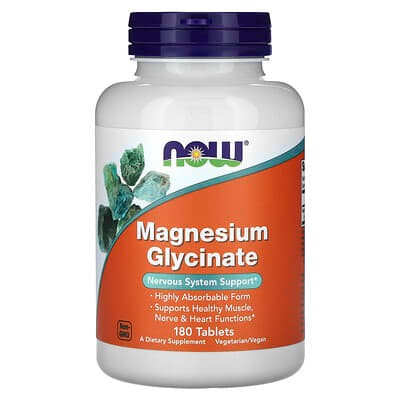

$18.50 $0.20 per serving


Product analysis
Magnesium Glycinate supplies magnesium for normal energy metabolism and bone mineral nutrition, with the clearest usefulness when intake is low.
AI assessment of the formula, label and price. How scoring works
Nutrient Quality20
Magnesium’s form is not specified alongside its nutrient amount, which limits a straightforward label comparison. The wider ingredient information identifies bisglycinate, a favorable form for absorption.
Ingredient Transparency63
The magnesium amount is disclosed, helping you compare the nutrient quantity. Its form is not identified alongside that amount, making the label less direct to compare.
Value For Money100
The magnesium serving compares very favorably on value. The comparison concerns the actual magnesium contribution, rather than counting the larger compound weight as extra magnesium.
Customer Satisfaction94
Customer ratings are very positive across tens of thousands of reviews. The large review pool gives a broad picture of satisfaction, without confirming sleep, stress or other health benefits.
Product Focus64
Magnesium provides focused nutritional support for normal energy use and mineral balance. Broader stress, hormone and cardiovascular effects remain limited or uncertain, and the compound weight is not additional magnesium.
- Format
Tablet - Container
- 180 Tablet(s)
- Per serving
- $0.20
- Customer rating
- 4.8 · 41,747 ratings
Goals

Impact
High effect
Magnesium · 200 mg
Magnesium contributes to normal vascular tone and may modestly affect blood pressure, although findings are inconsistent. This 200 mg serving supplies a partial amount-based contribution in the saved result. Its bisglycinate form does not establish a superior cardiovascular effect, and the support concerns blood-pressure measures rather than prevention of heart events.
How this product is rated for Heart Health
Ingredient fit72
Magnesium gives the formula a focused connection to the goal. The magnesium amount supplies partial support rather than the full amount-based contribution.
Goal fit
Magnesium gives the formula a focused connection to the goal.
Dose adequacy
The magnesium amount supplies partial support rather than the full amount-based contribution.
Pathways19
The saved support concerns electrolyte balance and vascular tone, with no comparable breadth across the other assessed heart-health areas.
Depth
The saved support concerns electrolyte balance and vascular tone, with no comparable breadth across the other assessed heart-health areas..
Breadth
No assessed area reaches the saved breadth threshold; the narrower contribution remains recognized.
Evidence89
Magnesium supplies the strongest recognized evidence, although blood-pressure effects are marginal and inconsistent.
Evidence strength
Magnesium supplies the strongest recognized evidence, although blood-pressure effects are marginal and inconsistent.
Studied preparation
The saved result recognizes the preparations of the ingredients retained for this check; that recognition does not broaden their demonstrated benefits.
Formulation logic100
The recognized ingredients do not lack a required partner, and no configured conflict was matched. The retained ingredients meet the amount check.
Partner coverage
The recognized ingredients can contribute alone or have their required partner; no missing-partner limitation was found.
Conflicts
No configured ingredient conflict was matched in the supplied facts; this check does not establish general safety.
Effective doses
All ingredients retained for this check meet its minimum amount criterion; that does not establish clinically effective dosing.

Impact
High effect
Magnesium · 200 mg
Magnesium contributes to normal energy metabolism and mineral nutrition when dietary intake is low. This serving supplies 200 mg of magnesium; the larger bisglycinate material amount is not additional magnesium. Its contribution is focused rather than broad, and the supplied context does not establish extra benefit from the bisglycinate form or a sleep or stress treatment effect.
How this product is rated for Everyday Health
Ingredient fit72
The contributing ingredients receive a partial amount allowance in the saved comparison; this is not a clinical benefit threshold.
Goal fit
The ingredients with a supported contribution are focused on this goal, although the product is also linked to other goals.
Dose adequacy
The contributing ingredients receive a partial amount allowance in the saved comparison; this is not a clinical benefit threshold.
Pathways40
The strongest contribution is in energy metabolism, with partial coverage in the saved comparison. The meaningful contribution is concentrated in one area rather than spread across the broader goal.
Depth
The strongest contribution is in energy metabolism, with partial coverage in the saved comparison.
Breadth
The meaningful contribution is concentrated in one area rather than spread across the broader goal.
Evidence86
Magnesium leads the saved evidence comparison; its nutritional role does not establish additional benefit when intake is adequate.
Evidence strength
Magnesium leads the saved evidence comparison; its nutritional role does not establish additional benefit when intake is adequate.
Studied preparation
The contributing ingredients with qualifying amounts match preparations accepted in the saved comparison; this does not establish superiority of their forms.
Formulation logic100
All ingredients retained as contributors reach the saved minimum amount threshold; that threshold is not a proven effective clinical dose.
Partner coverage
The contributing ingredients can act independently or have their required partners; no additional combination benefit is established.
Conflicts
No configured ingredient conflict was identified in the supplied facts; this is not a comprehensive safety assessment.
Effective doses
All ingredients retained as contributors reach the saved minimum amount threshold; that threshold is not a proven effective clinical dose.

Impact
Moderate effect
Magnesium · 200 mg
Magnesium supports normal energy metabolism and contributes to reducing tiredness when a shortfall is involved. Its role is nutritional, with no expectation of an added energy boost once needs are met. The 200 mg serving is assessed by its magnesium amount, without a special energy advantage for the glycinate form.
How this product is rated for Energy
Ingredient fit72
The assessed ingredients focus on functions relevant to energy. The assessed amounts provide partial coverage of the saved references.
Goal fit
The assessed ingredients focus on functions relevant to energy.
Dose adequacy
The assessed amounts provide partial coverage of the saved references.
Pathways0
The main contribution is nutritional support rather than a specific assessed performance mechanism. The saved findings show limited coverage across specific energy-performance processes.
Depth
The main contribution is nutritional support rather than a specific assessed performance mechanism.
Breadth
The saved findings show limited coverage across specific energy-performance processes.
Evidence88
Magnesium provides the strongest evidence contribution among the assessed ingredients, within the supplied evidence's limits. The assessed ingredients match the preparation categories used in the saved review.
Evidence strength
Magnesium provides the strongest evidence contribution among the assessed ingredients, within the supplied evidence's limits.
Studied preparation
The assessed ingredients match the preparation categories used in the saved review.
Formulation logic100
The assessed ingredients can contribute individually or have their required companion present. No configured ingredient conflict was identified in the supplied assessment. All ingredients counted in this finding meet the saved minimum amount threshold.
Partner coverage
The assessed ingredients can contribute individually or have their required companion present.
Conflicts
No configured ingredient conflict was identified in the supplied assessment.
Effective doses
All ingredients counted in this finding meet the saved minimum amount threshold.

Impact
High effect
Magnesium · 200 mg
Magnesium may support stress symptoms when magnesium intake is low or in selected clinical settings, while lasting everyday relief remains uncertain. This bisglycinate product supplies 200 mg elemental magnesium per selected serving; the separate 2,000 mg material declaration is not additional magnesium. That elemental amount gives a partial contribution against the saved quantity reference, concentrated mainly on calming.
How this product is rated for Stress Relief
Ingredient fit72
Magnesium provides the relevant ingredient focus. Amount support is partial at the selected serving.
Goal fit
Magnesium gives the formula a clear connection to stress relief.
Dose adequacy
The selected serving gives partial amount support for magnesium, limiting the contribution compared with the saved quantity references.
Pathways15
The main represented aspect is neural calming. The represented calming or recovery aspects remain limited at this serving, with none reaching the saved coverage threshold.
Depth
The strongest represented aspect is neural calming, based on magnesium.
Breadth
The represented calming or recovery aspects remain limited at this serving, with none reaching the saved coverage threshold.
Evidence76
The strongest relevant support comes from Magnesium, subject to the ingredient-specific limitations described above.
Evidence strength
The strongest relevant support comes from Magnesium, subject to the ingredient-specific limitations described above.
Studied preparation
The saved preparation check accepts the relevant ingredients; that finding does not establish identical trial conditions or lasting benefit.
Formulation logic100
The relevant ingredients meet the saved partner and minimum-amount checks. No configured ingredient conflict was identified in the supplied facts.
Partner coverage
Magnesium does not depend on an absent partner in the saved formulation check.
Conflicts
No configured ingredient conflict was identified in the supplied facts.
Effective doses
The ingredients retained for this check clear its minimum amount threshold; this is a comparison finding, not proof of effectiveness.

Impact
High effect
Magnesium · 200 mg
Magnesium has limited, inconsistent support for vascular function. One trial in older overweight adults improved arterial stiffness without lowering blood pressure, while subsequent trials found no overall stiffness or blood-pressure improvement. Different magnesium salts have not been shown to provide superior cardiovascular effects. The 200 mg elemental magnesium per serving provides a partial exposure comparison; the larger bisglycinate material mass is not extra magnesium.
How this product is rated for Cardiovascular Support
Ingredient fit72
The declared actives are focused on the evaluated cardiovascular-related ingredients. The amounts provide an uneven match to the comparison range; this limits how closely the formula resembles the evaluated exposures.
Goal fit
The declared actives are focused on the evaluated cardiovascular-related ingredients.
Dose adequacy
The amounts provide an uneven match to the comparison range; this limits how closely the formula resembles the evaluated exposures.
Pathways17
Vascular tone and sodium balance is the strongest assigned cardiovascular role; the result does not establish the complete product's clinical effect. None of the selected cardiovascular roles reached the coverage requirement.
Depth
Vascular tone and sodium balance is the strongest assigned cardiovascular role; the result does not establish the complete product's clinical effect.
Breadth
None of the selected cardiovascular roles reached the coverage requirement.
Evidence79
Magnesium leads the evidence finding, subject to its specific clinical and population limitations. The counted ingredients match the saved preparation requirements, without confirming a trial of this complete formula.
Evidence strength
Magnesium leads the evidence finding, subject to its specific clinical and population limitations.
Studied preparation
The counted ingredients match the saved preparation requirements, without confirming a trial of this complete formula.
Formulation logic100
The evaluated ingredients have no missing required partner or configured conflict. All counted amounts pass the minimum comparison.
Partner coverage
No required partner is missing from the counted ingredients; this does not establish an additional combination benefit.
Conflicts
No configured conflict was identified among the evaluated ingredients.
Effective doses
All counted ingredients pass the minimum amount comparison; passing it does not prove a clinical cardiovascular benefit.

Impact
Moderate effect
Magnesium · 200 mg
Magnesium at 200 mg may help retain water in the bowel and soften stools. The supplied findings indicate a modest contribution at this amount. The findings for specific laxative preparations do not imply the same effect from every magnesium salt.
How this product is rated for Gut Health
Ingredient fit72
The assessed ingredient is closely focused on the digestive contribution described here. The declared amount provides a partial contribution in the saved findings.
Goal fit
The assessed ingredient is closely focused on the digestive contribution described here.
Dose adequacy
The declared amount provides a partial contribution in the saved findings.
Pathways10
The main contribution is water retention in the bowel, with limited support in the saved findings. The saved findings show limited support within a narrow area of digestion.
Depth
The main contribution is water retention in the bowel, with limited support in the saved findings.
Breadth
The saved findings show limited support within a narrow area of digestion.
Evidence24
Support concerns a narrow stool-regulation effect rather than broad gut benefits. The declared magnesium preparation is not matched to a studied preparation in the saved findings.
Evidence strength
Support concerns a narrow stool-regulation effect rather than broad gut benefits.
Studied preparation
The declared magnesium preparation is not matched to a studied preparation in the saved findings.
Formulation logic100
The assessed ingredient reaches the minimum contribution threshold in the saved findings. No ingredient conflict was identified in the supplied assessment.
Partner coverage
The assessed ingredients do not require a missing partner for their assigned contribution.
Conflicts
No ingredient conflict was identified in the supplied assessment.
Effective doses
The assessed ingredient reaches the minimum contribution threshold in the saved findings.
Ingredients
| Ingredient | Amount per serving | Score |
|---|---|---|
Magnesium | 200 mg |
Magnesium · 200 mg OverallScore96
Each serving supplies 200 mg of magnesium as magnesium bisglycinate. The magnesium source is recorded as a branded material.
How this ingredient is rated
Active Ingredient Quality & Bioavailability100
The magnesium source is magnesium bisglycinate.
Magnesium Form & Absorption Potential
The magnesium source is magnesium bisglycinate.
Patented Materials & Chelation Quality
A branded magnesium material is recorded, though its name is not included in the saved facts.
Dose, Safety & Label Transparency90
The serving provides 200 mg of magnesium. The evaluation records no qualifying magnesium cofactor.
Elemental Yield Transparency
The stated amount is 200 mg of elemental magnesium per serving.
Therapeutic Dosage Alignment
The serving provides 200 mg of magnesium.
Synergistic Formulation Logic
The evaluation records no qualifying magnesium cofactor.
Value100
The whole-product serving costs about $0.21.
Price Per Elemental Quality
The whole-product serving costs about $0.21.
Alternative products
Report alternatives
Sources
Published studies used for the product analysis and the top-ranked studies for each ingredient and goal.
- Association between Serum Magnesium and Fractures: A Systematic Review and Meta-Analysis of Observational Studies.
- Bioabsorbable Magnesium-Based Materials Potential and Safety in Bone Surgery: A Systematic Review.
- Vascularized bone grafting fixed by biodegradable magnesium screw for treating osteonecrosis of the femoral head.
- An update on magnesium and bone health.
- Sex-specific differences in the association of magnesium intake with femoral neck bone mineral density among older adults.
- Circulating and dietary magnesium and risk of cardiovascular disease: a systematic review and meta-analysis of prospective studies.
- Magnesium and the risk of cardiovascular events: a meta-analysis of prospective cohort studies.
- Quantitative Association Between Serum/Dietary Magnesium and Cardiovascular Disease/Coronary Heart Disease Risk: A Dose-Response Meta-analysis of Prospective Cohort Studies.
- Comparative Efficacy of Nutraceuticals on Endothelial Function: A Systematic Review and Network Meta-Analysis.
- Serum magnesium, mortality, and cardiovascular disease in chronic kidney disease and end-stage renal disease patients: a systematic review and meta-analysis.
- Magnesium-L-threonate improves sleep quality and daytime functioning in adults with self-reported sleep problems: A randomized controlled trial.
- Total magnesium intake and risk of frailty in older women.
- Red blood cell magnesium and chronic fatigue syndrome.
- Exercise, magnesium and immune function.
- Perioperative systemic magnesium to minimize postoperative pain: a meta-analysis of randomized controlled trials.
- Long-term outcome after intravenous magnesium sulphate in suspected acute myocardial infarction: the second Leicester Intravenous Magnesium Intervention Trial (LIMIT-2).
- Association of magnesium sulfate use with mortality in critically ill patients with sepsis: a retrospective propensity score-matched cohort study.
- Hypomagnesemia and Mortality in Incident Hemodialysis Patients.
- The effects of magnesium supplementation on abnormal uterine bleeding, alopecia, quality of life, and acne in women with polycystic ovary syndrome: a randomized clinical trial.
- Efficacy of oral magnesium therapy in the treatment of chronic constipation in spastic cerebral palsy children: a randomized controlled trial.