
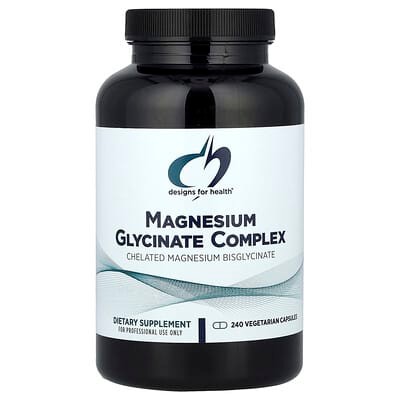
Magnesium Glycinate Chelate

Goals
$64.99 $0.54 per serving

Product analysis
Magnesium Glycinate Chelate can help fill a magnesium gap and support normal nerve and bone function. Its buffered blend also contains magnesium oxide, with undisclosed proportions that make its absorption advantage uncertain.
AI assessment of the formula, label and price. How scoring works
Nutrient Quality36
The magnesium combines glycinate with oxide, so the blend cannot be assumed to match pure glycinate. Unknown proportions limit confidence in how much the preferred form contributes.
Ingredient Transparency100
The magnesium amount and named form are clearly disclosed, making the serving easier to compare. The buffered name alone does not establish the proportions of its component forms.
Value For Money30
Value is limited by the uncertain mix of glycinate and oxide. The price cannot be assumed to buy the same quality as a fully specified glycinate supplement.
Customer Satisfaction76
Customer ratings are very positive across a few hundred reviews. That offers a useful view of satisfaction without establishing health effects.
Product Focus66
A single nutrient supports several related needs, chiefly when magnesium intake is low. Broader promises about energy, stress or hormones remain less certain.
- Format
Capsule - Container
- 240 Capsule(s)
- Per serving
- $0.54
- Also available
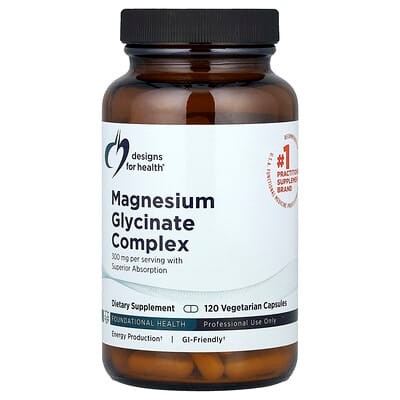 Magnesium Glycinate Chelate$33.49
- Customer rating
- 4.8 · 271 ratings
Goals

Impact
High effect
Magnesium · 300 mg
Magnesium supports normal nerve function and may help stress symptoms when magnesium intake is low or in selected clinical settings. This serving supplies 300 mg from buffered magnesium glycinate chelate, giving a meaningful nutritional contribution. Lasting relief from everyday stress remains uncertain.
How this product is rated for Stress Relief
Ingredient fit85
Magnesium is the main relevant ingredient, supplied in a meaningful amount.
Goal fit
Magnesium is the main ingredient related to this goal.
Dose adequacy
The 300 mg serving contributes substantially but falls below the comparison's full amount.
Pathways45
Magnesium's recorded contribution centers on neural calming, with a smaller stress-hormone connection.
Depth
Neural calming is the strongest recorded area for magnesium.
Breadth
Neural calming is the only prominently covered area; the other recorded areas are limited or absent.
Evidence76
Magnesium has conditional stress support, and the saved preparation criteria are met.
Evidence strength
Magnesium's support is most relevant with low intake or selected clinical circumstances.
Studied preparation
The declared magnesium preparation meets the saved preparation criteria; different salts are not assumed to absorb equally.
Formulation logic100
Magnesium provides a meaningful amount without a required missing partner or a matched conflict.
Partner coverage
Magnesium does not need an additional partner to contribute here.
Conflicts
No configured ingredient conflict was identified in the supplied facts.
Effective doses
Magnesium supplies a meaningful amount for the saved comparison.

Impact
Highest effect
Magnesium · 300 mg
Magnesium contributes to normal energy and mineral metabolism, with usefulness mainly when dietary intake falls short. Amounts above nutritional adequacy do not establish additional general-health benefit.
How this product is rated for Everyday Health
Ingredient fit92
Magnesium connects this product to routine nutrient provision. Its practical value depends on filling dietary gaps.
Goal fit
The included nutrients stay focused on routine nutritional support, although the product is linked to several health goals.
Dose adequacy
The relevant amounts reach the supplied comparison endpoints; higher amounts do not demonstrate additional benefit above adequate intake.
Pathways80
Normal energy metabolism is the strongest represented nutritional role. Several nutritional roles are represented.
Depth
Normal energy metabolism is the strongest represented nutritional role.
Breadth
The represented roles include energy metabolism cofactors, bone and mineral metabolism, with breadth determined by the supplied amounts.
Evidence86
Magnesium is the main contributor to the saved evidence finding. The supplied evidence supports nutritional usefulness when intake is low, without establishing extra benefit in adequately nourished adults.
Evidence strength
Magnesium leads the saved evidence finding; its relevance is nutritional support when intake is low, without established benefit above adequacy.
Studied preparation
The included nutrient declarations satisfy the supplied preparation checks, without evidence that a particular form or delivery method provides greater general-health benefit.
Formulation logic100
The supplied checks identify no missing required partner or configured conflict. Included nutrient amounts meet the comparison threshold.
Partner coverage
No required nutrient partner is missing under the supplied checks; co-presence does not establish added benefit from the combination.
Conflicts
No configured ingredient conflict was identified in the supplied checks.
Effective doses
The included contributions meet the supplied amount threshold, which describes nutrient availability rather than a proven health-outcome dose.

Impact
High effect
Magnesium · 300 mg
Magnesium supports normal energy metabolism and can address fatigue and weakness associated with low magnesium intake or deficiency. Its normal role in using energy does not show that extra magnesium increases energy when intake is adequate. The declared forms do not establish a separate fatigue advantage.
How this product is rated for Energy
Ingredient fit85
The relevant connection comes from Magnesium. The amounts offer different levels of support in the saved findings.
Goal fit
The relevant ingredient is the formulation’s main assessed connection to energy, although it is also linked to other goals.
Dose adequacy
The included amounts receive partial support against the saved amount references, without defining a proven fatigue-treatment dose.
Pathways0
The saved findings concern nutrient sufficiency rather than coverage of the configured alertness, muscle-energy, cellular-energy, stress-fatigue or blood-flow pathways.
Depth
No configured energy pathway receives coverage; nutrient-related contributions are considered separately.
Breadth
No configured pathway reaches the saved coverage requirement.
Evidence88
The strongest included evidence contribution comes from Magnesium. Studied-preparation matching does not remove the ingredient-specific limits on fatigue benefits.
Evidence strength
Magnesium provides the strongest included evidence contribution; its population and deficiency limitations still determine the benefit that can be expected.
Studied preparation
The included amounts meet the saved studied-preparation check, without establishing that the finished product itself was tested.
Formulation logic100
The included ingredients meet the saved minimum amount requirement without a missing required partner or matched conflict.
Partner coverage
The included ingredients do not lack a required partner in the saved findings; this does not imply an added combination benefit.
Conflicts
No configured ingredient conflict was matched in the supplied facts.
Effective doses
All counted ingredients meet the saved minimum amount requirement; this is distinct from a proven effective fatigue-treatment dose.

Impact
High effect
Magnesium · 300 mg
Magnesium has a limited connection with testosterone markers in small exercise-related studies. Those findings do not establish a routine testosterone increase in nutrient-replete adults, and the declared form has no demonstrated hormone advantage.
How this product is rated for Testosterone Support
Ingredient fit92
Magnesium provide the relevant declared ingredients; their human hormone findings constrain what the serving amounts can mean.
Goal fit
The retained ingredients are focused on testosterone-related roles, although relevance depends on their human hormone findings.
Dose adequacy
The declared amounts reach the full amount comparison; this does not establish a proven testosterone-enhancing dose.
Pathways70
The strongest represented area is free-testosterone availability, without establishing that supplementation changes this outcome in routine use. Coverage reaches the comparison threshold for free-testosterone availability, with limited breadth across other hormone-related areas.
Depth
The strongest represented area is free-testosterone availability, without establishing that supplementation changes this outcome in routine use.
Breadth
Coverage reaches the comparison threshold for free-testosterone availability, with limited breadth across other hormone-related areas.
Evidence74
The retained evidence chiefly reflects Magnesium, with preparation matching considered separately from applicability to routine use.
Evidence strength
Magnesium supplies the strongest retained evidence contribution, subject to its population-specific limitations.
Studied preparation
The retained contributing preparations meet the matching check; this does not establish broader testosterone benefits beyond the studied populations.
Formulation logic100
The retained contributors satisfy the required-partner and minimum-amount checks, and no listed conflict was triggered.
Partner coverage
No retained contributor is missing a required partner in these checks; combining them does not establish a greater hormone effect.
Conflicts
No listed ingredient conflict was triggered by the supplied facts.
Effective doses
All retained contributors meet the minimum amount threshold, which is a comparison convention rather than a proven testosterone-enhancing dose.

Impact
High effect
Magnesium · 300 mg
Magnesium offers limited support for vascular function, with inconsistent findings on arterial stiffness and blood pressure. The declared 300 mg serving receives partial amount-based recognition, without demonstrating a larger clinical effect or personal suitability. The supplied evidence does not establish superior cardiovascular benefit from its particular form or prevention of cardiovascular events.
How this product is rated for Cardiovascular Support
Ingredient fit85
The recognized ingredients give the formula a focused cardiovascular connection, without establishing a clinical effect. The magnesium amount receives partial recognition; this does not establish larger benefit or personal suitability.
Goal fit
The recognized ingredients give the formula a focused cardiovascular connection, without establishing a clinical effect.
Dose adequacy
The magnesium amount receives partial recognition; this does not establish larger benefit or personal suitability.
Pathways48
The saved support centers on triglyceride metabolism, without establishing cardiovascular-event prevention.
Depth
The saved support centers on triglyceride metabolism, without establishing cardiovascular-event prevention.
Breadth
Only the leading area meets the saved coverage criterion, leaving support narrow across the assessed cardiovascular areas.
Evidence79
Magnesium leads the recognized evidence, with inconsistent arterial-stiffness and blood-pressure findings.
Evidence strength
Magnesium leads the recognized evidence, with inconsistent arterial-stiffness and blood-pressure findings.
Studied preparation
The saved result recognizes the preparations retained for this check; that recognition does not expand their demonstrated clinical benefits.
Formulation logic100
No required partner is missing and no configured conflict was matched. All ingredients retained for this check meet its minimum amount criterion; this does not establish effective clinical dosing.
Partner coverage
The recognized ingredients can contribute alone or have their required partner; no missing-partner limitation was found.
Conflicts
No configured conflict was matched in the supplied facts; this does not establish general safety.
Effective doses
All ingredients retained for this check meet its minimum amount criterion; this does not establish effective clinical dosing.

Impact
Highest effect
Magnesium · 300 mg
Magnesium supports electrolyte balance and blood-vessel tone. Its connection to blood pressure is modest and inconsistent, even when the serving provides a substantial amount. The declared forms do not establish superior cardiovascular effects.
How this product is rated for Heart Health
Ingredient fit85
Magnesium provide the focused connection to heart health. Magnesium have declared amounts that provide partial amount-based coverage of their relevant roles.
Goal fit
Magnesium provide the focused connection to heart health.
Dose adequacy
Magnesium have declared amounts that provide partial amount-based coverage of their relevant roles.
Pathways51
Magnesium provides the main coverage for electrolyte balance and blood-vessel tone. Coverage is concentrated in electrolyte and blood-vessel tone support.
Depth
Magnesium provides the main coverage for electrolyte balance and blood-vessel tone.
Breadth
Coverage is concentrated in electrolyte and blood-vessel tone support.
Evidence89
Magnesium leads the finding, although its blood-pressure effects remain modest and inconsistent.
Evidence strength
Magnesium leads the finding, although its blood-pressure effects remain modest and inconsistent.
Studied preparation
The counted ingredients with qualifying amounts satisfy the preparation checks used here; this does not establish superiority of their forms.
Formulation logic100
The counted ingredients have no unmet partner requirement or identified configured conflict, and meet the amount check.
Partner coverage
The counted ingredients have no unmet partner requirement; this does not imply extra benefit from combining them.
Conflicts
No configured ingredient conflict was identified in the supplied facts.
Effective doses
The counted ingredients meet the amount check for their roles; this is not a proven clinical-effect threshold.
Ingredients
| Ingredient | Amount per serving | Score |
|---|---|---|
Magnesium (TRAACS Magnesium Glycinate Chelate buffered) | 300 mg |
A serving supplies 300 mg of magnesium from buffered magnesium glycinate. That buffered source includes magnesium oxide, but its internal proportions are unknown.
How this ingredient is rated
Active Ingredient Quality & Bioavailability55
The sources include magnesium glycinate buffered. The buffered material includes magnesium oxide, and the proportions are unknown. A magnesium-specific branded material is identified in the saved facts.
Magnesium Form & Absorption Potential
The sources include magnesium glycinate buffered. The buffered material includes magnesium oxide, and the proportions are unknown.
Patented Materials & Chelation Quality
A magnesium-specific branded material is identified in the saved facts.
Dose, Safety & Label Transparency90
A serving provides 300 mg of magnesium. Calcium is recorded as 0 mg per serving; no positive amount of an evaluated cofactor is recorded.
Elemental Yield Transparency
The saved facts specify 300 mg of elemental magnesium per serving.
Therapeutic Dosage Alignment
A serving provides 300 mg of magnesium.
Synergistic Formulation Logic
Calcium is recorded as 0 mg per serving; no positive amount of an evaluated cofactor is recorded.
Value30
The whole-product serving costs about $0.54. The buffered source proportions are unknown.
Price Per Elemental Quality
The whole-product serving costs about $0.54. The buffered source proportions are unknown.
Alternative products
Report alternatives
Sources
Published studies used for the product analysis and the top-ranked studies for each ingredient and goal.
- Association between Serum Magnesium and Fractures: A Systematic Review and Meta-Analysis of Observational Studies.
- Bioabsorbable Magnesium-Based Materials Potential and Safety in Bone Surgery: A Systematic Review.
- Vascularized bone grafting fixed by biodegradable magnesium screw for treating osteonecrosis of the femoral head.
- An update on magnesium and bone health.
- Sex-specific differences in the association of magnesium intake with femoral neck bone mineral density among older adults.
- Circulating and dietary magnesium and risk of cardiovascular disease: a systematic review and meta-analysis of prospective studies.
- Magnesium and the risk of cardiovascular events: a meta-analysis of prospective cohort studies.
- Quantitative Association Between Serum/Dietary Magnesium and Cardiovascular Disease/Coronary Heart Disease Risk: A Dose-Response Meta-analysis of Prospective Cohort Studies.
- Comparative Efficacy of Nutraceuticals on Endothelial Function: A Systematic Review and Network Meta-Analysis.
- Serum magnesium, mortality, and cardiovascular disease in chronic kidney disease and end-stage renal disease patients: a systematic review and meta-analysis.
- Magnesium-L-threonate improves sleep quality and daytime functioning in adults with self-reported sleep problems: A randomized controlled trial.
- Total magnesium intake and risk of frailty in older women.
- Red blood cell magnesium and chronic fatigue syndrome.
- Exercise, magnesium and immune function.
- Perioperative systemic magnesium to minimize postoperative pain: a meta-analysis of randomized controlled trials.
- Long-term outcome after intravenous magnesium sulphate in suspected acute myocardial infarction: the second Leicester Intravenous Magnesium Intervention Trial (LIMIT-2).
- Association of magnesium sulfate use with mortality in critically ill patients with sepsis: a retrospective propensity score-matched cohort study.
- Hypomagnesemia and Mortality in Incident Hemodialysis Patients.
- The effects of magnesium supplementation on abnormal uterine bleeding, alopecia, quality of life, and acne in women with polycystic ovary syndrome: a randomized clinical trial.
- Efficacy of oral magnesium therapy in the treatment of chronic constipation in spastic cerebral palsy children: a randomized controlled trial.