
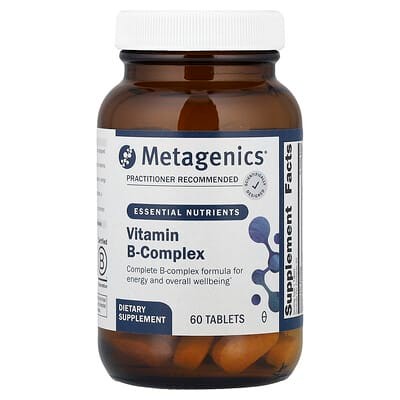

$29.95 $0.49 per serving


Product analysis
Glycogenics may help fill B-vitamin gaps that affect normal energy use, mood and nerve function. Larger amounts and methylated forms do not establish extra benefits when nutritional needs are already met.
AI assessment of the formula, label and price. How scoring works
Nutrient Quality58
Some B-vitamin preparations are clearly identified and favorable for nutrient use, especially vitamin B5. Other forms and quality details remain uncertain, so the whole formula does not share a confirmed quality advantage.
Ingredient Transparency70
All listed amounts and most forms are disclosed, allowing a useful basic comparison. Several forms and the proportions of the niacin mixture are missing, limiting a closer look at the formula.
Value For Money40
Vitamin B6 compares favorably and riboflavin offers moderate value at the serving price. Several other ingredients are costly for the amounts provided, while the remaining comparisons are uncertain.
Customer Satisfaction74
Customer ratings are strongly positive, though the modest number of reviews gives a limited picture. They do not establish mood, energy or cognitive benefits.
Product Focus65
The B vitamins have a clear nutritional role across energy use, mood and normal nerve function when intake is low. The broad range of intended uses and high amounts do not establish additional benefits above adequate nutrition.
- Format
Tablet - Container
- 60 Tablet(s)
- Per serving
- $0.49
- Customer rating
- 4.8 · 100 ratings
Goals

Impact
High effect
Vitamin B5 · 75 mgRiboflavin · 16 mgThiamin · 14 mgVitamin B12 · 250 mcg
Vitamin B5 Not classified
No linked studies yet.

Impact
High effect
Biotin · 250 mcgNiacin · 200 mgVitamin B12 · 250 mcgRiboflavin · 16 mgThiamin · 14 mgVitamin B5 · 75 mgVitamin B6 · 22 mg
Ingredients
| Ingredient | Amount per serving | Score |
|---|---|---|
Vitamin C (Ascorbic Acid) | 125 mg | |
Thiamine (Thiamine Mononitrate) | 14 mg | |
Riboflavin | 16 mg | |
Niacin (Niacinamide) | 200 mg | |
Vitamin B6 (Pyridoxine Hydrochloride) | 22 mg | |
Folate (Metafolin) | 665 mcg DFE | |
Vitamin B12 (Methylcobalamin) | 250 mcg | |
Biotin | 250 mcg | |
Pantothenic Acid (Calcium D-Pantothenate) | 75 mg | |
Choline (Choline Bitartrate) | 100 mg | |
Myo-Inositol | 94 mg | |
PABA | 15 mg |
Vitamin B6 (Pyridoxine Hydrochloride) · 22 mg OverallScore80
Choline (Choline Bitartrate) · 100 mg OverallScore75
Vitamin B5 (Calcium D-Pantothenate) · 75 mg OverallScore83
Alternative products
Report alternatives
Sources
Published studies used for the product analysis and the top-ranked studies for each ingredient and goal.
- Physicochemical properties of and volatile compounds in riboflavin fortified cloudy apple juice; study of its effect on job fatigue among Egyptian construction workers.
- Vitamin B status in patients with chronic fatigue syndrome.
- B-vitamins, related vitamers, and metabolites in patients with quiescent inflammatory bowel disease and chronic fatigue treated with high dose oral thiamine.
- Metabolic features of chronic fatigue syndrome.
- Effectiveness of Riboflavin in Inherited Metabolic Diseases: A Systematic Review
- Influence of thiamin supplementation on the health and general well-being of an elderly Irish population with marginal thiamin deficiency.
- Randomised clinical trial: high-dose oral thiamine versus placebo for chronic fatigue in patients with quiescent inflammatory bowel disease.
- Dietary reference values for thiamin.
- Effects of thiamine supplementation on exercise-induced fatigue.
- Long-term maintenance treatment with 300 mg thiamine for fatigue in patients with inflammatory bowel disease: results from an open-label extension of the TARIF study.
- A new perspective on vitamin B12 deficiency in rheumatology: a case-based review.
- Effects of Vitamin B12 Supplementation on Cognitive Function, Depressive Symptoms, and Fatigue: A Systematic Review, Meta-Analysis, and Meta-Regression.
- Patients' experiences with methylcobalamin injections in amyotrophic lateral sclerosis.
- Cobalamin deficiency: clinical picture and radiological findings.
- Vitamin B12 Deficiency: Common Questions and Answers.
- Biotin and contribution to normal energy-yielding metabolism: evaluation of a health claim pursuant to Article 14 of Regulation (EC) No 1924/2006.
- Pregnancy and lactation alter biomarkers of biotin metabolism in women consuming a controlled diet.
- Survey of the effect of biotin on glycemic control and plasma lipid concentrations in type 1 diabetic patients in kermanshah in iran (2008-2009)
- Chromium picolinate and biotin combination improves glucose metabolism in treated, uncontrolled overweight to obese patients with type 2 diabetes
- Biotin supplementation reduces plasma triacylglycerol and VLDL in type 2 diabetic patients and in nondiabetic subjects with hypertriglyceridemia