
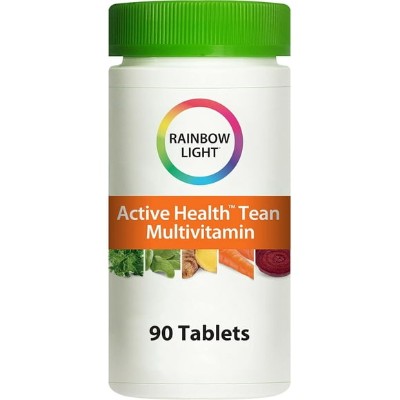

$35.99 $1.19 per serving


Product analysis
Active Health Teen offers vitamins and minerals relevant to normal skin and connective-tissue function. Undisclosed blend contents and a missing probiotic amount make it harder to know what each serving delivers.
AI assessment of the formula, label and price. How scoring works
Nutrient Quality37
Natural-form vitamin E is a clear quality strength. Quality remains uncertain for most other ingredients, and several preparations are not specified.
Ingredient Transparency68
Most amounts and many forms are stated, so parts of the serving can be compared. The missing probiotic amount, unspecified forms and undisclosed blend contents leave important gaps.
Value For Money39
The few ingredients with clear value comparisons are not especially economical. Value for most of the formula remains uncertain, making a confident buying comparison difficult.
Customer Satisfaction62
Buyer ratings are generally favorable. The small review pool gives a limited picture of customer experience.
Product Focus10
The formula includes nutrients involved in normal skin and connective-tissue functions. Its long ingredient list and unidentified blend contents make its focus less clear for a teen supplement.
- Format
Tablet - Container
- 90 Tablet(s)
- Per serving
- $1.19
- Customer rating
- 4.2 · 51 ratings
Goals

Impact
Moderate effect
Zinc · 10 mgVitamin C · 300 mgCopper · 1 mgSelenium · 50 mcgVitamin E · 30 IU
Vitamin C and copper support connective tissue, while zinc contributes to normal skin repair and selenium participates in antioxidant enzymes. The teen positioning and unresolved carotenoid preparation limit the relevance of adult cosmetic findings.
How this product is rated for Skin Health
Ingredient fit53
The saved assessment identifies 10 skin-relevant ingredients alongside ingredients serving other goals. Amounts provide partial support in the saved assessment; low or unresolved quantities limit the contribution.
Goal fit
The saved assessment identifies 10 skin-relevant ingredients alongside ingredients serving other goals.
Dose adequacy
Amounts provide partial support in the saved assessment; low or unresolved quantities limit the contribution.
Pathways18
The strongest saved connection is the collagen structure of skin, with a partial contribution. The saved findings do not show broad coverage across the main skin mechanisms.
Depth
The strongest saved connection is the collagen structure of skin, with a partial contribution.
Breadth
The saved findings do not show broad coverage across the main skin mechanisms.
Evidence100
Vitamin C provides the strongest evidence connection in the saved assessment; normal nutrient roles and specific trial outcomes remain distinct. The saved assessment recognizes 7 ingredients with amounts and preparations matching its comparison criteria.
Evidence strength
Vitamin C provides the strongest evidence connection in the saved assessment; normal nutrient roles and specific trial outcomes remain distinct.
Studied preparation
The saved assessment recognizes 7 ingredients with amounts and preparations matching its comparison criteria.
Formulation logic94
The assessed ingredients can contribute independently or have their required partner present. No ingredient conflict was identified in the saved assessment. 7 of 9 credited ingredients meet the saved minimum amount criterion; below it: Vitamin A, Vitamin E.
Partner coverage
The assessed ingredients can contribute independently or have their required partner present.
Conflicts
No ingredient conflict was identified in the saved assessment.
Effective doses
7 of 9 credited ingredients meet the saved minimum amount criterion; below it: Vitamin A, Vitamin E.

Impact
High effect
Zinc · 10 mgVitamin E · 30 IUVitamin C · 300 mgcarotenoids · 60 mgCopper · 1 mgVitamin A · 10000 IU
The counted nutrients have connections to vision-related nutrition, but their supplied findings largely concern specific combinations or disease populations. Those findings do not establish improved everyday vision from this formula. Ingredient amounts and normal antioxidant functions cannot by themselves show a visual-performance benefit.
How this product is rated for Eye Health
Ingredient fit49
Copper receives the main saved credit, but the relevant findings do not establish a standalone routine vision benefit. The useful interpretation depends on the population and outcome studied.
Goal fit
Copper receives the main saved credit, but the relevant findings do not establish a standalone routine vision benefit.
Dose adequacy
Unresolved amounts for Vitamin A, Vitamin E limit the contribution of those nutrients; the known amounts provide varying contributions.
Pathways60
The saved findings concentrate on antioxidant-related connections in the retina and lens; those roles do not establish improved vision. Coverage remains concentrated in this area.
Depth
The saved findings concentrate on antioxidant-related connections in the retina and lens; those roles do not establish improved vision.
Breadth
The saved findings concentrate in one area, with limited coverage of the other examined aspects of vision.
Evidence88
Copper leads the saved findings, but its supplied scientific context does not establish an independent everyday vision benefit. Combination findings cannot establish the same benefit for this product.
Evidence strength
Copper leads the saved findings, but its supplied scientific context does not establish an independent everyday vision benefit.
Studied preparation
The counted ingredients meet the saved preparation criteria; this does not transfer a complete clinical regimen’s benefit to this product.
Formulation logic92
The counted ingredients have their required partners and no evaluated conflict was identified. Unresolved amounts limit some contributions.
Partner coverage
No counted ingredient lacks a required partner in this comparison; this does not establish that a clinical combination regimen has been reproduced.
Conflicts
No evaluated ingredient conflict was identified in the supplied facts.
Effective doses
Vitamin A, Vitamin E have unresolved amounts below the comparison threshold; the other counted ingredients meet it.
carotenoids Not classified
No linked studies yet.
Ingredients
| Ingredient | Amount per serving | Score |
|---|---|---|
Vitamin A (Beta-Carotene, Vitamin A Palmitate) | 10000 IU | |
Vitamin C (Ascorbic Acid) | 300 mg | |
Vitamin D (Cholecalciferol, Vitamin D3) | 400 IU | |
Vitamin E (D-Alpha-Tocopheryl) | 30 IU | |
Vitamin K (Phytonadione) | 150 mcg | |
Vitamin B1 (Thiamine Mononitrate) | 30 mg | |
Riboflavin | 30 mg | |
Niacin (Niacinamide) | 30 mg | |
Vitamin B6 (Pyridoxine) | 30 mg | |
Folic Acid | 400 mcg | |
Vitamin B12 (Cyanocobalamin) | 30 mcg | |
Biotin | 300 mcg | |
Vitamin B5 (Calcium Pantothenate) | 30 mg | |
Calcium (Calcium Carbonate, Calcium Citrate) | 300 mg | |
Iron (Iron Amino Acid Chelate) | 9 mg | |
Magnesium (Magnesium Amino Acid Chelate, Magnesium Oxide) | 300 mg | |
Zinc (Zinc Amino Acid Chelate) | 10 mg | |
Selenium (Selenomethionine) | 50 mcg | |
Copper (Copper Amino Acid Chelate) | 1 mg | |
Manganese (Manganese Amino Acid Chelate) | 3 mg | |
Chromium (Chromium Amino Acid Chelate) | 200 mcg | |
Molybdenum (Molybdenum Amino Acid Chelate) | 252 mcg | |
Citrus Bioflavonoid Complex | 75 mg | |
Rutin | 45 mg | |
Hesperidin | 45 mg | |
Choline (Choline Bitartrate) | 30 mg | |
Inositol | 30 mg | |
PABA | 30 mg | |
Mixed Carotenoid Complex | 60 mg | |
Gentle Digestion Support Blend | 486 mg | |
ProbioActive | 0 NP | |
Nourishing Vegetable Complex | 306 mg | |
DermaComplex Herbal Blend | 585 mg |
PABA · 30 mg OverallScore78
Each serving lists 30 mg of PABA. The whole-product price works out to about $4.00 per 100 mg of PABA.
How this ingredient is rated
Active Ingredient Quality & Bioavailability80
PABA is named; a specific purity grade is not recorded in the saved facts.
PABA Source & Grade
PABA is named; a specific purity grade is not recorded in the saved facts.
Dose, Safety & Label Transparency95
The PABA amount is individually stated as 30 mg per serving. None of the three checked additive categories are recorded in the saved ingredient information: artificial dyes, titanium dioxide, or hydrogenated oils.
PABA Dosage Alignment
30 mg per serving falls in the evaluation's B-complex amount category.
Label Disclosure Clarity
The PABA amount is individually stated as 30 mg per serving.
Additive and Excipient Quality
None of the three checked additive categories are recorded in the saved ingredient information: artificial dyes, titanium dioxide, or hydrogenated oils.
Value40
The whole-product price works out to about $4.00 per 100 mg of PABA.
Price per 100mg PABA
The whole-product price works out to about $4.00 per 100 mg of PABA.
Vitamin E (D-Alpha-Tocopheryl) · 30 IU OverallScore53
A serving provides 30 IU of vitamin E as d-alpha-tocopheryl, a natural form. The exact ester is not established, and a whole-product serving costs about $1.20.
How this ingredient is rated
Active Ingredient Quality & Bioavailability46
d-alpha-tocopheryl is a natural form of vitamin E, although its exact ester is not established. No tocotrienols are recorded in the saved facts.
Natural (d-alpha) vs. Synthetic (dl-alpha)
d-alpha-tocopheryl is a natural form of vitamin E, although its exact ester is not established.
Mixed Tocopherol Isomer Diversity
No mixed tocopherol complex is recorded in the saved facts.
Tocotrienol Complex Inclusion
No tocotrienols are recorded in the saved facts.
Dose, Safety & Label Transparency66
The serving contains 30 IU of vitamin E. D-alpha-tocopheryl and the total amount are recorded; the exact ester is not established.
Therapeutic Dosage Range
The serving contains 30 IU of vitamin E.
Label Transparency and Isomer Specificity
D-alpha-tocopheryl and the total amount are recorded; the exact ester is not established.
Value40
A whole-product serving costs about $1.20.
Cost per Natural-Form Therapeutic Serving
A whole-product serving costs about $1.20.
Vitamin A (Beta-Carotene, Vitamin A Palmitate) · 10000 IU OverallScore37
A serving lists 10,000 IU of vitamin A from beta-carotene and retinyl palmitate. The amount of preformed vitamin A is not established and could reach the safety limit.
How this ingredient is rated
Active Ingredient Quality & Bioavailability40
The sources include beta-carotene and retinyl palmitate; their proportions are not established.
Vitamin A Chemical Form & Source
The sources include beta-carotene and retinyl palmitate; their proportions are not established.
Dose, Safety & Label Transparency27
The serving lists 10,000 IU; the preformed share is unknown and could reach the safety limit. Source proportions are not disclosed.
Dosage Efficacy & Safety Thresholds
The serving lists 10,000 IU total; the undisclosed preformed share could reach the safety limit.
Label Transparency of Specific Forms
The sources are named, but their proportions are not disclosed.
Value50
The estimated whole-product cost is $0.60 per 5,000 IU of vitamin A.
Price per 5,000 IU Dose
The estimated whole-product cost is $0.60 per 5,000 IU of vitamin A.
Alternative products
Report alternatives
Sources
Published studies used for the product analysis and the top-ranked studies for each ingredient and goal.
- What did we learn in 35 years of research on nutrition and supplements for age-related macular degeneration: a systematic review.
- Dietary Nutrient Intake and Progression to Late Age-Related Macular Degeneration in the Age-Related Eye Disease Studies 1 and 2.
- Association between late age-related macular degeneration and dietary intake of copper, iron, zinc and selenium: a 2005-2008 NHANES cross-sectional observational study.
- Associations between dietary nutrient intake and the risk of multiple age-related ocular diseases: evidence from longitudinal analysis.
- Dietary habits and dietary nutrient intake in patients with age-related macular degeneration: A case-control study.
- U.S. Multicenter Clinical Trial of Corneal Collagen Crosslinking for Treatment of Corneal Ectasia after Refractive Surgery.
- United States Multicenter Clinical Trial of Corneal Collagen Crosslinking for Keratoconus Treatment.
- EpiSmart Crosslinking for Keratoconus: A Phase 2 Study.
- Prospective Randomized Trial of Corneal Cross-linking Riboflavin Dosing Frequencies for Treatment of Keratoconus and Corneal Ectasia.
- Corneal collagen cross-linking for keratoconus: results of 3-year follow-up in Pakistani population.
- A randomized, double-masked study on the treatment of retinal vein occlusion with troxerutin
- Efficacy and safety of AZR-MD-001 selenium sulfide ophthalmic ointment in adults with meibomian gland dysfunction: A vehicle-controlled, randomized clinical trial.
- The efficacy and safety of selenium supplementation versus placebo in the treatment of Graves' orbitopathy: A systematic review and meta-analysis of randomised controlled trials.
- Efficacy and safety of AZR-MD-001 selenium sulfide ophthalmic ointment in adults with meibomian gland dysfunction over six months of treatment: A Phase 2, vehicle-controlled, randomized extension trial.
- AZR-MD-001 0.5% selenium sulfide ophthalmic ointment for the treatment of contact lens discomfort: A vehicle-controlled, randomized, clinical trial.
- The effect of a biweekly novel selenium sulfide-containing topical treatment in symptomatic contact lens wearers: An exploratory study.
- A randomized trial of vitamin A and vitamin E supplementation for retinitis pigmentosa.
- Efficacy and safety of retinol palmitate ophthalmic solution in the treatment of dry eye: a Japanese Phase II clinical trial.
- Vitamin A supplementation for preventing morbidity and mortality in children from six months to five years of age.
- Vitamin A supplementation improves retinal function in infants at risk of retinopathy of prematurity.