
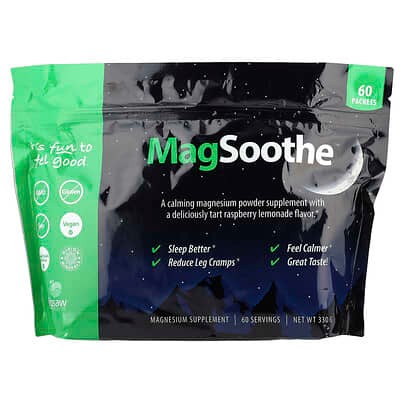
MagSoothe Tart Raspberry Lemonade Flavor

Goals
$59.97 $0.99 per serving


Product analysis
MagSoothe Tart Raspberry Lemonade Flavor offers magnesium and potassium in favorable forms for the body to use. Value is stronger for potassium and sodium than for magnesium.
AI assessment of the formula, label and price. How scoring works
Nutrient Quality88
The magnesium and potassium forms are clear quality strengths. The sodium form is named, but its relative quality remains uncertain.
Ingredient Transparency91
Ingredient amounts are clearly listed, helping you compare servings. Most ingredient forms are named, although a few remain unclear.
Value For Money74
The serving offers favorable value for potassium and sodium, with more moderate value for magnesium. The sodium price comparison is older, making that part less certain.
Customer Satisfaction76
Customer feedback is very positive. The number of reviews gives more context to satisfaction but does not establish effectiveness or safety.
Product Focus64
The ingredients have support across several intended goals, though benefits are uncertain. The wide range of goals makes the purpose less focused.
- Format
Powder - Container
- 330 Gram(s)
- Per serving
- $0.99
- Customer rating
- 4.8 · 243 ratings
Goals

Impact
High effect
Magnesium · 200 mgPotassium · 180 mg
Magnesium supports normal energy metabolism and can help address tiredness caused by low magnesium intake. Potassium supports electrolyte function, and deficiency can cause weakness, but a general energy benefit from this supplement amount is not established. These nutritional roles do not imply extra energy when intake is already adequate.
How this product is rated for Energy
Ingredient fit80
Magnesium, Potassium are included at declared amounts, with partial coverage of the saved comparison ranges.
Goal fit
Magnesium, Potassium account for the relevant ingredients; the product is also linked to other goals.
Dose adequacy
The included amounts provide partial coverage of the saved comparison ranges; these ranges are not proven treatment doses.
Pathways0
No contribution was recorded in the configured energy pathways; nutritional roles can still matter when intake is inadequate.
Depth
No contribution was recorded in the configured energy pathways; nutritional roles can still matter when intake is inadequate.
Breadth
None of the configured pathways reached the coverage threshold.
Evidence88
Magnesium provides the strongest included evidence, subject to its preparation and population limits.
Evidence strength
Magnesium provides the strongest included evidence, subject to its preparation and population limits.
Studied preparation
The included preparations were treated as matching studied material; this does not establish a benefit for every user.
Formulation logic100
The included ingredients have no recorded partner gap or configured conflict and clear the minimum amount threshold.
Partner coverage
The included ingredients can stand alone or have their required partner present.
Conflicts
No configured ingredient conflict was identified.
Effective doses
All included ingredients clear the saved minimum amount threshold; this is not a guarantee of a noticeable benefit.

Impact
High effect
Magnesium · 200 mg
Potassium contributes to blood-pressure regulation, with effects depending on usual intake and baseline blood pressure. Magnesium supports electrolyte balance and blood-vessel tone, although blood-pressure effects are small and inconsistent.
How this product is rated for Heart Health
Ingredient fit69
Magnesium, Potassium connect to heart-related functions. Some amounts provide only partial exposure relative to the supplied comparisons.
Goal fit
Magnesium, Potassium provide the relevant connection; the product's broader ingredient and goal mix limits its focus.
Dose adequacy
Magnesium, Potassium provide partial exposure compared with the supplied comparison ranges; this does not establish an ineffective dose.
Pathways47
The clearest connection is electrolyte and vascular-tone balance. Support is concentrated in that route.
Depth
The strongest represented route is electrolyte and vascular-tone balance, with support limited to the ingredients and amounts supplied.
Breadth
The findings cover one route, with limited breadth beyond that mechanism.
Evidence89
Magnesium supplies the strongest relevant support here, though blood-pressure results are inconsistent.
Evidence strength
Magnesium supplies the strongest relevant support here, though blood-pressure results are inconsistent.
Studied preparation
The eligible declared ingredients meet the supplied preparation comparison; this does not establish superiority over other forms.
Formulation logic100
The relevant ingredients do not require another partner, and no specified conflict was identified. The amount comparisons do not establish added benefit from combining ingredients.
Partner coverage
The relevant ingredients can contribute without an additional required partner; no extra combination benefit is established.
Conflicts
No specified ingredient conflict was identified in the supplied findings.
Effective doses
The ingredients included in this finding clear the supplied minimum exposure comparison; this is not a proven clinical efficacy threshold.

Impact
Moderate effect
Magnesium · 200 mg
Magnesium may help with stress when magnesium levels are low. Its connection here is mainly with calming, while lasting relief from everyday stress is less certain. The declared magnesium source identifies what you're taking, but it doesn't guarantee that you'll feel more relaxed.
How this product is rated for Stress Relief
Ingredient fit58
Magnesium has a conditional stress connection; potassium adds no separately supported stress benefit here. Amounts differ in how closely they match the comparison quantities.
Goal fit
Magnesium has a conditional stress connection; potassium adds no separately supported stress benefit here.
Dose adequacy
Magnesium supplies 200 mg per serving, matching the 200 mg lower comparison amount.
Pathways15
Magnesium relates mainly to calming; this doesn't imply equally broad effects on other aspects of stress.
Depth
Magnesium relates mainly to calming; this doesn't imply equally broad effects on other aspects of stress.
Breadth
Magnesium's contribution is concentrated rather than broad across the different aspects of stress.
Evidence76
Magnesium may help when levels are low, but broad lasting stress relief remains uncertain.
Evidence strength
Magnesium may help when levels are low, but broad lasting stress relief remains uncertain.
Studied preparation
The declared magnesium preparation is compatible with its possible contribution; that does not guarantee a personal benefit.
Formulation logic100
The relevant ingredients do not require an additional partner for their individual contributions. No particular ingredient conflict is identified.
Partner coverage
The relevant ingredients do not require an additional partner for their individual contributions.
Conflicts
No particular ingredient conflict is identified in the available product details.
Effective doses
Magnesium supplies 200 mg per serving, matching the 200 mg lower comparison amount.

Impact
High effect
Magnesium · 200 mg
Magnesium supplies a nutrient used in normal metabolism and mineral balance. The 200 mg serving can make a meaningful contribution when dietary magnesium is low, while receiving only a partial allowance in the saved amount comparison. That comparison does not establish improved sleep, reduced stress or prevention of disease. Adequate nutritional intake does not imply further benefit from adding more.
How this product is rated for Everyday Health
Ingredient fit72
Magnesium is the relevant contribution in the supplied findings. Magnesium supplies a partial amount relative to the saved comparison.
Goal fit
Magnesium is the relevant contribution in the supplied findings.
Dose adequacy
Magnesium supplies a partial amount relative to the saved comparison.
Pathways40
The strongest contribution is concentrated in normal metabolism, with limited breadth across other areas.
Depth
Normal metabolism is the main area supported by the included ingredients.
Breadth
The strongest contribution is concentrated in normal metabolism, with limited breadth across other areas.
Evidence86
Magnesium supplies the strongest included evidence contribution. Nutritional roles may help low intake, without demonstrating benefits above adequacy or superiority of the declared forms.
Evidence strength
Magnesium leads the supplied evidence finding; its nutritional role concerns low intake, without establishing extra benefit above adequacy.
Studied preparation
The included nutrients' preparations are accepted in the supplied findings, without establishing superiority of one form or delivery method.
Formulation logic100
The included ingredients meet their amount and partner requirements. No configured conflict was identified.
Partner coverage
The included ingredients have no unmet partner requirement in the supplied findings; this does not establish extra benefit from combining them.
Conflicts
No configured ingredient conflict was identified in the supplied findings.
Effective doses
All ingredients included in the main findings meet the amount requirement; this does not mean every declared ingredient is included.

Impact
High effect
Potassium · 180 mgMagnesium · 200 mg
Potassium supports blood-pressure regulation, but 180 mg per serving is well below the supplied daily study exposures. Magnesium has inconsistent arterial-stiffness and blood-pressure findings, with greater plausibility when status is low or blood pressure is elevated. The declared chelate does not establish superior cardiovascular effects.
How this product is rated for Cardiovascular Support
Ingredient fit72
Potassium, Magnesium provide the principal recognized connection. Amount or disclosure limitations reduce the combined finding.
Goal fit
Relevant ingredients sit within a broader formula with several actives not established for this goal.
Dose adequacy
The declared amounts receive partial combined recognition; lower or unresolved amounts limit comparison with the supplied reference exposures.
Pathways60
The strongest recognized area is vascular tone and sodium balance. Coverage remains concentrated in one area.
Depth
Vascular tone and sodium balance is the strongest recognized area; this is a marker connection, not a prediction of clinical-event prevention.
Breadth
One area meets the supplied coverage requirement, leaving limited breadth across other cardiovascular outcomes.
Evidence86
Potassium leads the saved evidence finding. The supplied preparation, population and outcome limitations constrain the practical claim.
Evidence strength
Potassium has the strongest recognized evidence among counted ingredients; marker changes and essential functions do not automatically establish fewer cardiovascular events.
Studied preparation
The saved findings recognize the eligible preparations; this does not establish identical exposure, population or outcomes to the cited interventions.
Formulation logic100
No required partner is missing and no assessed conflict is recorded.
Partner coverage
The counted ingredients work without an additional missing partner; no extra combination benefit is established.
Conflicts
No assessed conflict is recorded; this does not establish comprehensive interaction testing.
Effective doses
All counted ingredients meet the saved minimum amount criterion, which is not proof of a clinically effective cardiovascular dose.

Impact
High effect
Magnesium · 200 mg
Magnesium supports normal nutrient function, but its small exercise-related hormone study does not establish a routine testosterone increase. The declared amount is recognized in the saved comparison, but that comparison is not a validated hormone-raising dose.
How this product is rated for Testosterone Support
Ingredient fit58
The recognized ingredients are part of a broader formula, reducing its specific focus on testosterone support. The serving amounts only partly match the saved comparisons, limiting amount-based findings.
Goal fit
The recognized ingredients are part of a broader formula, reducing its specific focus on testosterone support.
Dose adequacy
The serving amounts only partly match the saved comparisons, limiting amount-based findings.
Pathways50
The saved findings concentrate on free-testosterone availability; this representation does not establish a measured hormone increase. Only one hormone-related aspect reaches the saved comparison, leaving limited breadth.
Depth
The saved findings concentrate on free-testosterone availability; this representation does not establish a measured hormone increase.
Breadth
Only one hormone-related aspect reaches the saved comparison, leaving limited breadth.
Evidence74
Magnesium provides the strongest recognized evidence here, with its population and preparation limitations. The qualifying preparations are recognized in the saved comparison; this does not establish routine hormone enhancement.
Evidence strength
Magnesium provides the strongest recognized evidence here, with its population and preparation limitations.
Studied preparation
The qualifying preparations are recognized in the saved comparison; this does not establish routine hormone enhancement.
Formulation logic100
No listed ingredient conflict was matched; this does not establish individual suitability. The recognized ingredients meet the saved minimum amount comparison, which is not a proven hormone-effect threshold.
Partner coverage
No required partner is missing for the recognized ingredients; this does not demonstrate synergy.
Conflicts
No listed ingredient conflict was matched; this does not establish individual suitability.
Effective doses
The recognized ingredients meet the saved minimum amount comparison, which is not a proven hormone-effect threshold.
Ingredients
| Ingredient | Amount per serving | Score |
|---|---|---|
Calories | 5 Calorie(s) | |
Magnesium (Magnesium Lysinate Glycinate Chelate) | 200 mg | |
Sodium (Sodium Bicarbonate) | 130 mg | |
Potassium (Potassium Bicarbonate) | 180 mg |
Sodium (Sodium Bicarbonate) · 130 mg OverallScore74
Each serving provides 130 mg of sodium as sodium bicarbonate. It also contains 180 mg of potassium and 200 mg of magnesium.
How this ingredient is rated
Active Ingredient Quality & Bioavailability70
The stated sodium source is sodium bicarbonate.
Sodium Source Purity & Quality
The identified sodium source is sodium bicarbonate.
Bioavailability of Supporting Electrolytes
The evaluation recognizes a more readily absorbed potassium or magnesium form; the specific form is not identified in the available facts.
Trace Mineral Complex & Buffering Forms
Sodium bicarbonate is identified as a buffering ingredient.
Dose, Safety & Label Transparency65
The serving states 130 mg of sodium. The amounts of the other listed electrolytes are stated separately.
Sodium Dosage for Athletic Replenishment
A serving provides 130 mg of sodium.
Ingredient Label Transparency
The serving states 130 mg sodium, 180 mg potassium and 200 mg magnesium separately.
Artificial Color and Sweetener Disclosure
No artificial color or sweetener was identified in the available Other Ingredients evidence.
Value100
A whole-product serving with a stated 130 mg of sodium costs about $1.00.
Price Per Serving vs. Collection Median
A whole-product serving with a stated 130 mg of sodium costs about $1.00.
Potassium (Potassium Bicarbonate) · 180 mg OverallScore85
Each serving lists 180 mg of potassium, a moderate amount in this comparison. The listed potassium form is potassium bicarbonate.
How this ingredient is rated
Active Ingredient Quality & Bioavailability100
The listed potassium form is potassium bicarbonate.
Potassium Form Quality
The listed potassium form is potassium bicarbonate.
Dose, Safety & Label Transparency64
Potassium is listed at 180 mg per serving, a moderate amount in this comparison; explicit elemental-potassium wording is not recorded in the saved facts.
Potassium Dosage Potency
The listed 180 mg of potassium per serving is a moderate amount in this comparison.
Elemental Yield Transparency
The label lists 180 mg of potassium per serving; the saved facts do not include explicit elemental-potassium wording.
Value100
A whole-product serving costs about $1.00 and provides 180 mg of potassium.
Potassium Value Efficiency
A whole-product serving costs about $1.00 and provides 180 mg of potassium.
Magnesium (Magnesium Lysinate Glycinate Chelate) · 200 mg OverallScore86
A serving supplies 200 mg of magnesium as magnesium lysinate glycinate. The whole-product serving costs about $1.00.
How this ingredient is rated
Active Ingredient Quality & Bioavailability100
The magnesium source is magnesium lysinate glycinate. A magnesium-specific branded material is identified in the saved facts.
Magnesium Form & Absorption Potential
The magnesium source is magnesium lysinate glycinate.
Patented Materials & Chelation Quality
A magnesium-specific branded material is identified in the saved facts.
Dose, Safety & Label Transparency90
A serving provides 200 mg of magnesium. Calcium is recorded as 0 mg per serving; no positive amount of an evaluated cofactor is recorded.
Elemental Yield Transparency
The saved facts specify 200 mg of elemental magnesium per serving.
Therapeutic Dosage Alignment
A serving provides 200 mg of magnesium.
Synergistic Formulation Logic
Calcium is recorded as 0 mg per serving; no positive amount of an evaluated cofactor is recorded.
Value50
The whole-product serving costs about $1.00. The evaluation considers the magnesium form when assessing that price.
Price Per Elemental Quality
The whole-product serving costs about $1.00. The evaluation considers the magnesium form when assessing that price.
Alternative products
Report alternatives
Sources
Published studies used for the product analysis and the top-ranked studies for each ingredient and goal.
- Association between Serum Magnesium and Fractures: A Systematic Review and Meta-Analysis of Observational Studies.
- Bioabsorbable Magnesium-Based Materials Potential and Safety in Bone Surgery: A Systematic Review.
- Vascularized bone grafting fixed by biodegradable magnesium screw for treating osteonecrosis of the femoral head.
- An update on magnesium and bone health.
- Sex-specific differences in the association of magnesium intake with femoral neck bone mineral density among older adults.
- Effect of potassium citrate on bone density, microarchitecture, and fracture risk in healthy older adults without osteoporosis: a randomized controlled trial.
- Long-term persistence of the urine calcium-lowering effect of potassium bicarbonate in postmenopausal women.
- Partial neutralization of the acidogenic Western diet with potassium citrate increases bone mass in postmenopausal women with osteopenia.
- Potassium citrate supplementation results in sustained improvement in calcium balance in older men and women.
- Effects of potassium chloride and potassium bicarbonate on endothelial function, cardiovascular risk factors, and bone turnover in mild hypertensives.
- Circulating and dietary magnesium and risk of cardiovascular disease: a systematic review and meta-analysis of prospective studies.
- Magnesium and the risk of cardiovascular events: a meta-analysis of prospective cohort studies.
- Quantitative Association Between Serum/Dietary Magnesium and Cardiovascular Disease/Coronary Heart Disease Risk: A Dose-Response Meta-analysis of Prospective Cohort Studies.
- Comparative Efficacy of Nutraceuticals on Endothelial Function: A Systematic Review and Network Meta-Analysis.
- Serum magnesium, mortality, and cardiovascular disease in chronic kidney disease and end-stage renal disease patients: a systematic review and meta-analysis.
- Sex-specific associations between sodium and potassium intake and overall and cause-specific mortality: a large prospective U.S. cohort study, systematic review, and updated meta-analysis of cohort studies.
- Potassium intake, stroke, and cardiovascular disease a meta-analysis of prospective studies.
- Blood pressure response to changes in sodium and potassium intake: a metaregression analysis of randomised trials.
- Twenty-Four-Hour Urinary Sodium and Potassium Excretion and Their Associations With Blood Pressure Among Adults in China: Baseline Survey of Action on Salt China.
- Dietary Sodium and Potassium Intake and Risk of Non-Fatal Cardiovascular Diseases: The Million Veteran Program.