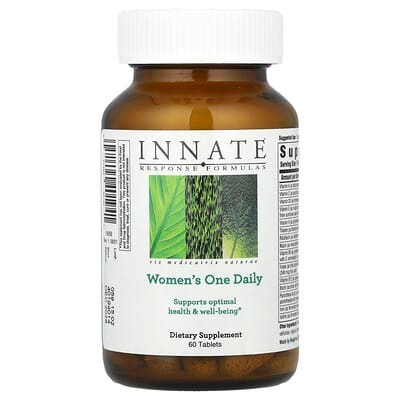
Nutrient quality
Broad vitamin coverage and conservative dosing support general daily nutrition. Less defined yeast minerals and an unclear blend limit quality.
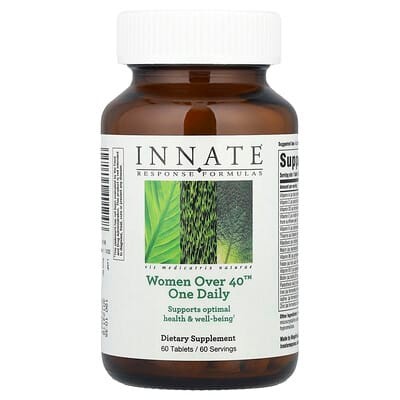
.
 Pure Formulas Pure Formulas | $ 49.99 | |
 iHerb iHerb | $ 37.49 | |
 Vitacost Vitacost | $ 49.99 |
One tablet supplies key vitamins alongside 4.5 mg iron, 150 mcg iodine, 14 mg zinc, 60 mcg chromium, and 30 mcg molybdenum. Vitamin C, folate, and vitamin B12 complement the iron for normal red-blood-cell and energy metabolism.
Iodine meets a practical daily-support amount, but yeast-bound trace minerals have less defined absorption than specified salts or chelates. The iron amount is too low for targeted repletion, while chromium and molybdenum mainly cover maintenance.
Sixty servings and one-tablet dosing are convenient. The formula remains relatively costly for its modest trace-mineral doses and is best viewed as general coverage rather than an energy intervention.
Broad vitamin coverage and conservative dosing support general daily nutrition. Less defined yeast minerals and an unclear blend limit quality.
.Most nutrient totals are visible. Duplicate entries, an undisclosed blend, and missing non-active ingredients reduce clarity.
.The supplied average rating is very strong. No specific review comments were supplied, so repeated negative experiences cannot be assessed.
.Broad coverage provides reasonable daily utility. Premium cost and incomplete blend disclosure weaken competitiveness.
.B vitamins and iodine support routine fuel conversion and thyroid-related metabolism, while low-dose iron may help only when intake is inadequate. The age-focused multivitamin is not a targeted fatigue formula.
Iodine reaches maintenance level, but iron, B12, and riboflavin fall below the specified energy targets. Yeast-bound minerals and a proprietary food-and-herb blend limit form clarity.
| Ingredient | Amount per serving |
|---|---|
Vitamin A (Beta Carotene) | 338 mcg RAE |
Vitamin C (Ascorbic Acid) | 60 mg |
Vitamin D3 (Cholecalciferol) | 10 mcg |
Vitamin E (D-Alpha-Tocopherol) | 11 mg |
Vitamin K (Phytonadione) | 30 mcg |
Thiamine (Thiamine HCl) | 3 mg |
Riboflavin (organic Brown Rice) | 2 mg |
Niacin (Niacinamide, S. cerevisiae) | 20 mg NE |
Vitamin B6 (Pyridoxine HCl) | 4 mg |
Folate (Broccoli, Folic Acid) | 400 mcg DFE |
Vitamin B12 (Cyanocobalamin) | 10 mcg |
Biotin (Brown Rice) | 30 mcg |
Pantothenic Acid (Calcium D-Pantothenate) | 10 mg |
Iron (Saccharomyces cerevisiae) | 4.5 mg |
Iodine (Saccharomyces cerevisiae) | 150 mcg |
Zinc (Saccharomyces cerevisiae) | 14 mg |
Selenium (Saccharomyces cerevisiae) | 15 mcg |
Copper (S. cerevisiae) | 0.2 mg |
Manganese (Saccharomyces cerevisiae) | 1 mg |
Chromium (S. cerevisiae) | 60 mcg |
Molybdenum (Saccharomyces cerevisiae) | 30 mcg |
Boron (S. cerevisiae) | 500 mcg |
Nourishing Food & Herb Blend | 100 mg |
Yeast-bound iodine is clearly sourced but has less certain absorption than potassium iodide. The clearly stated 150 mcg serving meets daily-support needs and remains safely below the upper limit. A midrange serving cost and limited selenium support produce only fair iodine value.
The four and a half mg iron serving is below the effective target range for focused supplementation. Iron supplied through nutritional yeast offers a food-based matrix, though it is not identified as Koji iron. Zinc in the same serving may compete with iron despite adequate vitamin C, folate, and vitamin B12. Cost per serving is above the collection benchmark.
The yeast-bound form lacks a defined chelating ligand, while no source branding adds quality verification. The low amount offers limited support beyond basic nutrition, and the amount remains comfortably within the safety limit. Moderate cost is undermined by the low amount.
Published studies used for the product analysis and the top-ranked studies for each ingredient and goal.