
Nutrient quality
Separate EPA and DHA amounts are missing, so active potency and concentration cannot be verified from total oil weight. The label does not identify fish species, molecular form, purification, or independent testing.
.
 iHerb iHerb | $ 6.87 | |
 Pure Formulas Pure Formulas | $ 7.64 |
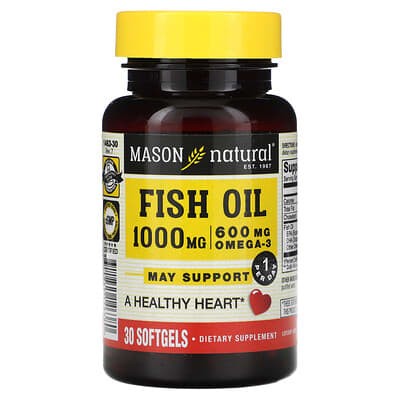
A single softgel supplies 1,000 mg of fish oil in a compact 30-serving bottle. Fish-derived omega-3 fats may support cardiovascular and inflammatory pathways, but those effects depend mainly on the actual EPA and DHA delivered rather than total oil weight.
EPA, DHA, molecular form, fish species, purification, independent testing, and antioxidant protection are not shown. The short bottle can work as a trial, but modest serving value and unknown active potency limit the case for continued use.
The product fits users who accept a general fish-oil serving without verified active-fatty-acid potency. Better-labeled alternatives are easier to compare when a specific EPA or DHA target matters.
Separate EPA and DHA amounts are missing, so active potency and concentration cannot be verified from total oil weight. The label does not identify fish species, molecular form, purification, or independent testing.
.The total oil amount is disclosed, but the key EPA and DHA constituents are not quantified. Serving count is available, while complete usage directions, excipients, and several source-quality details are absent.
.The supplied aggregate rating is strong, though confidence depends on the available review volume. No review text is provided to identify recurring complaints or firsthand experiences such as fishy aftertaste or capsule tolerance.
.The listed serving economics appear moderate, but missing EPA and DHA amounts prevent an effective-dose comparison. The focused oil formula avoids unrelated active additions.
.
Fish oil is relevant to inflammatory resolution, but the label does not disclose its EPA and DHA content. Human evidence is strong for adequate EPA and DHA intake, while applicability is uncertain without those active amounts.
A 1,000 mg fish-oil amount does not establish that the active omega-3 dose reaches a useful target. Missing EPA, DHA, oil-form, and purity details prevent assessment of active quality. Fish oil is sourced from fish and may not be suitable for people with a fish allergy.

Fish oil is directly relevant to cardiovascular support because its marine omega-3 fatty acids may help lipid and endothelial health. The ingredient class has strong evidence, but the label does not identify its active fatty-acid content.
The undisclosed EPA and DHA amounts prevent a meaningful dose assessment. A clean single-ingredient design keeps the formula coherent, although its practical depth remains uncertain.
| Ingredient | Amount per serving |
|---|---|
Calories | 10 Calorie(s) |
Total Fat | 1 Gram(s) |
Cholesterol | 10 mg |
Fish Oil | 1000 mg |
The fish oil amount is shown, but EPA and DHA are not listed separately, so active dose and concentration cannot be verified. Molecular form, purification, fish species, and independent testing are not stated. No antioxidant stabilizer is listed, and missing active amounts prevent a value calculation.
Published studies used for the product analysis and the top-ranked studies for each ingredient and goal.