No linked studies yet.
Product analysis
EPA-DHA Balance provides omega-3 fats with a useful connection to lower triglycerides and possible modest joint support. Its EPA contribution offers good value, while the exact oil forms remain unclear.
AI assessment of the formula, label and price. How scoring works
Nutrient Quality20
EPA and DHA are identified, but their exact forms are not clearly disclosed. That leaves uncertainty about the oil preparation and how readily the body can use it.
Ingredient Transparency70
The EPA and DHA amounts and their composition are disclosed. Their exact forms are not, so active quantities are easier to compare than preparations.
Value For Money60
EPA offers good value at the full serving cost, while DHA is comparatively expensive for its amount. The buying case is stronger when EPA is your priority.
Customer Satisfaction93
Customer feedback is very positive across many thousands of ratings. The broad review base supports confidence in satisfaction, without proving heart or joint benefits.
Product Focus70
The clearest role concerns EPA and DHA support for blood-fat levels, especially triglycerides. Wider expectations for skin, immediate focus or metabolism are less dependable.
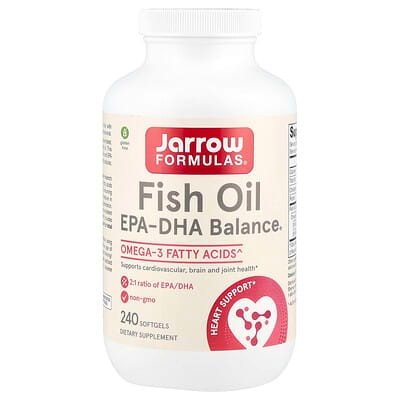
- Format
Softgel - Container
- 240 Softgel(s)
- Per serving
- $0.72
- Also available
EPA-DHA Balance$48.99- Customer rating
- 4.8 · 17,268 ratings
Goals
The explicitly declared EPA and DHA are relevant to triglyceride and selected vascular measures, with EPA leading the saved contribution. Fish-oil carrier mass and duplicate DHA catalogue identity do not create additional active doses. These surrogate findings do not establish routine prevention of major cardiovascular events, and neither triglyceride-form wording nor oil mass establishes superior clinical benefit.
How this product is rated for Heart Health
Ingredient fit84
Goal fit
Dose adequacy
Pathways60
Depth
Breadth
Evidence100
Evidence strength
Studied preparation
Formulation logic100
Partner coverage
Conflicts
Effective doses
EPA and DHA can lower triglycerides, which is the main cardiovascular role supported here. The separately declared active amounts receive recognition, but total oil weight is not an additional active dose. Trials used particular exposures and populations, so the recorded triglyceride contribution does not demonstrate prevention of cardiovascular events or improved heart rhythm.

How this product is rated for Cardiovascular Support
Ingredient fit81
Goal fit
Dose adequacy
Pathways60
Depth
Breadth
Evidence83
Evidence strength
Studied preparation
Formulation logic100
Partner coverage
Conflicts
Effective doses
EPA and DHA can influence inflammatory fatty-acid mediators, with supplied human analyses reporting lower inflammatory markers. Their separate declarations receive recognition here and are not pooled into a guessed combined fish-oil dose. The generic fish-oil active amount remains unresolved. These findings do not establish a routine clinical anti-inflammatory benefit from this serving.

How this product is rated for Inflammation
Ingredient fit65
Goal fit
Dose adequacy
Pathways40
Depth
Breadth
Evidence70
Evidence strength
Studied preparation
Formulation logic100
Partner coverage
Conflicts
Effective doses
Omega-3 supplies fatty acids, but the generic identity does not establish routine skin improvement. Specific purified-EPA UV-challenge findings cannot be transferred to this fish-oil formulation. The fish-oil material amount is not an additional omega-3 dose.

How this product is rated for Skin Health
Ingredient fit92
Goal fit
Dose adequacy
Pathways50
Depth
Breadth
Evidence78
Evidence strength
Studied preparation
Formulation logic100
Partner coverage
Conflicts
Effective doses
Omega-3 fatty acids, including EPA and DHA, may provide small improvements in joint pain, stiffness or function in some inflammatory-joint and osteoarthritis settings. Findings are mixed, with important large trials showing no benefit. The evidence concerns sustained study regimens, so a label serving does not establish the same exposure or outcome, and it does not show cartilage repair or prevention.

How this product is rated for Joint Health
Ingredient fit74
Goal fit
Dose adequacy
Pathways20
Depth
Breadth
Evidence69
Evidence strength
Studied preparation
Formulation logic100
Partner coverage
Conflicts
Effective doses
Whether omega-3 raises your resting calorie use is unclear for adults in general. Possible effects have varied between different groups of people, so they don't translate into a dependable metabolism boost from this serving. Changes in insulin-related processes are also different from an increase in whole-body energy expenditure.

How this product is rated for Metabolism Support
Ingredient fit51
Goal fit
Dose adequacy
Pathways42
Depth
Breadth
Evidence89
Evidence strength
Studied preparation
Formulation logic100
Partner coverage
Conflicts
Effective doses
DHA contributes to brain membrane structure, while EPA and DHA have been studied with repeated omega-3 intake. The supplied evidence does not establish an immediate improvement in concentration from this serving. Positive DHA findings involved people with low intake taking it for months, and broader long-term omega-3 findings were not consistently positive. These distinctions limit what can be expected for acute mental focus.
How this product is rated for Mental Focus
Ingredient fit70
Goal fit
Dose adequacy
Pathways58
Depth
Breadth
Evidence56
Evidence strength
Studied preparation
Formulation logic100
Partner coverage
Conflicts
Effective doses
No linked studies yet.
Ingredients
| Ingredient | Amount per serving | Score |
|---|---|---|
Calories | 20 Calorie(s) | |
Total Fat | 2 Gram(s) | |
Fish Oil concentrate | 2000 mg | |
Omega-3 Fatty Acids | 1200 mg | |
Eicosapentaenoic Acid | 800 mg | |
Docosahexaenoic Acid | 400 mg |
Alternative products
Sources
Published studies used for the product analysis and the top-ranked studies for each ingredient and goal.
- Marine Omega-3 Supplementation and Cardiovascular Disease: An Updated Meta-Analysis of 13 Randomized Controlled Trials Involving 127 477 Participants.
- Impact of omega-3 fatty acids on hypertriglyceridemia, lipidomics, and gut microbiome in patients with type 2 diabetes.
- A systematic review of fish-oil supplements for the prevention and treatment of hypertension.
- Effects of fish oil-derived fatty acids on suboptimal cardiovascular health: A multicenter, randomized, double-blind, placebo-controlled trial.
- Effect of High-Dose Marine Omega-3 Fatty Acids on Atherosclerosis: A Systematic Review and Meta-Analysis of Randomized Clinical Trials.
- Effects of eicosapentaenoic acid on major coronary events in hypercholesterolaemic patients (JELIS): a randomised open-label, blinded endpoint analysis.
- Effects of EPA on coronary artery disease in hypercholesterolemic patients with multiple risk factors: sub-analysis of primary prevention cases from the Japan EPA Lipid Intervention Study (JELIS).
- Effects of omega-3 fatty acids on coronary revascularization and cardiovascular events: a meta-analysis.
- Incremental effects of eicosapentaenoic acid on cardiovascular events in statin-treated patients with coronary artery disease.
- Omega-3 Fatty Acids for the Management of Hypertriglyceridemia: A Science Advisory From the American Heart Association.
- Dose-dependent effects of fish oil on cardio-metabolic biomarkers in healthy middle-aged and elderly Chinese people: a double-blind randomized controlled trial.
- Eicosapentaenoic acid supplementation alleviates pruritus, enhances skin moisture, and mitigates depression in maintenance hemodialysis patients.
- Lowering effects of fish oil supplementation on proinflammatory markers in hypertension: results from a randomized controlled trial.
- The effects of ω-3 fish oil emulsion-based parenteral nutrition plus combination treatment for acute paraquat poisoning.
- Effects of Omega-3 Fatty Acid Intake in Patients Undergoing Dialysis: A Systematic Review and Meta-Analysis of Randomized Controlled Trials.
- Supplementation of fish oil and olive oil in patients with rheumatoid arthritis.
- Krill oil improved osteoarthritic knee pain in adults with mild to moderate knee osteoarthritis: a 6-month multicenter, randomized, double-blind, placebo-controlled trial.
- Effects of omega-3 supplementation on lipid metabolism, inflammation, and disease activity in rheumatoid arthritis: a meta-analysis of randomized controlled trials.
- Impact of type and dose of oral polyunsaturated fatty acid supplementation on disease activity in inflammatory rheumatic diseases: a systematic literature review and meta-analysis.
- A meta-analysis of the analgesic effects of omega-3 polyunsaturated fatty acid supplementation for inflammatory joint pain.