No linked studies yet.
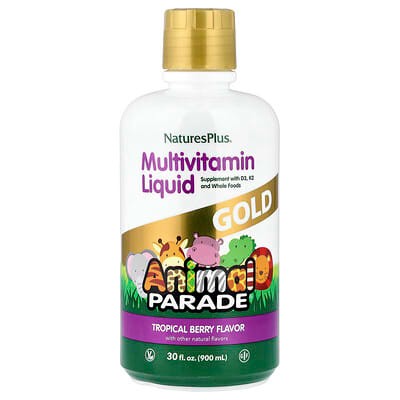
Gold Liquid Natural Tropical Berry Flavor
Product analysis
Gold Liquid Natural Tropical Berry Flavor offers broad nutrition in a liquid format, with nutrients that support normal skin maintenance and vision when intake is low. Missing blend proportions make some of its extras harder to compare.
AI assessment of the formula, label and price. How scoring works
Nutrient Quality40
Vitamin D3, natural-form vitamin E and chromium picolinate are favorable ingredient choices. Several other forms lack a confirmed comparison, and the oil blend proportions remain unclear.
Ingredient Transparency75
Amounts and most forms are stated, helping identify much of the formula. Missing proportions in the vitamin A and oil mixtures limit precise comparison.
Value For Money41
Value is mixed, with reasonably good value for vitamin E and more modest value for some other nutrients. Iron, chromium and choline are relatively costly within the whole formula.
Customer Satisfaction93
Customer feedback is very positive across many thousands of ratings. The large review base provides a broad picture of satisfaction without establishing skin or vision improvements.
Product Focus10
The broad nutrient lineup mainly supports general nutrition rather than a targeted cosmetic or vision effect. The clearest benefits depend on correcting low nutrient intake.
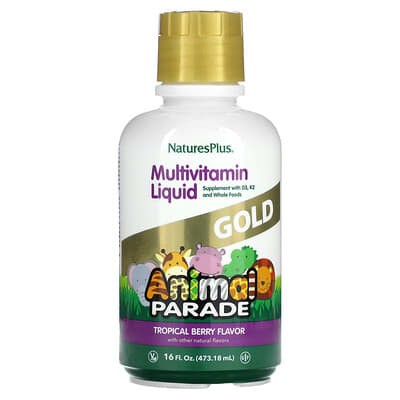
- Format
Liquid - Container
- 30 Liquid(s)
- Per serving
- $0.52
- Also available
Gold Liquid Natural Tropical Berry Flavor$18.66- Customer rating
- 4.8 · 22,602 ratings
Goals
Ingredients
| Ingredient | Amount per serving | Score |
|---|---|---|
Calories | 25 Calorie(s) | |
Total Carbohydrates | 6 Gram(s) | |
Vitamin A (Beta-Carotene, Vitamin A Palmitate) | 5000 IU | |
Vitamin C (Ascorbic Acid) | 60 mg | |
Vitamin D3 (Lichen) | 500 IU | |
Vitamin E (D-Alpha-Tocopheryl Acetate) | 30 IU | |
Vitamin K2 (Menatetrenone) | 40 mcg | |
Thiamine (Thiamine Hydrochloride) | 1.5 mg | |
Riboflavin | 1.7 mg | |
Niacin (Niacinamide) | 20 mg | |
Vitamin B6 (Pyridoxine Hydrochloride) | 2 mg | |
Folate (Calcium L-5-Methyltetrahydrofolate) | 10 mcg | |
Vitamin B12 (Methylcobalamin) | 6 mcg | |
Biotin | 50 mcg | |
Pantothenic Acid (Calcium Pantothenate) | 10 mg | |
Calcium (Calcium Citrate) | 50 mg | |
Iron (Iron Gluconate) | 5 mg | |
Iodine (Potassium Iodide) | 100 mcg | |
Magnesium (Magnesium Citrate Complex) | 10 mg | |
Zinc (Zinc Gluconate) | 3 mg | |
Copper (Copper Aminoate Complex) | 1 mg | |
Manganese (Manganese Gluconate) | 1 mg | |
Selenium (Sodium Selenite) | 35 mcg | |
Chromium (Chromium Picolinate) | 60 mcg | |
Potassium | 3 mg | |
Lemon Bioflavonoid Complex (Citrus limon) | 22 mg | |
Inositol | 10 mg | |
Choline (Choline Bitartrate) | 10 mg | |
Essential Fatty Acid Complex (Flax, Spirulina, Sunflower) | 2 mg | |
Lutein (active Carotenoid) | 0.5 mg |
How this ingredient is rated
Active Ingredient Quality & Bioavailability40
Vitamin A Chemical Form & Source
Dose, Safety & Label Transparency82
Dosage Efficacy & Safety Thresholds
Label Transparency of Specific Forms
Value50
Price per 5,000 IU Dose
Alternative products
Sources
Published studies used for the product analysis and the top-ranked studies for each ingredient and goal.

- What did we learn in 35 years of research on nutrition and supplements for age-related macular degeneration: a systematic review.
- Dietary Nutrient Intake and Progression to Late Age-Related Macular Degeneration in the Age-Related Eye Disease Studies 1 and 2.
- Association between late age-related macular degeneration and dietary intake of copper, iron, zinc and selenium: a 2005-2008 NHANES cross-sectional observational study.
- Associations between dietary nutrient intake and the risk of multiple age-related ocular diseases: evidence from longitudinal analysis.
- Dietary habits and dietary nutrient intake in patients with age-related macular degeneration: A case-control study.
- U.S. Multicenter Clinical Trial of Corneal Collagen Crosslinking for Treatment of Corneal Ectasia after Refractive Surgery.
- United States Multicenter Clinical Trial of Corneal Collagen Crosslinking for Keratoconus Treatment.
- EpiSmart Crosslinking for Keratoconus: A Phase 2 Study.
- Prospective Randomized Trial of Corneal Cross-linking Riboflavin Dosing Frequencies for Treatment of Keratoconus and Corneal Ectasia.
- Corneal collagen cross-linking for keratoconus: results of 3-year follow-up in Pakistani population.
- Efficacy and safety of AZR-MD-001 selenium sulfide ophthalmic ointment in adults with meibomian gland dysfunction: A vehicle-controlled, randomized clinical trial.
- The efficacy and safety of selenium supplementation versus placebo in the treatment of Graves' orbitopathy: A systematic review and meta-analysis of randomised controlled trials.
- Efficacy and safety of AZR-MD-001 selenium sulfide ophthalmic ointment in adults with meibomian gland dysfunction over six months of treatment: A Phase 2, vehicle-controlled, randomized extension trial.
- AZR-MD-001 0.5% selenium sulfide ophthalmic ointment for the treatment of contact lens discomfort: A vehicle-controlled, randomized, clinical trial.
- The effect of a biweekly novel selenium sulfide-containing topical treatment in symptomatic contact lens wearers: An exploratory study.
- A randomized trial of vitamin A and vitamin E supplementation for retinitis pigmentosa.
- Efficacy and safety of retinol palmitate ophthalmic solution in the treatment of dry eye: a Japanese Phase II clinical trial.
- Vitamin A supplementation for preventing morbidity and mortality in children from six months to five years of age.
- Vitamin A supplementation improves retinal function in infants at risk of retinopathy of prematurity.
- Effect of short-term, high-dose retinol on dark adaptation in aging and early age-related maculopathy.