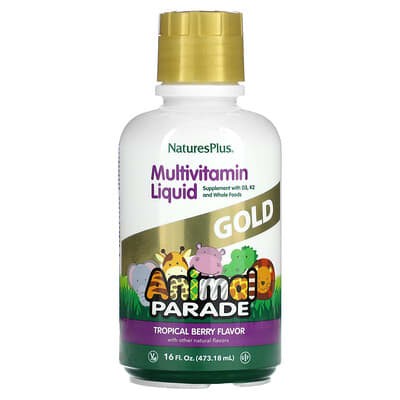
Gold Liquid Natural Tropical Berry Flavor

Gold Liquid Natural Tropical Berry Flavor

Format:Liquid Quantity: 16 Fluid Ounce(s) · 32 servings
Goals

Product analysis

52 out of 100

Gold Liquid Natural Tropical Berry Flavor provides nutrients that support normal skin maintenance and help meet eye-related nutritional needs when intake is low. Unstated blend proportions make some parts of this broad mixture harder to compare.

AI assessment of the formula, label and price. How scoring works

Nutrient Quality44

Vitamin D3 and the natural vitamin E form are favorable choices, while quality is less clear for much of the remaining formula. Unspecified forms and blend proportions limit a complete judgment.

Ingredient Transparency75

All ingredient quantities are stated, so the amounts can be checked. Some forms and the proportions within the vitamin A and oil mixtures are unstated, limiting a complete comparison.

Value For Money41

Value varies, with vitamin E offering a more favorable price comparison than chromium or choline. Limited price information for many other ingredients leaves the value of the full mixture uncertain.

Customer Satisfaction93

Customer feedback is very positive across a very large number of ratings. The broad response gives substantial confidence in the satisfaction trend.

Product Focus10

The clearest nutritional purposes involve skin maintenance and meeting riboflavin needs for eye health. The wide ingredient range and unresolved blend details make the formula less focused on a single need.
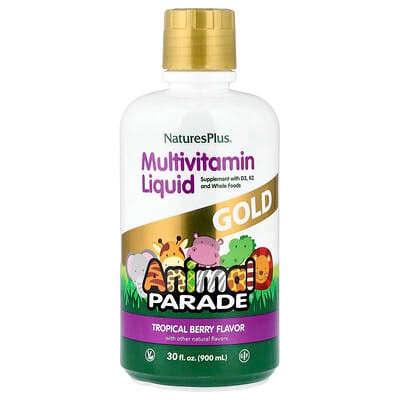
Format
Liquid
Container
16 Fluid Ounce(s)
Per serving
$0.58
Customer rating
4.8 · 21,128 ratings
Report analysis

Goals

Impact
Moderate effect
D- Ingredient FitD PathwaysA- EvidenceA Formulation Logic
Zinc · 3 mgVitamin E · 30 IUVitamin C · 60 mgCopper · 1 mgVitamin A · 5000 IU
Study evidence
Copper Supportive 7 studies
Riboflavin Supportive 69 studies
Selenium Supportive 15 studies
Vitamin A Supportive 65 studies
Vitamin C Disputed 24 studies
Vitamin D Disputed 35 studies
Vitamin E Disputed 35 studies
Zinc Supportive 39 studies
Impact
Moderate effect
D Ingredient FitF PathwaysA- EvidenceA Formulation Logic
Zinc · 3 mgVitamin C · 60 mgCopper · 1 mgSelenium · 35 mcgVitamin E · 30 IU
Study evidence
Biotin Supportive 10 studies
Copper Supportive 16 studies
Niacin Supportive 61 studies
Selenium Supportive 22 studies
Vitamin A Supportive 106 studies
Vitamin C Supportive 53 studies
Vitamin E Supportive 38 studies
Zinc Supportive 66 studies

Ingredients

IngredientAmount per servingScore
Calories
25 Calorie(s)
Total Carbohydrates
6 Gram(s)
Vitamin A (Beta-Carotene, Vitamin A Palmitate)
5000 IU 59
Vitamin C (Ascorbic Acid)
60 mg
Vitamin D3 (Cholecalciferol)
500 IU 61
Vitamin E (D-Alpha-Tocopheryl Acetate)
30 IU 59
Vitamin K2 (Menaquinone)
40 mcg
Thiamine (Thiamine Hydrochloride)
1.5 mg
Riboflavin
1.7 mg
Niacin (Niacinamide)
20 mg
Vitamin B6 (Pyridoxine Hydrochloride)
2 mg
Folate (Folic Acid)
10 mcg
Vitamin B12 (Cyanocobalamin)
6 mcg
Biotin
50 mcg
Pantothenic Acid (Calcium Pantothenate)
10 mg
Calcium (Calcium Citrate)
50 mg
Iron (Iron Gluconate)
5 mg 45
Iodine (Potassium Iodide)
100 mcg
Magnesium (Magnesium Citrate)
10 mg
Zinc (Zinc Gluconate)
3 mg
Copper (Copper Aminoate)
1 mg 62
Manganese (Manganese Gluconate)
1 mg
Selenium (Sodium Selenite)
35 mcg
Chromium (Chromium Picolinate)
60 mcg 36
Potassium
3 mg
Lemon Bioflavonoid Complex (Citrus limon)
22 mg
Inositol
10 mg
Choline (Choline Bitartrate)
10 mg 54
Essential Fatty Acid Complex (Flax, Spirulina, Sunflower)
2 mg
Lutein (Marigold)
0.5 mg
Gluten Free Adults 18–50 Children 4+ Children 1–4 Vegetarian
Report overview
D- Active Ingredient Quality & BioavailabilityB+ Dose, Safety & Label TransparencyD+ Value
Each serving supplies 5,000 IU of vitamin A, with a moderate cost for the amount. The vitamin A comes from Beta-Carotene and Retinyl Palmitate, but the proportions are unknown.
How this ingredient is rated

Active Ingredient Quality & Bioavailability40

The vitamin A comes from Beta-Carotene and Retinyl Palmitate, but the proportions are unknown.
Vitamin A Chemical Form & Source
The vitamin A comes from Beta-Carotene and Retinyl Palmitate, but the proportions are unknown.

Dose, Safety & Label Transparency82

Each serving supplies 5,000 IU of vitamin A. The label names Beta-Carotene and Retinyl Palmitate, but does not disclose their proportions.
Dosage Efficacy & Safety Thresholds
Each serving supplies 5,000 IU of vitamin A.
Label Transparency of Specific Forms
The label names Beta-Carotene and Retinyl Palmitate, but does not disclose their proportions.

Value50

The cost of the product relative to its vitamin A amount is moderate.
Price per 5,000 IU Dose
The cost of the product relative to its vitamin A amount is moderate.
C- Active Ingredient Quality & BioavailabilityB- Dose, Safety & Label TransparencyD+ Value
D Active Ingredient Quality & BioavailabilityC+ Dose, Safety & Label TransparencyB- Value
Report alternatives

Sources

Published studies used for the product analysis and the top-ranked studies for each ingredient and goal.

  1. What did we learn in 35 years of research on nutrition and supplements for age-related macular degeneration: a systematic review.
    Pameijer EM; Heus P; Damen JAA; Spijker R; Hooft L; Ringens PJ; Imhof SM; van Leeuwen R · Acta ophthalmologica · 2023
    Systematic review27 studies pooledEye Health forCopper
  2. Dietary Nutrient Intake and Progression to Late Age-Related Macular Degeneration in the Age-Related Eye Disease Studies 1 and 2.
    Agrón E; Mares J; Clemons TE; Swaroop A; Chew EY; Keenan TDL; AREDS and AREDS2 Research Groups · Ophthalmology · 2021
    Cohort study8,242 participantsEye Health forCopper
  3. Association between late age-related macular degeneration and dietary intake of copper, iron, zinc and selenium: a 2005-2008 NHANES cross-sectional observational study.
    Lu Y; Li C; Liu Y; Wu T; Lu P · BMC ophthalmology · 2025
    Observational study4,996 participantsEye Health forCopper
  4. Associations between dietary nutrient intake and the risk of multiple age-related ocular diseases: evidence from longitudinal analysis.
    Yang Y; Zou H · The journal of nutrition, health & aging · 2026
    Cohort study103,192 participantsEye Health forCopper
  5. Dietary habits and dietary nutrient intake in patients with age-related macular degeneration: A case-control study.
    Šalková Kráľová J; Kolář P; Kapounová Z; Veselý P; Derflerová Brázdová Z · Central European journal of public health · 2023
    Case-control study151 participantsEye Health forCopper
  6. U.S. Multicenter Clinical Trial of Corneal Collagen Crosslinking for Treatment of Corneal Ectasia after Refractive Surgery.
    Hersh PS; Stulting RD; Muller D; Durrie DS; Rajpal RK; U.S. Crosslinking Study Group · Ophthalmology · 2017
    Randomized trial179 participantsEye Health forRiboflavin
  7. United States Multicenter Clinical Trial of Corneal Collagen Crosslinking for Keratoconus Treatment.
    Hersh PS; Stulting RD; Muller D; Durrie DS; Rajpal RK; United States Crosslinking Study Group · Ophthalmology · 2017
    Randomized trial205 participantsEye Health forRiboflavin
  8. EpiSmart Crosslinking for Keratoconus: A Phase 2 Study.
    Epstein RJ; Belin MW; Gravemann D; Littner R; Rubinfeld RS · Cornea · 2023
    Randomized trial2,228 participantsEye Health forRiboflavin
  9. Prospective Randomized Trial of Corneal Cross-linking Riboflavin Dosing Frequencies for Treatment of Keratoconus and Corneal Ectasia.
    Price MO; Fairchild K; Feng MT; Price FW · Ophthalmology · 2019
    Randomized trial510 participantsEye Health forRiboflavin
  10. Corneal collagen cross-linking for keratoconus: results of 3-year follow-up in Pakistani population.
    Khan WA; Zaheer N; Khan S · Canadian journal of ophthalmology. Journal canadien d'ophtalmologie · 2015
    Non-randomized trial66 participantsEye Health forRiboflavin
  11. Efficacy and safety of AZR-MD-001 selenium sulfide ophthalmic ointment in adults with meibomian gland dysfunction: A vehicle-controlled, randomized clinical trial.
    Watson SL; Jones LW; Stapleton F; Hinds M; Ng A; Tan J; Alster Y; Bosworth C; Rafaeli O; DePuy V; CELESTIAL STUDY Group · The ocular surface · 2026
    Randomized trial245 participantsEye Health forSelenium
  12. The efficacy and safety of selenium supplementation versus placebo in the treatment of Graves' orbitopathy: A systematic review and meta-analysis of randomised controlled trials.
    Sharabati I; Qafesha RM; Hindawi MD; Amro S; Ayesh BM · Clinical endocrinology · 2024
    Meta-analysis4 studies pooledEye Health forSelenium
  13. Efficacy and safety of AZR-MD-001 selenium sulfide ophthalmic ointment in adults with meibomian gland dysfunction over six months of treatment: A Phase 2, vehicle-controlled, randomized extension trial.
    Downie LE; Craig JP; Stapleton F; Tan J; Jones LW; Ng A; Hinds M; Bosworth C; Alster Y · The ocular surface · 2025
    Randomized trial245 participantsEye Health forSelenium
  14. AZR-MD-001 0.5% selenium sulfide ophthalmic ointment for the treatment of contact lens discomfort: A vehicle-controlled, randomized, clinical trial.
    Stapleton F; Hinds M; Tan J; Jones L; Chalmers R; Bosworth C; Alster Y · The ocular surface · 2025
    Randomized trial67 participantsEye Health forSelenium
  15. The effect of a biweekly novel selenium sulfide-containing topical treatment in symptomatic contact lens wearers: An exploratory study.
    Stapleton F; Jia T; DePuy V; Bosworth C; Gleeson M; Tan J · The ocular surface · 2025
    Randomized trial14 participantsEye Health forSelenium
  16. A randomized trial of vitamin A and vitamin E supplementation for retinitis pigmentosa.
    Berson EL; Rosner B; Sandberg MA; Hayes KC; Nicholson BW; Weigel-DiFranco C; Willett W · Archives of ophthalmology (Chicago, Ill. : 1960) · 1993
    Randomized trial601 participantsEye Health forVitamin A
  17. Efficacy and safety of retinol palmitate ophthalmic solution in the treatment of dry eye: a Japanese Phase II clinical trial.
    Toshida H; Funaki T; Ono K; Tabuchi N; Watanabe S; Seki T; Otake H; Kato T; Ebihara N; Murakami A · Drug design, development and therapy · 2018
    Randomized trial66 participantsEye Health forVitamin A
  18. Vitamin A supplementation for preventing morbidity and mortality in children from six months to five years of age.
    Imdad A; Mayo-Wilson E; Haykal MR; Regan A; Sidhu J; Smith A; Bhutta ZA · The Cochrane database of systematic reviews · 2022
    Meta-analysis1,223,856 participants47 studies pooledEye Health forVitamin A
  19. Vitamin A supplementation improves retinal function in infants at risk of retinopathy of prematurity.
    Mactier H; McCulloch DL; Hamilton R; Galloway P; Bradnam MS; Young D; Lavy T; Farrell L; Weaver LT · The Journal of pediatrics · 2012
    Randomized trial89 participantsEye Health forVitamin A
  20. Effect of short-term, high-dose retinol on dark adaptation in aging and early age-related maculopathy.
    Owsley C; McGwin G; Jackson GR; Heimburger DC; Piyathilake CJ; Klein R; White MF; Kallies K · Investigative ophthalmology & visual science · 2006
    Randomized trial104 participantsEye Health forVitamin A