
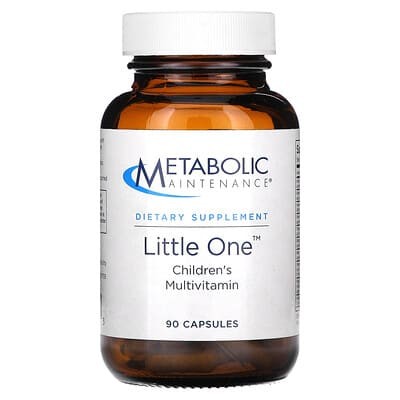

$35.50 $0.39 per serving


Product analysis
Little One combines vitamins and minerals that support normal immune function and energy use when intake is low. Most forms are identified, but missing mixture proportions make some nutrient contributions harder to compare.
AI assessment of the formula, label and price. How scoring works
Nutrient Quality47
B5, selenium, chromium and molybdenum have favorable form-quality findings. Quality remains less clear for many other nutrients, including unspecified folate and biotin forms.
Ingredient Transparency77
All amounts and most forms are disclosed, helping you check the nutrient mixture. The applicable proportions within mixed-form ingredients are missing, limiting more detailed comparisons.
Value For Money40
Value is uneven across the nutrients, with favorable molybdenum value but weaker B5, selenium and chromium value. Several other contributions cannot be valued confidently, so the complete mixture is harder to compare.
Customer Satisfaction79
Customer ratings are highly favorable. Several hundred reviews offer useful feedback, though they do not establish nutritional suitability.
Product Focus54
The nutrient mixture is most relevant to filling dietary gaps rather than adding benefits when intake is adequate. The benefit comparisons use adult references and do not establish suitability for children.
- Format
Capsule - Container
- 90 Capsule(s)
- Per serving
- $0.39
- Customer rating
- 4.8 · 466 ratings
Goals

Impact
Highest effect
Folate · 667 mcg DFEVitamin B12 · 10 mcgVitamin D · 20 mcgSelenium · 100 mcgZinc · 15 mgVitamin C · 75 mg
B vitamins and folate provide nutrients involved in normal energy metabolism and blood formation. Iron and iodine can help fill dietary gaps, and zinc and selenium contribute to normal antioxidant and immune functions. These nutritional contributions can help when intake is low, without establishing extra benefit when intake is adequate. The supplied comparison uses routine adult nutritional references and does not establish suitability or benefit for children.
How this product is rated for Everyday Health
Ingredient fit87
The relevant nutrients fit the goal, although the product is also associated with other uses. The relevant amounts provide uneven contributions, with some below the saved comparison endpoints or unresolved.
Goal fit
The relevant nutrients fit the goal, although the product is also associated with other uses.
Dose adequacy
The relevant amounts provide uneven contributions, with some below the saved comparison endpoints or unresolved.
Pathways100
The strongest represented area is normal energy metabolism. The saved findings span several distinct nutritional functions.
Depth
The strongest represented area is normal energy metabolism.
Breadth
The saved findings span several distinct nutritional functions.
Evidence82
Vitamin B9 (Folate) leads the saved evidence finding; its nutritional role does not establish added benefit when intake is adequate.
Evidence strength
Vitamin B9 (Folate) leads the saved evidence finding; its nutritional role does not establish added benefit when intake is adequate.
Studied preparation
The counted preparations match the saved preparation finding, without establishing superior effects from particular forms.
Formulation logic100
The counted ingredients have their relevant partners or contribute independently, and no listed formulation conflict was triggered.
Partner coverage
The counted ingredients contribute independently or have their relevant partners; an added combined benefit is not established.
Conflicts
No listed formulation conflict was triggered; this does not establish safety of the whole formula.
Effective doses
The counted ingredients reach the saved minimum amount comparison, which is not a proven clinical benefit threshold.

Impact
Highest effect
Vitamin C · 75 mgZinc · 15 mgVitamin A · 1500 mcg RAEVitamin D · 20 mcgSelenium · 100 mcg
Zinc, Vitamin D and Selenium contribute to normal immune function, without establishing extra protection when intake is adequate. Vitamin A supports normal immune and barrier functions when intake is low. Copper, Folate, Vitamin B6, Vitamin B12 and Iron can help fill dietary gaps that impair immune-cell function.
How this product is rated for Immunity
Ingredient fit69
Lower or unavailable amounts limit the contribution compared with the saved references.
Goal fit
The formula includes immunity-related ingredients alongside ingredients directed at other goals.
Dose adequacy
Lower or unavailable amounts limit the contribution compared with the saved references.
Pathways100
The strongest saved connection is barrier and antimicrobial defense, rather than a direct measure of infection protection.
Depth
The strongest saved connection is barrier and antimicrobial defense, rather than a direct measure of infection protection.
Breadth
The saved findings cover barrier and antimicrobial defense, lymphocyte function and immune regulation, oxidative and inflammatory balance.
Evidence100
Zinc provides the leading saved contribution; its supported role does not establish infection prevention.
Evidence strength
Zinc provides the leading saved contribution; its supported role does not establish infection prevention.
Studied preparation
The saved findings accept the preparations with sufficient amounts; this does not establish testing of the complete formula.
Formulation logic100
All counted ingredients reach the saved minimum amount threshold, which is not proof of clinical effectiveness.
Partner coverage
The counted ingredients can contribute without an additional partner; this does not establish synergy.
Conflicts
No configured ingredient conflict was identified.
Effective doses
All counted ingredients reach the saved minimum amount threshold, which is not proof of clinical effectiveness.

Impact
High effect
Biotin · 300 mcgVitamin D · 20 mcgZinc · 15 mgIron · 9 mgVitamin C · 75 mg
Zinc can help address shedding caused by inadequate zinc intake, and iron can help when iron deficiency is responsible. Biotin has a similarly limited role in deficiency-related shedding; higher amounts do not establish extra regrowth with adequate intake. The remaining nutrient functions do not establish routine hair growth. The saved findings mainly recognize nutrient amounts and antioxidant-related coverage, whose practical benefit remains dependent on the specific nutritional circumstances.
How this product is rated for Hair Health
Ingredient fit69
The formula contains recognized hair-related ingredients, but their practical relevance depends on nutritional need and usable amounts. Recognized hair-related ingredients sit alongside ingredients serving other purposes, so the formula has a broader focus.
Goal fit
Recognized hair-related ingredients sit alongside ingredients serving other purposes, so the formula has a broader focus.
Dose adequacy
Some recognized ingredients have low or unresolved amounts, limiting how much the serving contributes.
Pathways55
Antioxidant-related nutrient coverage is the strongest finding, but normal antioxidant functions do not establish hair regrowth. Meaningful coverage centers on antioxidant-related functions, with limited coverage of the other hair pathways.
Depth
Antioxidant-related nutrient coverage is the strongest finding, but normal antioxidant functions do not establish hair regrowth.
Breadth
Meaningful coverage centers on antioxidant-related functions, with limited coverage of the other hair pathways.
Evidence97
Zinc is the leading recognized ingredient; its practical hair benefit is relevant to deficiency-related shedding, rather than routine regrowth. Preparation matching does not establish a trial of the complete product.
Evidence strength
Zinc is the leading recognized ingredient; its practical hair benefit is relevant to deficiency-related shedding, rather than routine regrowth.
Studied preparation
Recognized preparations meet the saved comparison criteria except iodine; this does not demonstrate hair benefits from the complete formula.
Formulation logic98
The recognized ingredients have no missing required partner or configured conflict. Vitamin B12 has low or unresolved amounts in the saved findings; the other recognized ingredients meet its amount criterion.
Partner coverage
No required partner is missing among the recognized ingredients; this does not establish extra benefit from combining them.
Conflicts
No configured ingredient conflict was identified in the supplied findings.
Effective doses
Vitamin B12 has low or unresolved amounts in the saved findings; the other recognized ingredients meet its amount criterion.

Impact
High effect
Zinc · 15 mgVitamin C · 75 mgCopper · 2 mgSelenium · 100 mcgVitamin E · 40 mg
Vitamin C supports collagen formation and can restore impaired healing caused by low intake. Extra vitamin C has no established skin benefit when intake is adequate. Zinc also supports repair when intake is low. B6 and riboflavin can help prevent deficiency-related dermatitis, without establishing additional cosmetic benefits in adequately nourished adults.
How this product is rated for Skin Health
Ingredient fit68
Copper leads the relevant ingredient finding, alongside other goals where present. Declared amounts provide partial exposure coverage.
Goal fit
The product combines relevant skin-related ingredients with ingredients linked to other goals.
Dose adequacy
Copper and other counted ingredients provide partial coverage of the supplied comparison amounts.
Pathways80
The strongest supplied connection is dermal collagen matrix. This describes the ingredients’ assigned roles rather than a measured improvement in skin.
Depth
The strongest connection is dermal collagen matrix, reflecting declared amounts and assigned ingredient roles.
Breadth
Two mechanisms reach the supplied coverage threshold, with other mechanisms receiving less coverage.
Evidence89
Copper leads the supplied evidence finding. Nutritional adequacy or limited surrogate findings do not establish universal cosmetic improvement.
Evidence strength
Copper leads the supplied evidence finding; normal nutrient needs do not prove extra cosmetic benefit when intake is adequate.
Studied preparation
The qualifying ingredients meet the supplied preparation criteria, without establishing superiority of their declared forms.
Formulation logic100
No required partner is missing and no specified formulation conflict was matched. Clearing the exposure threshold does not prove an effective skin dose.
Partner coverage
The counted ingredients work without an additional required partner or have that partner present.
Conflicts
No specified formulation conflict was matched in the supplied facts.
Effective doses
All counted ingredients clear the minimum exposure threshold; this does not establish a clinically effective skin dose.

Impact
Moderate effect
Folate · 667 mcg DFEVitamin B6 · 5 mgVitamin D · 20 mcgVitamin B12 · 10 mcg
B12, folate, thiamin and niacin support normal nervous-system function and nutrient adequacy. Iron at 9 mg is relevant when low iron contributes to poor concentration. These are conditional nutritional connections; the supplied adult comparison does not establish age-specific suitability.
How this product is rated for Mental Focus
Ingredient fit65
The relevant ingredients provide a reasonable connection to the goal within a broader formula. The counted amounts broadly support the supplied comparison ranges, although support varies by ingredient.
Goal fit
The relevant ingredients provide a reasonable connection to the goal within a broader formula.
Dose adequacy
The counted amounts broadly support the supplied comparison ranges, although support varies by ingredient.
Pathways0
The saved findings show nutritional support without coverage of a specific acute-focus mechanism. No mechanism reaches the saved broader-coverage threshold.
Depth
The saved findings show nutritional support without coverage of a specific acute-focus mechanism.
Breadth
No mechanism reaches the saved broader-coverage threshold.
Evidence74
Vitamin B9 (Folate) provides the strongest relevant evidence among ingredients counted at meaningful amounts. The findings remain specific to the reviewed context. The counted ingredients at meaningful amounts match preparations accepted in the saved evidence assessment.
Evidence strength
Vitamin B9 (Folate) provides the strongest relevant evidence among ingredients counted at meaningful amounts. The findings remain specific to the reviewed context.
Studied preparation
The counted ingredients at meaningful amounts match preparations accepted in the saved evidence assessment.
Formulation logic100
The counted ingredients can contribute independently or have their required partner. No ingredient conflict was identified in the saved assessment. 8 of 8 counted ingredients reach the saved meaningful-amount threshold.
Partner coverage
The counted ingredients can contribute independently or have their required partner.
Conflicts
No ingredient conflict was identified in the saved assessment.
Effective doses
8 of 8 counted ingredients reach the saved meaningful-amount threshold.
Ingredients
| Ingredient | Amount per serving | Score |
|---|---|---|
Vitamin A (Natural Mixed Carotenoids, Vitamin A Palmitate) | 1500 mcg RAE | |
Vitamin C (Ascorbic Acid) | 75 mg | |
Vitamin D3 (Cholecalciferol) | 20 mcg | |
Vitamin E (D-Alpha-Tocopheryl Acid Succinate) | 40 mg | |
Thiamine (Thiamine Mononitrate) | 5 mg | |
Riboflavin (Riboflavin 5-Phosphate) | 5 mg | |
Niacin (Niacinamide) | 25 mg NE | |
Vitamin B6 (Pyridoxal 5-Phosphate, Pyridoxine Hydrochloride) | 5 mg | |
Folate | 667 mcg DFE | |
Vitamin B-12 (Methylcobalamin) | 10 mcg | |
Biotin | 300 mcg | |
Pantothenic Acid (Calcium D-Pantothenate) | 25 mg | |
Iron (Iron Bisglycinate) | 9 mg | |
Iodine (Potassium Iodide) | 100 mcg | |
Zinc (Zinc Citrate) | 15 mg | |
Selenium (L-Selenomethionine) | 100 mcg | |
Copper (Copper Gluconate) | 2 mg | |
Manganese (Manganese Glycinate) | 1 mg | |
Chromium (Chromium Polynicotinate) | 100 mcg | |
Molybdenum (Molybdenum Glycinate) | 25 mcg |
Selenium (L-Selenomethionine) · 100 mcg OverallScore81
A serving provides 100 mcg of selenium as l-selenomethionine. At the listed price, the product costs about $0.79 per 200 mcg of selenium for comparison.
How this ingredient is rated
Active Ingredient Quality & Bioavailability100
The selenium is identified as L-selenomethionine, with the L form specifically named.
Selenium Chemical Form
The recorded form is L-selenomethionine, an organic form of selenium.
Form Transparency & Isomer Specificity
The name specifies the L form of selenomethionine.
Dose, Safety & Label Transparency88
The serving provides 100 mcg of selenium. It falls below the upper limit used in the evaluation, though food and other sources also contribute to total intake.
Dosage Efficacy Sweet Spot
A serving supplies 100 mcg of selenium, an amount used for selenium support.
Safety Margin & UL Adherence
The 100 mcg in a serving is below the upper limit used in the evaluation; food and other products also contribute to total selenium intake.
Value30
At the listed price, about $0.79 of the whole product corresponds to 200 mcg of selenium. The cost also covers any other ingredients.
Price per 200 mcg Serving
At the listed price, about $0.79 of the whole product corresponds to 200 mcg of selenium. The cost also covers any other ingredients.
Copper (Copper Gluconate) · 2 mg OverallScore67
Each serving supplies 2 mg of copper as copper gluconate. The serving also has 15 mg zinc, a ratio to copper that falls outside the balance favored in the evaluation.
How this ingredient is rated
Active Ingredient Quality & Bioavailability58
The copper amount and its source, copper gluconate, are disclosed.
Copper Form Bioavailability
The copper source is listed as copper gluconate.
Elemental Copper Labeling Clarity
The copper row lists 2 mg per serving and identifies copper gluconate as its source.
Dose, Safety & Label Transparency85
The serving contains 2 mg copper and 15 mg zinc; their ratio falls outside the balance favored in the evaluation.
Copper Dosage Safety & Efficacy
Each serving supplies 2 mg of copper.
Zinc-to-Copper Balance
The serving also has 15 mg zinc; its zinc-to-copper ratio falls outside the balance favored in the evaluation.
Value50
The whole-product serving costs about $0.39.
Price Per Serving Efficiency
The whole-product serving costs about $0.39.
Molybdenum (Molybdenum Glycinate) · 25 mcg OverallScore76
The serving provides 25 mcg of molybdenum as glycinate. The named form identifies its chelating partner.
How this ingredient is rated
Active Ingredient Quality & Bioavailability85
Molybdenum glycinate identifies the chelating form; no branded source is identified in the available facts.
Molybdenum Chemical Form
The molybdenum is recorded as glycinate.
Branded or Patented Source
No recognized branded source is identified in the available facts.
Dose, Safety & Label Transparency64
The serving records 25 mcg of molybdenum and was not flagged for exceeding the adult upper limit.
Elemental Dose Optimization
The recorded molybdenum amount is 25 mcg per serving.
Upper Limit (UL) Safety Compliance
The evaluation did not flag this serving amount as exceeding the adult upper limit.
Value80
The whole product costs about $0.39 per serving.
Price per Effective Serving
The selected whole-product serving costs about $0.39.
Alternative products
Report alternatives
Sources
Published studies used for the product analysis and the top-ranked studies for each ingredient and goal.
- Intakes of Folate, Vitamin B6, and Vitamin B12 in Relation to All-Cause and Cause-Specific Mortality: A National Population-Based Cohort.
- The responsiveness of plasma homocysteine to small increases in dietary folic acid: a primary care study.
- Associations of Serum Folate and Homocysteine Concentrations with All-Cause, Cardiovascular Disease, and Cancer Mortality in Men and Women in Korea: the Cardiovascular Disease Association Study.
- The concept of folic acid supplementation and its role in prevention of neural tube defect among pregnant women: PRISMA.
- Systematic review of adverse health outcomes associated with high serum or red blood cell folate concentrations.
- Associations of selenium status with all-cause and cause-specific mortality: a systematic review and meta-analysis of cohort studies.
- Dietary Antioxidants, Circulating Antioxidant Concentrations, Total Antioxidant Capacity, and Risk of All-Cause Mortality: A Systematic Review and Dose-Response Meta-Analysis of Prospective Observational Studies.
- The efficacy and safety of selenium supplementation versus placebo in the treatment of Graves' orbitopathy: A systematic review and meta-analysis of randomised controlled trials.
- Associations of plasma metal concentrations with the risks of all-cause and cardiovascular disease mortality in Chinese adults.
- Updates on clinical studies of selenium supplementation in radiotherapy.
- Oral Vitamin B12 versus Placebo for the Prevention of Chemotherapy-Induced Peripheral Neuropathy in Gynecological Cancer Patients: A Randomized, Double-Blind, Placebo-Controlled Trial.
- Vitamin B12 Supplementation in Diabetic Neuropathy: A 1-Year, Randomized, Double-Blind, Placebo-Controlled Trial.
- A single-center randomized controlled trial of local methylcobalamin injection for subacute herpetic neuralgia.
- Local Injection of Methylcobalamin Combined with Lidocaine for Acute Herpetic Neuralgia.
- The Effect of Vitamin B12 and Folic Acid Supplementation on Serum Homocysteine, Anemia Status and Quality of Life of Patients with Multiple Sclerosis.
- Dietary intake and blood concentrations of antioxidants and the risk of cardiovascular disease, total cancer, and all-cause mortality: a systematic review and dose-response meta-analysis of prospective studies.
- Scientific Opinion on the substantiation of a health claim related to vitamin C and increasing non haem iron absorption pursuant to Article 14 of Regulation (EC) No 1924/2006.
- Vitamin C Depletion and All-Cause Mortality in Renal Transplant Recipients.
- Associations of Serum Biomarkers of Fruit and Vegetable Intake With the Risk of Cause-Specific Mortality and All-Cause Mortality: A National Prospective Cohort Study.
- Relation between plasma ascorbic acid and mortality in men and women in EPIC-Norfolk prospective study: a prospective population study. European Prospective Investigation into Cancer and Nutrition.