
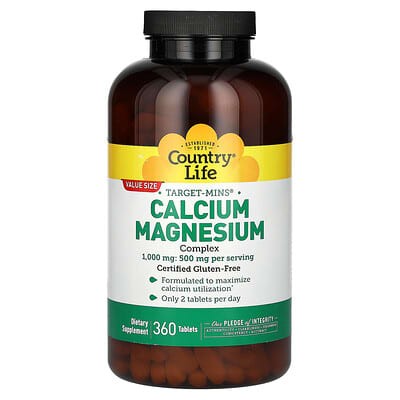
Target-Mins Calcium Magnesium Complex

Goals
$39.55 $0.21 per serving


Product analysis
Target-Mins Calcium Magnesium Complex lists useful amount details, but leaves some form or blend information unspecified. Good assessed value makes it worth considering, although some assessed forms are weak.
AI assessment of the formula, label and price. How scoring works
Nutrient Quality58
Form quality is mixed, with favorable assessments for phosphorus but weaker assessments for magnesium.
Ingredient Transparency80
The label discloses useful details but omits some assessed forms or composition information.
Value For Money77
The assessed ingredient contributions offer good value overall.
Customer Satisfaction89
Customer ratings are positive overall; the size of the rating pool adds context.
Product Focus69
The formula aligns reasonably well with its assessed goals.
- Format
Tablet - Container
- 360 Tablet(s)
- Per serving
- $0.21
- Also available
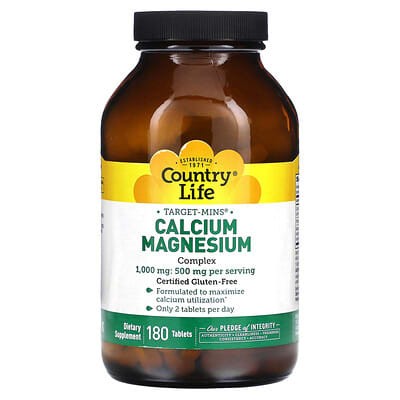 Target-Mins Calcium Magnesium Complex$25.99
- Customer rating
- 4.7 · 6,656 ratings
Goals

Impact
Highest effect
Phosphorus · 500 mgMagnesium · 500 mgCalcium · 1000 mg
Calcium and magnesium can fill dietary gaps supporting normal bone mineralization and metabolism. Phosphorus is a bone constituent whose replacement matters when intake or availability is deficient, without established added benefit above adequacy. The substantial calcium serving has an unmet partner requirement in the saved findings. These nutritional roles do not establish routine fracture prevention or a stronger effect from larger amounts.
How this product is rated for Bone Health
Ingredient fit85
Calcium is a key ingredient in the saved bone-related findings. The amounts provide uneven support.
Goal fit
Calcium gives the formula a focused bone-related connection, although the product has other linked uses.
Dose adequacy
The disclosed amounts provide uneven or partial support; unknown quantities limit their contributions without establishing ineffectiveness.
Pathways60
Coverage is strongest for bone mineral supply. The breadth finding includes bone mineral supply.
Depth
The strongest saved coverage concerns bone mineral supply; coverage does not establish a change in bone density or fracture risk.
Breadth
The routes meeting the breadth criterion are bone mineral supply. Other bone functions receive less or no coverage.
Evidence100
Calcium supports filling dietary gaps for normal mineralization; fracture results are mixed, and larger supplemental amounts do not establish added benefit.
Evidence strength
Calcium supports filling dietary gaps for normal mineralization; fracture results are mixed, and larger supplemental amounts do not establish added benefit.
Studied preparation
The credited preparations meet the saved criteria, while the supplied nutritional, population and outcome limitations still apply.
Formulation logic94
The saved findings identify an unmet partner requirement for calcium; its contribution is retained with that limitation. No evaluated ingredient conflict was identified.
Partner coverage
The saved findings identify an unmet partner requirement for calcium; its contribution is retained with that limitation.
Conflicts
No ingredient conflict was identified by the evaluated rules.
Effective doses
All credited ingredients meet the saved minimum amount criterion; this is not a proven effective dose or fracture-prevention threshold.

Impact
Highest effect
Magnesium · 500 mg
Magnesium contributes to energy and mineral metabolism; Calcium contribute to bone and mineral nutrition. These nutritional contributions are useful when intake falls short; extra benefit above adequate intake is not established.
How this product is rated for Everyday Health
Ingredient fit91
Magnesium and Calcium supply the main nutritional contributions.
Goal fit
The relevant nutrients address several ordinary nutritional needs.
Dose adequacy
The relevant serving amounts reach the saved comparison endpoints; these do not establish extra benefit above adequate intake.
Pathways80
The strongest supported area is energy metabolism cofactors.
Depth
The strongest supported area is energy metabolism cofactors.
Breadth
The broader contribution covers energy metabolism cofactors, bone and mineral metabolism.
Evidence86
The nutrient findings concern filling dietary gaps, with no established extra benefit when intake is adequate.
Evidence strength
Magnesium leads the saved comparison; the supported contribution is nutritional availability when intake is low.
Studied preparation
The saved findings accept the relevant preparations; this does not demonstrate superior forms or improved outcomes in adequately nourished adults.
Formulation logic100
The relevant ingredients have no missing required partners or triggered listed conflicts.
Partner coverage
The relevant ingredients can contribute independently or have their required partners; this does not establish an added combination benefit.
Conflicts
No listed ingredient conflict was triggered by the supplied facts.
Effective doses
All ingredients retained in this finding meet its amount threshold; that threshold is not a proven clinical dose.

Impact
Moderate effect
Magnesium · 500 mg
Magnesium contributes to meeting nutritional needs, with fatigue and weakness among the possible signs of low intake or status. The 500 mg serving does not imply greater energy benefit than nutritional adequacy.
How this product is rated for Energy
Ingredient fit70
The selection spans several purposes, with part of its ingredients relevant to nutritional energy support. The assessed amounts fully match the saved ingredient comparisons.
Goal fit
The selection spans several purposes, with part of its ingredients relevant to nutritional energy support.
Dose adequacy
The assessed amounts fully match the saved ingredient comparisons.
Pathways0
The saved findings identify no contribution across the reviewed energy mechanisms. No reviewed mechanism reaches the saved coverage threshold.
Depth
The saved findings identify no contribution across the reviewed energy mechanisms.
Breadth
No reviewed mechanism reaches the saved coverage threshold.
Evidence88
Magnesium provides the strongest saved ingredient finding, with the practical benefit dependent on nutritional need. The qualifying preparations match the saved reviewed comparisons.
Evidence strength
Magnesium provides the strongest saved ingredient finding, with the practical benefit dependent on nutritional need.
Studied preparation
The qualifying preparations match the saved reviewed comparisons.
Formulation logic100
No missing required ingredient partner was identified. No configured ingredient conflict was identified in the saved findings. All ingredients assessed for amounts reach the saved minimum comparison level.
Partner coverage
No missing required ingredient partner was identified.
Conflicts
No configured ingredient conflict was identified in the saved findings.
Effective doses
All ingredients assessed for amounts reach the saved minimum comparison level.

Impact
High effect
Magnesium · 500 mg
Magnesium contributes to electrolyte balance and blood-vessel tone, with marginal and inconsistent blood-pressure effects. The declared 500 mg per serving receives full amount recognition, without establishing a larger clinical benefit than smaller servings. Its mix of mineral forms does not demonstrate superior cardiovascular effects or broader support across cholesterol and triglyceride metabolism.
How this product is rated for Heart Health
Ingredient fit70
The relevant ingredient amounts receive full recognition in the saved comparison. Focus also depends on the formula’s other actives and links to other goals.
Goal fit
Relevant ingredients sit within a broader formula; other actives and links to additional goals reduce its focus here.
Dose adequacy
The included serving amounts receive full recognition in the saved comparison, without establishing optimal clinical doses.
Pathways57
The strongest recognized contribution is to electrolyte balance and blood-vessel tone. Coverage remains concentrated on this route.
Depth
The strongest recognized connection is to electrolyte balance and blood-vessel tone.
Breadth
Coverage is concentrated on electrolyte balance and blood-vessel tone; the other routes do not reach the supplied threshold.
Evidence89
Magnesium leads the saved evidence finding, though its blood-pressure effects are marginal and inconsistent. The included preparations are recognized as studied.
Evidence strength
Magnesium leads the saved evidence finding, though its blood-pressure effects are marginal and inconsistent.
Studied preparation
The included preparations are recognized as studied in the saved findings, without establishing form superiority.
Formulation logic100
No unmet required partner or configured conflict was identified. Included ingredients meet the saved amount threshold.
Partner coverage
The supplied findings identify no unmet required partner for the included ingredients; this does not establish synergy.
Conflicts
No configured ingredient conflict was matched in the supplied findings.
Effective doses
The ingredients included in this check meet its amount threshold, without establishing proven clinical efficacy at those amounts.

Impact
High effect
Magnesium · 500 mg
Magnesium contributes to normal blood-vessel function, with greater plausibility when magnesium status is low or blood pressure is elevated. Findings on arterial stiffness and blood pressure are mixed, including trials with no overall improvement. The supplied serving provides a substantial magnesium amount, but this does not establish prevention of cardiovascular events or superior effects from its particular salts.
How this product is rated for Cardiovascular Support
Ingredient fit70
The formula includes cardiovascular-related nutrients alongside ingredients aimed at other nutritional roles. The relevant declared amounts reach the saved comparison levels; this does not make a serving equivalent to a studied daily regimen.
Goal fit
The formula includes cardiovascular-related nutrients alongside ingredients aimed at other nutritional roles.
Dose adequacy
The relevant declared amounts reach the saved comparison levels; this does not make a serving equivalent to a studied daily regimen.
Pathways54
The main saved finding concerns vascular tone and blood-pressure regulation. The described mechanisms do not establish cardiovascular-event prevention.
Depth
The strongest saved finding concerns vascular tone and blood-pressure regulation; its biological relevance remains subject to the ingredient-specific limitations.
Breadth
The saved findings are concentrated in vascular tone and blood-pressure regulation, with limited breadth.
Evidence79
The vascular evidence concerns selected markers and populations, with mixed findings rather than established general cardiovascular protection.
Evidence strength
The vascular evidence concerns selected markers and populations, with mixed findings rather than established general cardiovascular protection.
Studied preparation
The saved findings recognize the relevant preparations as studied; their populations and outcomes still limit what can be expected.
Formulation logic100
The relevant ingredients do not require an unprovided partner, and no checked conflict was found.
Partner coverage
The relevant ingredients can act alone or have their required partners; no additional combined benefit is established.
Conflicts
No conflict covered by the supplied checks was identified.
Effective doses
All ingredients included in this finding meet the saved minimum amount comparison; that threshold is not a proven effective dose.

Impact
High effect
Magnesium · 500 mg
Magnesium supports normal nerve function and may help stress symptoms when magnesium is low or in selected clinical settings. The selected serving provides 500 mg elemental magnesium from several declared salts, above the highest comparison anchor; greater benefit or suitability is not established. Their relative amounts and absorption are unresolved. The stress connection centers on calming nerve activity, with broad everyday relief still uncertain.
How this product is rated for Stress Relief
Ingredient fit70
Magnesium supplies the stress connection within a calcium-and-mineral formula.
Goal fit
Magnesium supplies the stress connection within a calcium-and-mineral formula.
Dose adequacy
Magnesium reaches the comparison endpoint, with no additional contribution above it.
Pathways50
Magnesium provides the main connection to calming nerve activity. The connection is concentrated in calming nerve activity, with little support for other stress aspects.
Depth
Magnesium provides the main connection to calming nerve activity.
Breadth
The connection is concentrated in calming nerve activity, with little support for other stress aspects.
Evidence76
Magnesium supplies the strongest relevant evidence here, with benefits most applicable to low-magnesium or selected clinical settings.
Evidence strength
Magnesium has the strongest relevant evidence here, particularly in low-magnesium or selected clinical settings.
Studied preparation
The saved findings recognize the relevant preparations; this does not establish that the complete formula reproduces a trial regimen.
Formulation logic100
The relevant ingredients can contribute without a missing required partner. The supplied checks found no matched formulation conflict.
Partner coverage
No required partner is missing for the relevant ingredient contributions.
Conflicts
No listed ingredient combination triggered a conflict in the supplied checks.
Effective doses
All included ingredients reach the minimum amount threshold used for their contributions.
Ingredients
| Ingredient | Amount per serving | Score |
|---|---|---|
Calcium (Calcium Aspartate, Calcium Citrate, Calcium Hydroxyapatite) | 1000 mg | |
Phosphorus (Calcium Hydroxyapatite) | 500 mg | |
Magnesium (Magnesium Aspartate, Magnesium Citrate, Magnesium Oxide, Magnesium Taurinate) | 500 mg |
Phosphorus (Calcium Hydroxyapatite) · 500 mg OverallScore92
A serving supplies 500 mg of phosphorus as calcium hydroxyapatite. The whole-product serving costs about $0.22.
How this ingredient is rated
Active Ingredient Quality & Bioavailability100
Calcium hydroxyapatite is favored by the evaluation’s form policy; that rating does not establish a difference in absorption or bone effects.
Phosphorus Form Quality
Calcium hydroxyapatite is favored by the evaluation’s form policy; that rating does not establish a difference in absorption or bone effects.
Form Disclosure Clarity
A phosphorus form is identified on the phosphorus entry in the saved facts.
Dose, Safety & Label Transparency80
The phosphorus amount is stated as 500 mg per serving, a higher amount in the evaluation.
Dose Adequacy and Safety
A serving supplies 500 mg of phosphorus, a higher amount in the evaluation.
Elemental Dose Transparency
The saved facts state 500 mg of phosphorus per serving as the phosphorus amount, rather than only a compound weight.
Value100
A whole-product serving costs about $0.22 and supplies 500 mg of phosphorus. The evaluation uses the serving price without a minimum amount.
Price Per Serving Efficiency
A whole-product serving costs about $0.22 and supplies 500 mg of phosphorus. The evaluation uses the serving price without a minimum amount.
Each serving provides 1,000 mg of calcium, a large amount for a single serving. Some of that calcium may be absorbed less efficiently at this serving size.
How this ingredient is rated
Active Ingredient Quality & Bioavailability72
The calcium amount is stated as 1000 mg per serving. The sources are calcium aspartate, calcium citrate, and calcium hydroxyapatite; their proportions are unknown.
Calcium Form & Absorption Potential
The sources are calcium aspartate, calcium citrate, and calcium hydroxyapatite; their proportions are unknown.
Elemental Calcium Transparency
The amount is stated as 1000 mg of calcium per serving.
Dose, Safety & Label Transparency64
A serving provides 1000 mg of calcium, a large amount that may be absorbed less efficiently in a single serving. The available information identifies no evaluated artificial additives or flow agents; the sugar amount is unknown.
Absorption-Optimized Serving Dose
A serving provides 1000 mg of calcium, a large amount that may be absorbed less efficiently in a single serving.
Formulation Purity & Additives
The available information identifies no evaluated artificial additives or flow agents; the sugar amount is unknown.
Value100
A whole-product serving costs about $0.22.
Price Per Serving Efficiency
A whole-product serving costs about $0.22.
Magnesium (Magnesium Aspartate, Magnesium Citrate, Magnesium Oxide, Magnesium Taurinate) · 500 mg OverallScore52
A serving supplies a relatively large 500 mg of magnesium from four forms, including oxide. Their individual contributions are unknown.
How this ingredient is rated
Active Ingredient Quality & Bioavailability25
The blend contains magnesium aspartate, magnesium citrate, magnesium oxide, and magnesium taurinate. The individual source proportions are unknown.
Magnesium Form & Absorption Potential
The sources are magnesium aspartate, magnesium citrate, magnesium oxide, and magnesium taurinate; their individual proportions are unknown.
Patented Materials & Chelation Quality
The saved facts do not establish a named branded material or a fully chelated magnesium claim.
Dose, Safety & Label Transparency78
A serving supplies 500 mg of elemental magnesium.
Elemental Yield Transparency
The elemental magnesium amount is stated as 500 mg per serving.
Therapeutic Dosage Alignment
A serving supplies 500 mg of elemental magnesium.
Synergistic Formulation Logic
No positive amount of vitamin B6, vitamin D or boron is established in the saved facts.
Value52
The whole-product serving costs about $0.22.
Price Per Elemental Quality
The whole-product serving costs about $0.22.
Alternative products
Report alternatives
Sources
Published studies used for the product analysis and the top-ranked studies for each ingredient and goal.
- What is the impact of daily oral supplementation of vitamin D3 (cholecalciferol) plus calcium on the incidence of hip fracture in older people? A systematic review and meta-analysis.
- Calcium supplementation prevents seasonal bone loss and changes in biochemical markers of bone turnover in elderly New England women: a randomized placebo-controlled trial.
- The effects of calcium supplementation (milk powder or tablets) and exercise on bone density in postmenopausal women.
- The efficacy of calcium supplementation alone in elderly Thai women over a 2-year period: a randomized controlled trial.
- Calcium-enriched foods and bone mass growth in prepubertal girls: a randomized, double-blind, placebo-controlled trial.
- Association between Serum Magnesium and Fractures: A Systematic Review and Meta-Analysis of Observational Studies.
- Bioabsorbable Magnesium-Based Materials Potential and Safety in Bone Surgery: A Systematic Review.
- Vascularized bone grafting fixed by biodegradable magnesium screw for treating osteonecrosis of the femoral head.
- An update on magnesium and bone health.
- Sex-specific differences in the association of magnesium intake with femoral neck bone mineral density among older adults.
- Dairy product consumption, eating habits, sedentary behaviour and physical activity association with bone mineral density among adolescent boys: a cross-sectional observational study.
- Burosumab Improved Histomorphometric Measures of Osteomalacia in Adults with X-Linked Hypophosphatemia: A Phase 3, Single-Arm, International Trial.
- Early high calcium and phosphorus intake by parenteral nutrition prevents short-term bone strength decline in preterm infants.
- Phosphate Metabolism in Health and Disease.
- Expert consensus on clinical management of metabolic bone disease of prematurity (2021).
- Circulating and dietary magnesium and risk of cardiovascular disease: a systematic review and meta-analysis of prospective studies.
- Magnesium and the risk of cardiovascular events: a meta-analysis of prospective cohort studies.
- Quantitative Association Between Serum/Dietary Magnesium and Cardiovascular Disease/Coronary Heart Disease Risk: A Dose-Response Meta-analysis of Prospective Cohort Studies.
- Comparative Efficacy of Nutraceuticals on Endothelial Function: A Systematic Review and Network Meta-Analysis.
- Serum magnesium, mortality, and cardiovascular disease in chronic kidney disease and end-stage renal disease patients: a systematic review and meta-analysis.