No linked studies yet.
Product analysis
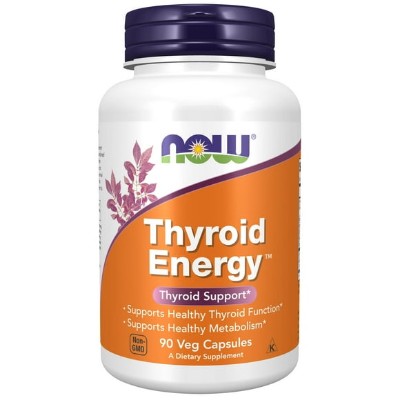
Thyroid Energy combines vitamins, minerals and herbs in one supplement, with favourable iodine and zinc forms. Unclear folate and tyrosine forms leave a few details harder to compare.
AI assessment of the formula, label and price. How scoring works
Nutrient Quality48
Iodine and zinc use favourable, clearly identified sources. The copper description is less specific, and several other ingredients do not have an established quality advantage.
Ingredient Transparency93
All listed amounts are stated, and most ingredient forms are named. Folate and tyrosine lack clear form details, leaving a few comparisons incomplete.
Value For Money50
The iodine and copper comparisons are favourable, while zinc offers reasonably competitive value. Several other ingredient comparisons remain unresolved, leaving the value of the full mixture less certain.
Customer Satisfaction75
Customers are generally positive about the supplement. Several hundred ratings provide a useful satisfaction picture, without proving benefits.
Product Focus22
The formula brings several nutrients and herbs together for a broad purpose. Its many ingredients do not establish a clear benefit for every goal or for every person.
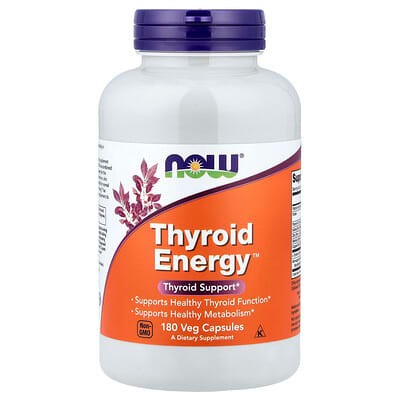
- Format
Capsule - Container
- 90 Capsule(s)
- Per serving
- $0.28
- Also available
Thyroid Energy$22.25- Customer rating
- 4.5 · 600 ratings
Goals
No linked studies yet.
Ingredients
| Ingredient | Amount per serving | Score |
|---|---|---|
Vitamin B6 (Pyridoxine Hydrochloride) | 2 mg | |
Folate | 680 mcg DFE | |
Vitamin B12 (Methylcobalamin) | 60 mcg | |
Iodine (Potassium Iodide) | 225 mcg | |
Zinc (L-OptiZinc) | 25 mg | |
Selenium (L-Selenomethionine) | 50 mcg | |
Copper (Copper Amino Acid Chelate) | 1 mg | |
L-Tyrosine | 1 Gram(s) | |
Guggul standardized extract (Guggulsterones) | 75 mg | |
Ashwagandha standardized extract (Withanolides) | 50 mg |
How this ingredient is rated
Active Ingredient Quality & Bioavailability100
Iodine Form & Bioavailability
Marine Source Purity & Sourcing
Dose, Safety & Label Transparency100
Dosage Efficacy for Daily Support
Dosage Safety & Upper Limits
Elemental Iodine Transparency
Value80
Price Per Effective Serving
How this ingredient is rated
Active Ingredient Quality & Bioavailability100
Zinc Form Bioavailability
Dose, Safety & Label Transparency91
Elemental Dose Transparency
Zinc Dosage Safety & Effectiveness
Zinc-to-Copper Mineral Balance
Value60
Price Per Serving Efficiency
Alternative products
Sources
Published studies used for the product analysis and the top-ranked studies for each ingredient and goal.
- The Association between Dietary and Circulating Copper Levels and Osteoporosis: a Scoping Review.
- Association between dietary copper, iron, zinc, selenium intake and osteopenia or osteoporosis in elderly hypertensive patients: a retrospective cohort study.
- Associations of dietary copper intake with total bone mineral density and lumbar spine bone mineral density in American adults.
- The association between dietary mineral intake and bone mineral density: a cross-sectional study.
- Association between dietary copper intake and bone mineral density in children and adolescents aged 8-19 years: A cross-sectional study.
- Association between RBC folate and lumbar bone mineral density in postmenopausal women, a cross-sectional study from NHANES 2009-2018.
- Genetic variants modify the associations of concentrations of methylmalonic acid, vitamin B-12, vitamin B-6, and folate with bone mineral density.
- Adequate Intake and Supplementation of B Vitamins, in Particular Folic Acid, can Play a Protective Role in Bone Health.
- Relation of homocysteine, folate, and vitamin B12 to bone mineral density of postmenopausal women.
- Dietary intake of folate, but not vitamin B2 or B12, is associated with increased bone mineral density 5 years after the menopause: results from a 10-year follow-up study in early postmenopausal women.
- Effect of Vitamin B12 and Folic Acid Supplementation on Bone Mineral Density and Quantitative Ultrasound Parameters in Older People with an Elevated Plasma Homocysteine Level: B-PROOF, a Randomized Controlled Trial.
- Plasma B vitamins, homocysteine, and their relation with bone loss and hip fracture in elderly men and women.
- Relation between homocysteine and B-vitamin status indicators and bone mineral density in older Americans.
- The role of B-vitamin intake, B-vitamin-rich dietary patterns, the B-vitamin deficiency index in bone mineral density among school-aged children.
- Hyperhomocysteinemia is Associated with Inflammation, Bone Resorption, Vitamin B12 and Folate Deficiency and MTHFR C677T Polymorphism in Postmenopausal Women with Decreased Bone Mineral Density.
- The Effects of the AGE Inhibitor Pyridoxamine on Bone in Older Women With Type 2 Diabetes: A Randomized Clinical Trial.
- Dietary B vitamin intake and risk of hip fracture: the Singapore Chinese Health Study.
- Hip fracture patients may be vitamin B6 deficient. Controlled study of serum pyridoxal-5'-phosphate.
- Degree of mineralization-related collagen crosslinking in the femoral neck cancellous bone in cases of hip fracture and controls.
- Increased incidence of fractures in middle-aged and elderly men with low intakes of phosphorus and zinc.