Nutrient quality
Active B vitamins and vitamin D3 are excellent, while several yeast-derived mineral forms are less specific. Vitamins, trace minerals, and choline are useful, while calcium and magnesium are absent.
.
 Vitacost Vitacost | $ 74.99 | |
 iHerb iHerb | $ 74.99 | |
 Amazon Amazon | $ 70.96 | |
 Pure Formulas Pure Formulas | $ 74.99 |
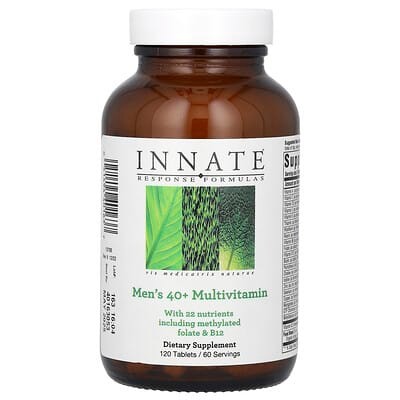
The formula uses P-5-P, methylfolate, methylcobalamin, riboflavin phosphate, vitamin D3, natural vitamin E, K2, and a broad trace-mineral pattern. The formula is designed for broad daily coverage rather than a single nutrient goal.
Calcium and magnesium are absent, choline is incomplete, and the premium positioning carries a high serving cost. These gaps materially affect how complete and transparent the product is.
The product best fits men over 40 seeking an active-form iron-free multi. Diet and any separate supplements still need to cover nutrients that are missing or only partly supplied.
Active B vitamins and vitamin D3 are excellent, while several yeast-derived mineral forms are less specific. Vitamins, trace minerals, and choline are useful, while calcium and magnesium are absent.
.Amounts are clear, though several nutrients are described mainly by their yeast source. Complete non-active ingredient details are not included in the supplied label data.
.The supplied average rating provides limited high-level context. Detailed firsthand feedback is unavailable, so recurring complaints and purpose fit cannot be assessed.
.Good forms do not fully justify the very high serving cost and missing major minerals. Trace-nutrient coverage provides limited dose-adjusted value at the premium price.
.Active riboflavin, vitamin B6, methylfolate, methylcobalamin, iodine, and choline form a well-designed metabolic nutrient base. The formula supports sustained cellular metabolism rather than acute stimulation.
Iodine reaches maintenance level, while B12 and most B vitamins remain below the specified high-dose targets. Bioactive vitamin forms strengthen quality, though yeast-bound iodine and several trace minerals are less precisely characterized.

Foundational nutrients support several natural clearance processes, led by choline, vitamin C, selenium, molybdenum, and active B-vitamin forms. The formula is better suited to steady nutritional support than to focused liver or gut clearance.
Choline supports liver fat transport, while selenium and vitamin C contribute antioxidant protection during normal metabolism. Missing glutathione-building amino acids, concentrated liver botanicals, and digestive binders limit the expected contribution to detoxification.
| Ingredient | Amount per serving |
|---|---|
Vitamin A (Beta Carotene) | 525 mcg RAE |
Vitamin C (organic Orange) | 200 mg |
Vitamin D3 (Cholecalciferol) | 25 mcg |
Vitamin E (D-Alpha-Tocopherol) | 20 mg |
Vitamin K1 (Phytonadione) | 60 mcg |
Thiamin (Thiamine HCl) | 2 mg |
Riboflavin (Riboflavin 5'-Phosphate Sodium) | 2 mg |
Niacin (Niacinamide) | 20 mg NE |
Vitamin B6 (Pyridoxal-5-Phosphate) | 6 mg |
Folate (L-5-Methyltetrahydrofolate) | 340 mcg DFE |
Vitamin B12 (Methylcobalamin) | 12 mcg |
Biotin (organic Brown Rice) | 250 mcg |
Pantothenic Acid (Calcium D-Pantothenate) | 10 mg |
Choline (Choline Bitartrate) | 200 mg |
Iodine (S. cerevisiae) | 150 mcg |
Zinc (Rice Amino Acid Chelate) | 15 mg |
Selenium (S. cerevisiae) | 50 mcg |
Copper (S. cerevisiae) | 0.2 mg |
Manganese (S. cerevisiae) | 1.5 mg |
Chromium (S. cerevisiae) | 120 mcg |
Molybdenum (S. cerevisiae) | 55 mcg |
Vitamin K2 (Menaquinone-7) | 30 mcg |
Yeast-bound iodine is clearly sourced but has less certain absorption than potassium iodide. The clearly stated 150 mcg serving meets daily-support needs and remains safely below the upper limit. A premium serving cost remains weak value despite a meaningful selenium cofactor.
Choline bitartrate provides a useful systemic form, though it is not the preferred choice for focused cognitive support. The stated dose is moderate and requires two tablets. Cost efficiency is weak for a standard bitartrate form, and the available data do not include the inactive ingredients needed to judge purity.
The formula distinguishes vitamin K1 from generic MK-7, but no branded or all-trans MK-7 source is disclosed. 30 mcg is a low MK-7 amount and is unlikely to deliver a full targeted serving; value for MK-7 is weak because the form is absent, undefined, or underdosed. Vitamin K can oppose warfarin and related vitamin K antagonists, so users of those medicines need consistent intake and clinician guidance.
Published studies used for the product analysis and the top-ranked studies for each ingredient and goal.