
Nutrient quality
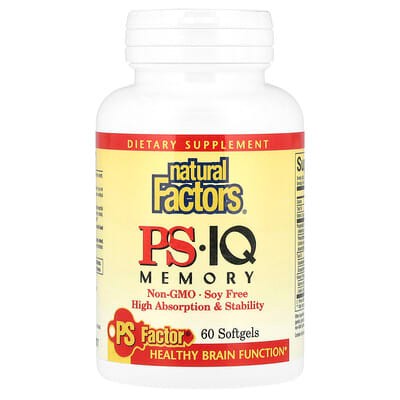
Phosphatidylserine, tuna oil, and evening primrose oil create a coherent memory-support blend. The DHA, GLA, and phosphatidylserine amounts are small, while several phospholipid amounts remain unspecified.
 iHerb iHerb | $ 12.57 | |
 Vitacost Vitacost | $ 12.57 |
The formula combines 50 mg phosphatidylserine with 100 mg DHA, 20 mg EPA, vitamin E, and small evening primrose fatty acids. Its concept is broad, but none of the headline cognitive or omega-3 actives reaches a particularly substantial amount.
A 280 mg phospholipid complex is listed while most component quantities remain unknown. Tuna oil is identified, yet molecular form, purification method, and independent purity evidence are absent.
Two softgels provide each of 30 servings, and targeted value is weak because the active amounts are dispersed. It may fit users wanting a mixed lipid formula, not those seeking efficient DHA, GLA, or phosphatidylserine dosing.
Phosphatidylserine, tuna oil, and evening primrose oil create a coherent memory-support blend. The DHA, GLA, and phosphatidylserine amounts are small, while several phospholipid amounts remain unspecified.
Most central active amounts are disclosed, but some components remain unquantified and the phospholipid complex leaves some component amounts unclear. Complete intake directions and a full non-active ingredient list are not supplied.
The supplied aggregate rating is favorable and rests on a moderate sample. No specific feedback is provided, so repeated complaints and real-world fit with the intended purpose cannot be assessed.
The effective serving offers limited value relative to formula and dose quality. Weak doses or low-value additions reduce spending efficiency.
| Ingredient | Amount per serving |
|---|---|
Calories | 10 Calorie(s) |
Total Fat | 1 Gram(s) |
Vitamin E | 20 mg |
Phospholipid Complex | 280 mg |
Phosphatidylserine | 50 mg |
Tuna Oil | 400 mg |
Docosahexaenoic Acid | 100 mg |
Eicosapentaenoic Acid | 20 mg |
Evening Primrose Oil | 300 mg |
Gamma-Linolenic Acid | 30 mg |
Linoleic Acid | 194 mg |
The explicitly listed 194 mg linoleic acid amount is below the collection median, limiting its use as a targeted supplement. Natural vitamin E helps protect the oils from oxidation, but the pressing or solvent-removal method is not stated. Cost per gram of linoleic acid is high.
Evening primrose supplies a moderate-density GLA source with a clearly stated active yield. The amount is very small, and vitamin E supports stability, but the extraction method remains undisclosed. Cost per active GLA is high, making it inefficient for targeted supplementation.
Vitamin E protects the tuna oil, but the DHA form is not identified. The 100 mg dose and low omega-3 concentration limit potency, while no independent purity evidence is supplied. Cost per gram of DHA remains high.