
Nutrient quality
Hemp oil supplies substantial amounts of GLA, linoleic acid, and alpha-linolenic acid. The label omits extraction and antioxidant-stability details, and the large linoleic acid load makes the oil less targeted.
 iHerb iHerb | $ 9.81 | |
 Pure Formulas Pure Formulas | $ 8.30 | |
 Vitacost Vitacost | $ 10.09 |
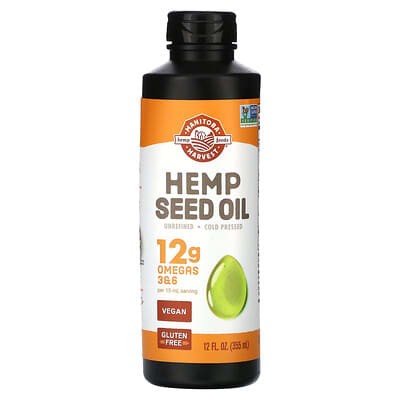
Each liquid serving supplies 8 g of linoleic acid, 420 mg of GLA, 2 g of alpha-linolenic acid, and 140 mg of stearidonic acid. That broad profile supports users seeking multiple plant-based fatty acids rather than an isolated GLA product.
All key fatty-acid amounts are disclosed, making the nutritional contribution easy to judge. The extraction method and any antioxidant protection are not stated, which matters for a polyunsaturated bulk oil.
Twenty-four servings provide a shorter supply than softgel options but strong active-ingredient value. The 13 g total-fat serving also needs to fit the user's diet and preference for liquid oil.
Hemp oil supplies substantial amounts of GLA, linoleic acid, and alpha-linolenic acid. The label omits extraction and antioxidant-stability details, and the large linoleic acid load makes the oil less targeted.
Listed active ingredients have specific amounts and no proprietary blend hides their doses. Complete intake directions and a full non-active ingredient list are not supplied.
The supplied aggregate rating is favorable and rests on a substantial sample. No specific feedback is provided, so repeated complaints and real-world fit with the intended purpose cannot be assessed.
The effective serving offers good value relative to formula and dose quality. A focused ingredient list supports efficient spending.

The hemp oil supplies a substantial amount of gamma-linolenic acid, a precursor to anti-inflammatory prostaglandins. Alpha-linolenic and stearidonic acids add related fatty-acid pathways, giving the oil broader coverage than isolated GLA alone.
The fatty-acid amounts are clearly stated, but hemp is a relatively dilute GLA source and the label omits extraction and antioxidant-stability details. A large linoleic-acid load accompanies the useful GLA amount, so the formula is potent but not especially concentrated for the target pathway.

Gamma-linolenic acid and other polyunsaturated fats directly support skin-barrier lipid nutrition. Human evidence supports essential fatty acids for dry or barrier-impaired skin, though hemp oil is less studied than targeted GLA oils.
The gamma-linolenic acid amount is substantial and the broader fatty-acid profile is clearly quantified. Active amounts are transparent, but extraction method and antioxidant protection are not disclosed.
| Ingredient | Amount per serving |
|---|---|
Calories | 121 {Calories} |
Calories from Fat | 117 {Calories} |
Total Fat | 13 Gram(s) |
Saturated Fat | 1 Gram(s) |
Trans Fat | 0 Gram(s) |
Polyunsaturated Fat | 10 Gram(s) |
Monounsaturated Fat | 2 Gram(s) |
Cholesterol | 0 mg |
Sodium | 0 mg |
Total Carbohydrates | 1 Gram(s) |
Dietary Fiber | 0 Gram(s) |
Sugar | 0 Gram(s) |
Protein | 0 Gram(s) |
Alpha-Linolenic Acid | 2000 mg |
Linoleic Acid | 8000 mg |
Gamma-Linolenic Acid | 420 mg |
Stearidonic Acid | 140 mg |
Hemp oil provides a clearly disclosed 420 mg of gamma-linolenic acid per serving, giving it substantial potency for this collection. Hemp is naturally a low-concentration GLA source, and the label does not identify an extraction method or antioxidant stabilizer. Even with those quality uncertainties, the large active serving makes the cost per unit of GLA highly favorable.
The hemp oil supplies a high amount of clearly disclosed linoleic acid in each serving. Its bulk liquid format delivers very favorable cost efficiency, though no pressing method is stated. The absence of listed antioxidant protection leaves some uncertainty about oxidation during storage.
Published studies used for the product analysis and the top-ranked studies for each ingredient and goal.