
Nutrient quality
Natural algal and marigold carotenoids in a softgel gives the formula reasonable ingredient quality. Dose uncertainty or limited delivery detail prevents a confident quality assessment.
 iHerb iHerb | $ 16.77 | |
 Amazon Amazon | $ 17.47 |
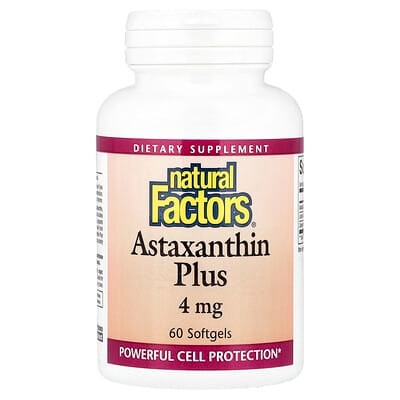
A 4 mg H. pluvialis astaxanthin serving is paired with lutein and zeaxanthin for an eye-oriented antioxidant formula. The combination is coherent and the softgel suits all three fat-soluble carotenoids.
Lutein and zeaxanthin are present in small amounts, while carrier oil and stability information are absent. The companions add context but do not make this a full-strength macular formula.
It best fits adults wanting general eye and skin antioxidant support in one softgel. Heart and cognitive relevance remains secondary because the blend does not address their main pathways directly.
Natural algal and marigold carotenoids in a softgel gives the formula reasonable ingredient quality. Dose uncertainty or limited delivery detail prevents a confident quality assessment.
The meaningful actives and their amounts are clearly identified. Serving guidance and the complete inactive-ingredient list are not fully supplied.
The aggregate rating is favorable and supported by useful review volume. No review excerpts are supplied to assess repeated complaints or purpose-specific experiences.
Formula quality provides fair value for the category. The effective serving and focused ingredient list compare favorably with similar options.

Natural astaxanthin offers targeted antioxidant support for skin, eye, and cellular resilience. The disclosed 4 mg serving is meaningful, while lutein and zeaxanthin add related eye-focused antioxidant coverage.
Human evidence supports selected age-relevant outcomes, although it does not establish broad healthspan effects. The focused softgel provides useful oxidative-stress support but little mitochondrial or structural coverage.

Natural astaxanthin from Haematococcus pluvialis provides targeted antioxidant and photo-protective support at 4 mg. Human evidence is relevant to skin resilience, although the formula does not provide collagen or hydration building blocks.
Small amounts of lutein and zeaxanthin add antioxidant context but are oriented more toward eye support. No carrier oil, trademarked source, or oxidation-protection detail is disclosed, which limits confidence in delivery quality.

Astaxanthin provides targeted antioxidant support for retinal tissues and may help with visual fatigue. Its natural algal source and disclosed amount make the main active easy to assess.
Lutein and zeaxanthin add macular pigments, but their amounts are too low for robust macular support. The formula also lacks omega-3s and the broader antioxidant-mineral combination used in established vision formulas.

Natural astaxanthin provides targeted antioxidant support that may help protect tissues from oxidative signals tied to inflammation. The 4 mg amount reaches the minimum useful range but is not especially potent.
Lutein and zeaxanthin add complementary carotenoid protection, though their small amounts are more relevant to eye support than broad inflammatory balance. The source is disclosed, while the carrier oil and oxidation-protection details are missing.

Astaxanthin may support lipid antioxidant protection and selected blood-flow measures, while lutein and zeaxanthin add small amounts of related carotenoids. The combination is more naturally aligned with eye support than with a broad cardiovascular strategy.
The 4 mg astaxanthin amount reaches a useful lower-end level, while lutein and zeaxanthin are too small to add much cardiovascular depth. Natural algal sourcing is clear, but no carrier oil, branded ingredient, or stability protection is stated.

Astaxanthin supplies neural antioxidant support, with lutein and zeaxanthin adding related carotenoid protection. The 4 mg astaxanthin amount reaches the lower end of commonly used intake.
The formula is more closely aligned with antioxidant and eye support than direct memory or attention. Exact active amounts are clear, but lipid delivery, branded sourcing, and stability details are missing.

Astaxanthin provides antioxidant activity that may support vascular function, but it is not a primary heart-health ingredient. Lutein and zeaxanthin are mainly eye-health nutrients with little direct cardiovascular contribution.
The 4 mg astaxanthin amount and algal source are transparent, though the dose is modest for cardiovascular research. The focused antioxidant formula is easy to assess but lacks lipid, nitric-oxide, mineral, or cardiac-energy support.
| Ingredient | Amount per serving |
|---|---|
Astaxanthin (Haematococcus pluvialis) | 4 mg |
Lutein (Marigold) | 1 mg |
Zeaxanthin (Marigold) | 170 mcg |
Astaxanthin from Haematococcus pluvialis provides a well-supported natural source at a clinically relevant dose. The softgel also supplies complementary eye carotenoids, but no carrier oil, trademarked ingredient, or oxidation-protection detail is disclosed. Cost per active amount is low, supporting good value for a straightforward antioxidant formula.
Published studies used for the product analysis and the top-ranked studies for each ingredient and goal.