
Nutrient quality
EPA anchors a broad, logically combined fish and plant oil formula. Unspecified molecular forms and modest DHA and GLA amounts reduce focused potency.
 iHerb iHerb | $ 20.97 | |
 Vitacost Vitacost | $ 20.97 |
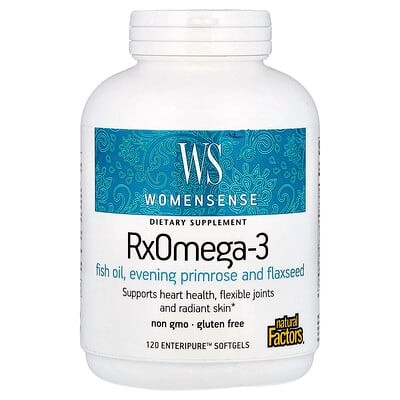
The blend clearly supplies 400 mg EPA and 200 mg DHA, giving the marine component an EPA-forward profile. Evening primrose contributes 50 mg GLA, while flax adds 260 mg alpha-linolenic acid for broader fatty-acid coverage.
Those line-item amounts make the formula easier to judge than blends that list only total oil. The combined marine omega-3 amount suits daily maintenance, though it is below the larger servings generally chosen for more targeted lipid support.
Fish species are named, but the molecular form of the fish oil is not disclosed. No antioxidant stabilizer or independent contaminant testing is stated, and evening primrose provides only a modest GLA amount.
EPA anchors a broad, logically combined fish and plant oil formula. Unspecified molecular forms and modest DHA and GLA amounts reduce focused potency.
Active fatty-acid amounts are clearly disclosed without a hidden blend. Complete use directions and inactive-ingredient details are not available.
The aggregate satisfaction measure is favorable, with response volume determining how much confidence it deserves. Comment-level evidence is absent, so recurring complaints and purpose fit cannot be verified.
Broad fatty-acid coverage and transparent doses support good value. Moderate potency and missing oil-form details keep the product from standing out.

Clearly disclosed EPA and DHA provide direct, evidence-based support for triglycerides and vascular inflammatory balance. ALA and GLA broaden the fatty-acid profile without obscuring the marine omega-3 amounts.
The EPA and DHA serving is useful but below the larger amounts commonly used for substantial triglyceride reduction. The focused oil blend is still one of the strongest cardiovascular fits in this group.

EPA and DHA provide the strongest direct anti-inflammatory mechanism, with evening primrose and flax oils adding other fatty-acid pathways. The combined marine omega-three amount suits maintenance but falls below a high-potency focused dose.
Individual EPA and DHA amounts are clear, while the fish-oil molecular form and oxidation protection are not disclosed. People with fish allergy should avoid the marine-oil component.
| Ingredient | Amount per serving |
|---|---|
Calories | 20 Calorie(s) |
Total Fat | 2 Gram(s) |
Polyunsaturated Fat | 2 Gram(s) |
Cholesterol | 5 mg |
pharmaceutical grade Fish Oil concentrate | 1070 mg |
Eicosapentaenoic Acid | 400 mg |
Docosahexaenoic Acid | 200 mg |
Evening Primrose Oil | 500 mg |
Gamma-Linolenic Acid | 50 mg |
organic Flaxseed Oil | 500 mg |
Alpha-Linolenic Acid | 260 mg |
The EPA amount is meaningful and clearly exceeds DHA, but the fish oil molecular form is not identified. EPA density is moderate, and no antioxidant protection is listed. Purification or recognized third-party contaminant testing is also not stated.
EPA and DHA are individually listed at a combined 600 mg, providing a maintenance dose. Active concentration is about 56% of the fish oil, while the molecular form is not disclosed and a pharmaceutical-grade claim supports general purity. Value is good, and the lack of an antioxidant stabilizer leaves oxidation protection uncertain.
Evening primrose provides a clearly stated GLA yield, though it is less concentrated than borage oil and the active amount is low. No extraction method or antioxidant stabilizer is identified, leaving oxidative protection uncertain. The cost per active amount is high despite a modest serving price.
Published studies used for the product analysis and the top-ranked studies for each ingredient and goal.