Rosemary

Description

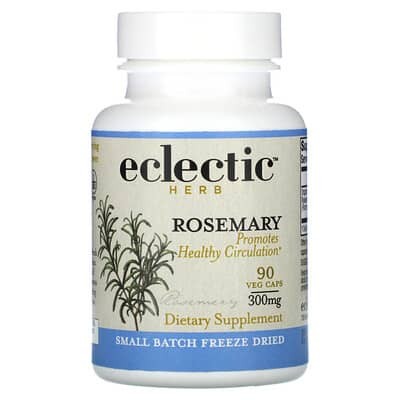
Rosemary (Rosmarinus officinalis) is an aromatic evergreen shrub native to the Mediterranean region, traditionally used as a culinary spice and for its medicinal properties. Its distinct flavor and fragrance come from its volatile oils and a wealth of bioactive compounds, including rosmarinic acid, carnosic acid, and various flavonoids, which contribute to its therapeutic potential. The herb is particularly renowned for its potent antioxidant activity, helping to protect cells from oxidative stress and damage. Additionally, rosemary exhibits anti-inflammatory effects, which can be beneficial for various bodily systems. It is also often associated with cognitive enhancement, with research exploring its potential to improve memory, concentration, and overall brain function. Beyond its internal uses, rosemary is popular in aromatherapy and topical applications for stimulating hair growth and improving skin health. It's a versatile herb recognized by both traditional herbalists and modern scientific research for its wide array of health-promoting benefits, supporting overall wellness and vitality.

Sources
Mediterranean region (native plant)Herbal teasCulinary spiceEssential oils
Cheapest Rosemary supplements
Discover the cheapest Rosemary supplements offering benefits for stress relief, cognitive support, and anti-inflammatory support, helping you achieve your wellness goals affordably.
Best Rosemary supplements
Explore the best Rosemary supplements chosen for their effectiveness in promoting stress relief, cognitive support, and anti-inflammatory benefits.
Value Rosemary supplements
Discover top-value Rosemary supplements for stress relief, cognitive support, and anti-inflammatory benefits to enhance your well-being.
Timing & Intake
AnytimeWith food
Can be consumed as a culinary herb or tea throughout the day. Supplements are often recommended with meals to enhance absorption and minimize potential mild gastric upset.
Optimal Dosage
Minimum500 mg
Maximum1500 mg
Safety & Toxicity
Interactions
Price per product
Average$30.00
Median$21.41
Price per serving
Average$0.64
Median$0.64
Price per 10 mg
Average$0.14
Median$0.10
Price distribution
Price per serving distribution
Price per 10 mg
Reference amount: 10 mg
Forms
Paired ingredients
Carnosic Acid (11)90
Carnosic acid is a major phenolic diterpene naturally present in Rosmarinus officinalis (rosemary). It is highly lipophilic, enabling it to penetrate biological membranes effectively. It exerts significant antioxidant effects by activating the Nrf2 pathway and possesses potent anti-inflammatory properties through the inhibition of NF-κB signaling and other inflammatory mediators.
Pros
  • Powerful antioxidant activity
  • Strong anti-inflammatory effects
  • Demonstrated neuroprotective potential
Cons
  • Poor water solubility, which can affect formulation
  • Bioavailability may vary depending on delivery method
  • Potential for interactions with certain medications
Per product
Avg$52.86
Med$38.52
Per serving
Avg$1.09
Med$0.74
Per 10 mg
Avg$0.19
Med$0.21
Price distribution
Carnosic Acid/Carnosol (3)92
This form combines carnosic acid and carnosol, two prominent phenolic diterpenes found in rosemary. Carnosol, a quinone derivative of carnosic acid, shares and often complements its biological activities. Both compounds are potent antioxidants (via Nrf2 activation) and anti-inflammatory agents (via NF-κB inhibition), potentially offering synergistic benefits.
Pros
  • Synergistic antioxidant and anti-inflammatory effects
  • Broad spectrum of action due to combined compounds
  • Enhanced neuroprotective potential compared to single compounds
Cons
  • Similar solubility and potential interaction considerations as carnosic acid alone
  • Standardization of ratio may vary between products
Per product
Avg$22.50
Med$24.00
Per serving
Avg$0.33
Med$0.33
Per 100 mg
Avg$0.33
Med$0.33
Price distribution
Diterpenic Compounds (3)88
This form represents the collective array of diterpenic compounds naturally occurring in rosemary, which includes key constituents like carnosic acid, carnosol, and rosmanol. These compounds are largely credited for rosemary's significant antioxidant, anti-inflammatory, and neuroprotective properties, acting through diverse cellular pathways, including Nrf2 and NF-κB.
Pros
  • Comprehensive activity profile from synergistic compounds
  • Captures the full spectrum of diterpene-related benefits
  • Reflects the natural complex of active compounds in the plant
Cons
  • Specific concentrations of individual compounds may vary across extracts
  • Less standardized than isolated forms, potentially leading to variability in effects
Per product
Avg$22.50
Med$24.00
Per serving
Avg$0.33
Med$0.33
Per 100 mg
Avg$0.33
Med$0.33
Price distribution
Rosmarinic Acid (3)87
Rosmarinic acid is a prominent ester of caffeic acid and 3,4-dihydroxyphenyl lactic acid. Although structurally different from the diterpenes, it is another key bioactive compound in rosemary. It exhibits strong antioxidant activity by scavenging free radicals and anti-inflammatory effects through inhibiting pro-inflammatory enzymes (e.g., COX-2, LOX) and pathways (e.g., NF-κB). It also possesses some neuroprotective qualities.
Pros
  • Potent antioxidant activity
  • Significant anti-inflammatory properties
  • Relatively good water solubility compared to diterpenes
Cons
  • Bioavailability can be limited due to extensive metabolism
  • Less lipid-soluble than diterpenes, potentially affecting brain penetration compared to carnosic acid
Per product
Avg$9.59
Med$9.59
Per serving
Avg$0.15
Med$0.15
Per 100 mg
Avg$0.03
Med$0.03
Price distribution
Carnosol (1)92
This form combines carnosic acid and carnosol, two prominent phenolic diterpenes found in rosemary. Carnosol, a quinone derivative of carnosic acid, shares and often complements its biological activities. Both compounds are potent antioxidants (via Nrf2 activation) and anti-inflammatory agents (via NF-κB inhibition), potentially offering synergistic benefits.
Pros
  • Synergistic antioxidant and anti-inflammatory effects
  • Broad spectrum of action due to combined compounds
  • Enhanced neuroprotective potential compared to single compounds
Cons
  • Similar solubility and potential interaction considerations as carnosic acid alone
  • Standardization of ratio may vary between products
Per product
Avg$38.95
Med$38.95
Per serving
Avg$0.64
Med$0.64
Per 100 mg
Avg$0.64
Med$0.64
Price distribution
Carnosol + Carnosic Acid (1)90
Carnosic acid is a major phenolic diterpene naturally present in Rosmarinus officinalis (rosemary). It is highly lipophilic, enabling it to penetrate biological membranes effectively. It exerts significant antioxidant effects by activating the Nrf2 pathway and possesses potent anti-inflammatory properties through the inhibition of NF-κB signaling and other inflammatory mediators.
Pros
  • Powerful antioxidant activity
  • Strong anti-inflammatory effects
  • Demonstrated neuroprotective potential
Cons
  • Poor water solubility, which can affect formulation
  • Bioavailability may vary depending on delivery method
  • Potential for interactions with certain medications
Per product
Avg$99.95
Med$99.95
Per serving
Avg$0.55
Med$0.55
Per 10 mg
Avg$0.11
Med$0.11
Price distribution