
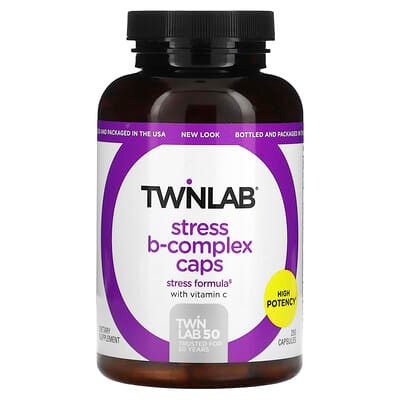

$34.15 $0.27 per serving


Product analysis
Stress B-Complex Caps supplies B vitamins and vitamin C to support normal energy use and help address tiredness linked to low nutrient intake.
AI assessment of the formula, label and price. How scoring works
Nutrient Quality48
The B5 form is a positive quality feature, and the B6 form is clearly identified. Unnamed forms for several other ingredients limit a fuller quality judgement.
Ingredient Transparency84
All listed amounts are stated, so the declared serving can be checked. Several forms are unnamed, making a close comparison of preparations harder.
Value For Money48
The serving offers attractive value for B6 and reasonable value for riboflavin. Choline and B5 look less economical, so value depends on which nutrients matter most to you.
Customer Satisfaction76
Customer ratings are very positive. Feedback comes from 439 ratings, providing useful context for that impression.
Product Focus65
The main role is filling nutrient gaps that affect normal metabolism and tiredness. The wider range of aims does not establish extra energy, faster calorie use or routine detoxification.
- Format
Capsule - Container
- 250 Capsule(s)
- Per serving
- $0.27
- Customer rating
- 4.7 · 439 ratings
Goals

Impact
High effect
Vitamin C · 1000 mg
Vitamin B6, Vitamin B12, Folate can help restore immune processes impaired by low intake, without establishing extra protection when intake is adequate. Vitamin C has modest regular-use cold-duration support, without establishing infection prevention. Higher Vitamin B6 amounts do not establish extra benefit or suitability.
How this product is rated for Immunity
Ingredient fit71
Vitamin C connects the formula to immunity. The included amounts reach the saved comparison endpoints; this does not mean larger amounts provide greater immune benefit.
Goal fit
Relevant immune nutrients are included within a broader formula with other active ingredients.
Dose adequacy
The included amounts reach the saved comparison endpoints; this does not mean larger amounts provide greater immune benefit.
Pathways60
The strongest saved finding concerns innate immune cell activity.
Depth
The strongest saved finding concerns innate immune cell activity.
Breadth
The broader saved findings cover innate immune cell activity.
Evidence100
Vitamin C provides the strongest saved evidence finding. Nutritional function or modest regular-use symptom support does not establish general infection prevention.
Evidence strength
Vitamin C drives the strongest saved evidence finding; the practical support remains bounded by its specific nutritional or regular-use role.
Studied preparation
The saved finding accepts the declared forms without establishing that they outperform other forms.
Formulation logic100
No unmet ingredient partner or configured conflict was identified. The included contributors meet the saved minimum amount criterion; this does not establish clinical effectiveness.
Partner coverage
The included ingredients have no unmet partner requirement in the supplied findings.
Conflicts
No configured ingredient conflict was identified in the supplied findings.
Effective doses
The included contributors meet the saved minimum amount criterion; this does not establish clinical effectiveness.

Impact
Highest effect
Folate · 667 mcg DFEVitamin B12 · 50 mcgVitamin C · 1000 mg
B vitamins and folate provide nutritional support for normal metabolism and blood formation when intake is low. Vitamin C adds a nutrient contribution in the antioxidant and immune area, while B12 receives a smaller amount-based contribution. High B-vitamin amounts do not establish extra energy or benefit above nutritional adequacy, and the additional inositol and PABA broaden the formula without a supported role here.
How this product is rated for Everyday Health
Ingredient fit84
The relevant ingredients support the identified roles, with the saved amount comparison determining their contributions.
Goal fit
The relevant ingredients have a role here, while additional actives and links to other goals make the formula less focused.
Dose adequacy
The saved amount comparison is partial overall; some declared amounts contribute less than their comparison endpoints.
Pathways100
The saved result recognizes coverage of nutrient metabolism, blood formation, antioxidant and immune functions.
Depth
The saved result places its strongest coverage in energy metabolism cofactors.
Breadth
The saved result recognizes coverage of nutrient metabolism, blood formation, antioxidant and immune functions.
Evidence82
Vitamin B9 (Folate) leads the saved evidence finding; the supplied limitations still restrict what health benefits can be described.
Evidence strength
Vitamin B9 (Folate) leads the saved evidence finding; the supplied limitations still restrict what health benefits can be described.
Studied preparation
The saved finding accepts the relevant preparations; it does not establish that a named form or delivery method offers superior benefits.
Formulation logic100
The counted ingredients meet the saved partner and minimum-amount requirements, and no configured conflict is triggered.
Partner coverage
The ingredients counted in the saved result work alone or meet its partner requirements; this does not demonstrate added benefit from combining them.
Conflicts
No configured ingredient conflict was triggered by the supplied facts.
Effective doses
All ingredients counted in this finding reach its saved minimum amount criterion; this is not a proven threshold for health improvement.

Impact
High effect
Vitamin B5 · 36 mgRiboflavin · 50 mgThiamin · 50 mgVitamin B12 · 50 mcg
Riboflavin, niacin, pantothenic acid, folate and vitamin B6 help address nutritional gaps associated with tiredness, while vitamin C deficiency can also cause fatigue. These roles concern restoring adequacy, rather than providing an extra energy boost from large amounts. Vitamin B12 is present at a smaller amount relative to the saved comparison, and high-dose or specific-form superiority is not established.
How this product is rated for Energy
Ingredient fit83
B vitamins and vitamin C provides a counted contribution, with amounts meeting the saved comparison to differing degrees.
Goal fit
The relevant ingredients sit within a formula that also contains ingredients aimed at other goals.
Dose adequacy
The declared amounts meet the saved comparisons to differing degrees; larger amounts do not establish benefits beyond adequacy.
Pathways0
The contribution concerns nutrient sufficiency. None of the five separately tracked energy functions received coverage.
Depth
No strongest tracked energy pathway was identified.
Breadth
None of the five tracked energy areas reaches the breadth comparison; the nutritional contribution is separate.
Evidence78
Riboflavin supplies the strongest saved evidence finding; its benefit remains tied to nutritional adequacy.
Evidence strength
Riboflavin supplies the strongest saved evidence finding; its benefit remains tied to nutritional adequacy.
Studied preparation
The saved findings accept the counted preparation, without establishing superiority of a particular form.
Formulation logic100
B vitamins and vitamin C needs no additional partner for the counted contribution. No configured ingredient conflict was matched.
Partner coverage
The counted ingredients can contribute without an additional partner.
Conflicts
No configured ingredient conflict was matched.
Effective doses
All counted ingredients reach the saved minimum amount comparison.
Vitamin B5 Not classified
No linked studies yet.

Impact
High effect
Vitamin C · 1000 mg
Vitamin C supports collagen formation and wound healing, with the clearest benefit when intake is low. The B6, riboflavin can help address deficiency-related skin problems, without established extra cosmetic benefit at adequate intake.
How this product is rated for Skin Health
Ingredient fit68
Relevant skin nutrients sit within a broader formula containing ingredients directed at other goals. Most relevant declared amounts fit the saved comparison, with some smaller contributions; serving frequency is not assumed.
Goal fit
Relevant skin nutrients sit within a broader formula containing ingredients directed at other goals.
Dose adequacy
Most relevant declared amounts fit the saved comparison, with some smaller contributions; serving frequency is not assumed.
Pathways7
The recorded barrier-lipid connection is limited; normal nutrient roles do not establish improved skin hydration.
Depth
The recorded barrier-lipid connection is limited; normal nutrient roles do not establish improved skin hydration.
Breadth
No skin pathway reached the saved breadth criterion, so broad support across these skin functions was not established.
Evidence100
Vitamin C provides the strongest recorded evidence contribution here; its supported role must retain the ingredient-specific limitations on routine cosmetic benefit.
Evidence strength
Vitamin C provides the strongest recorded evidence contribution here; its supported role must retain the ingredient-specific limitations on routine cosmetic benefit.
Studied preparation
The counted preparations met the saved preparation comparison; this does not establish cosmetic benefit beyond the outcomes and populations described.
Formulation logic100
No required partner was missing among the counted ingredients; this does not demonstrate an added benefit from combining them. No configured ingredient conflict was recorded in the supplied comparison.
Partner coverage
No required partner was missing among the counted ingredients; this does not demonstrate an added benefit from combining them.
Conflicts
No configured ingredient conflict was recorded in the supplied comparison.
Effective doses
The counted ingredients met the saved minimum amount criterion; that threshold is not a proven effective skin dose.

Impact
High effect
Biotin · 100 mcgNiacin · 70 mg NEVitamin B12 · 50 mcgRiboflavin · 50 mgThiamin · 50 mgVitamin B5 · 36 mgVitamin B6 · 40 mg
The B vitamins help normal energy-yielding metabolism, but more does not establish increased calorie expenditure with adequate intake.
How this product is rated for Metabolism Support
Ingredient fit75
The relevant ingredients sit within a broader formula, reducing its focus on energy expenditure. Retained amounts partly cover the comparison anchors, which are not proven effective doses for a lasting metabolic boost.
Goal fit
The relevant ingredients sit within a broader formula, reducing its focus on energy expenditure.
Dose adequacy
Retained amounts partly cover the comparison anchors, which are not proven effective doses for a lasting metabolic boost.
Pathways0
No contribution was recorded for the specific energy-expenditure mechanisms evaluated.
Depth
No contribution was recorded for the specific energy-expenditure mechanisms evaluated.
Breadth
None of the evaluated mechanisms reached the coverage threshold.
Evidence100
Vitamin B1 (Thiamin) leads the eligible evidence findings; its specific study population and outcomes limit expectations of a general metabolism boost.
Evidence strength
Vitamin B1 (Thiamin) leads the eligible evidence findings; its specific study population and outcomes limit expectations of a general metabolism boost.
Studied preparation
Eligible preparations match the supplied comparisons; a match does not establish lasting metabolic benefit.
Formulation logic100
No configured ingredient conflict was found. All retained ingredients meet the minimum comparison threshold; that threshold is not a proven effective dose for increasing calorie expenditure.
Partner coverage
The retained ingredients have no unmet partner requirement in the supplied findings.
Conflicts
No configured ingredient conflict was found.
Effective doses
All retained ingredients meet the minimum comparison threshold; that threshold is not a proven effective dose for increasing calorie expenditure.

Impact
High effect
Folate · 667 mcg DFEVitamin B12 · 50 mcgVitamin B6 · 40 mgVitamin C · 1000 mgCholine · 40 mgRiboflavin · 50 mg
Folate and B12 support methyl-group metabolism, while vitamin C provides normal antioxidant function. Folate’s arsenic findings concern specific exposed populations and nutrient status, rather than routine detoxification. Riboflavin and B6 have normal coenzyme roles without demonstrated extra toxin clearance. Choline supports liver fat handling, but its 40 mg per serving is a small nutritional contribution.
How this product is rated for Liver & Detox
Ingredient fit67
The formula supplies nutrients connected with normal liver and enzyme functions, within a broader nutritional product. Their amounts support differing levels of nutritional comparison.
Goal fit
The formula includes relevant nutritional ingredients alongside ingredients serving other purposes, so its focus is broader than this goal.
Dose adequacy
The declared nutrient amounts contribute unevenly to the supplied comparisons; these reference amounts are not proven toxin-clearance doses.
Pathways48
Nutritional coverage is strongest for liver cell function and fat export. Other areas have varying coverage; these findings do not demonstrate toxin removal.
Depth
The strongest retained area is liver cell function and fat export, reflecting nutrient roles rather than demonstrated toxin removal.
Breadth
The retained areas are liver cell function and fat export; this describes nutritional coverage, not proven clearance of toxins.
Evidence96
Folate leads the retained evidence comparison, with important limits around arsenic exposure, nutrient status and preparation. Some nutrient preparations lack a matching comparison.
Evidence strength
Folate provides the strongest retained support, but its arsenic findings are specific to exposure, nutrient status and preparation.
Studied preparation
Most retained ingredients match the supplied preparation comparisons; riboflavin, Vitamin B6 lack that match. This does not establish product-level toxin removal.
Formulation logic100
The retained contributions have no missing required partners or configured conflicts, and their amounts meet the supplied minimum comparison.
Partner coverage
No required ingredient partner is missing among the retained contributions; this does not establish an added benefit from combining them.
Conflicts
No configured ingredient conflict was identified in the supplied facts.
Effective doses
The retained ingredients meet the supplied minimum amount comparison; this is not a proven biological threshold for toxin clearance.
Riboflavin Not classified
No linked studies yet.
Vitamin B6 Not classified
No linked studies yet.

Impact
High effect
Vitamin C · 1000 mg
Vitamin C contributes antioxidant activity and has a limited signal for lowering CRP in adults with elevated baseline inflammation. A large trial was null overall, so this finding does not establish a broad anti-inflammatory benefit in unselected adults. The serving amount matches the 1000 mg daily trial exposure, without establishing the same regimen.
How this product is rated for Inflammation
Ingredient fit56
Vitamin C receive recognition in the saved findings. The clinical relevance depends on the supplied nutrient-status and study-context limitations.
Goal fit
The formula includes several ingredients beyond this goal, so its focus on inflammation is limited.
Dose adequacy
The declared amounts reach the saved comparison references; this does not establish clinical benefit from a serving.
Pathways55
The saved findings concentrate on oxidative and mitochondrial stress, with substantial coverage. Only one pathway reaches the saved coverage threshold, leaving the other inflammation pathways unrepresented.
Depth
The saved findings concentrate on oxidative and mitochondrial stress, with substantial coverage.
Breadth
Only one pathway reaches the saved coverage threshold, leaving the other inflammation pathways unrepresented.
Evidence87
Vitamin C leads the saved evidence findings. The ingredient-specific population and biomarker limitations still apply.
Evidence strength
Vitamin C provides the strongest saved evidence contribution; the supplied findings remain limited by population, biomarkers or nutrient status.
Studied preparation
The saved result recognizes the counted preparations as studied; this does not extend their findings beyond the supplied populations and outcomes.
Formulation logic100
The saved findings identify no configured conflicts or missing required partners. The counted ingredients reach the saved minimum amount threshold.
Partner coverage
The counted ingredients can contribute independently or have their required partner; no added benefit from combining them is established.
Conflicts
No configured ingredient conflict was identified in the saved findings.
Effective doses
The counted ingredients clear the saved minimum amount threshold, which is a comparison convention rather than a proven effective dose.
Ingredients
| Ingredient | Amount per serving | Score |
|---|---|---|
Vitamin C (Ascorbic Acid) | 1000 mg | |
Thiamine (Thiamine Mononitrate) | 50 mg | |
Riboflavin | 50 mg | |
Niacin (Niacinamide) | 70 mg NE | |
Vitamin B6 (Pyridoxine Hydrochloride) | 40 mg | |
Folate | 667 mcg DFE | |
Vitamin B12 (Cyanocobalamin) | 50 mcg | |
Biotin | 100 mcg | |
Pantothenic Acid (Calcium D-Pantothenate) | 36 mg | |
Choline (Choline Bitartrate) | 40 mg | |
PABA | 50 mg | |
Inositol | 100 mg |
Vitamin B6 (Pyridoxine Hydrochloride) · 40 mg OverallScore78
Each serving provides 40 mg per serving of vitamin B6 at a low cost per mg. That serving exceeds the European adult daily upper limit of 12 mg. The B6 comes from pyridoxine hydrochloride.
How this ingredient is rated
Ingredient Form & Label Quality100
The B6 comes from pyridoxine hydrochloride. No artificial dyes, titanium dioxide or talc are reported.
Vitamin B6 Form Identification
The B6 comes from pyridoxine hydrochloride.
Clean Label and Excipient Purity
No artificial dyes, titanium dioxide or talc are reported.
Dose, Safety & Label Transparency46
The label states 40 mg per serving and names the B6 source. The serving exceeds the European adult daily upper limit of 12 mg.
Vitamin B6 Dose & Safety Policy
The serving contains 40 mg per serving of B6. That exceeds the European adult daily upper limit of 12 mg.
Label Transparency
The B6 source is named as pyridoxine hydrochloride.
Value97
The cost per mg of B6 is low.
Vitamin B6 Price Efficiency
The cost per mg of B6 is low.
PABA · 50 mg OverallScore78
Each serving lists 50 mg of PABA. Based on the whole-product price, that works out to about $0.55 per 100 mg of PABA.
How this ingredient is rated
Active Ingredient Quality & Bioavailability80
PABA is named; no grade or high-purity designation is recorded in the saved details.
PABA Source & Grade
PABA is named; no grade or high-purity designation is recorded in the saved details.
Dose, Safety & Label Transparency95
PABA is individually listed at 50 mg per serving. The saved ingredient review did not identify artificial colors, titanium dioxide or hydrogenated oils.
PABA Dosage Alignment
A serving provides 50 mg of PABA.
Label Disclosure Clarity
PABA is individually listed at 50 mg per serving.
Additive and Excipient Quality
The saved ingredient review did not identify artificial colors, titanium dioxide or hydrogenated oils.
Value40
The whole-product price works out to about $0.55 per 100 mg of PABA.
Price per 100mg PABA
The whole-product price works out to about $0.55 per 100 mg of PABA.
Thiamin (Thiamine Mononitrate) · 50 mg OverallScore76
Each serving provides 50 mg of thiamin, a high-potency amount. The cost per amount of thiamin is high. It uses Thiamine Mononitrate, a standard water-soluble form.
How this ingredient is rated
Active Ingredient Quality & Bioavailability70
Thiamine Mononitrate is a standard water-soluble form of thiamin. The listed ingredients have no flagged artificial sweeteners or colors.
Thiamin Chemical Form
Thiamine Mononitrate is a standard water-soluble form of thiamin.
Excipient Purity
The listed ingredients have no flagged artificial sweeteners or colors.
Dose, Safety & Label Transparency100
Each serving provides 50 mg of thiamin, a high-potency amount. The thiamin amount is clearly stated.
Thiamin Dosage Potency
Each serving provides 50 mg of thiamin, a high-potency amount.
Label Transparency & Proprietary Blends
The thiamin amount per serving is clearly stated.
Value40
The cost per amount of thiamin is high.
Price per Declared Dose
The cost per amount of thiamin is high.
Alternative products
Report alternatives
Sources
Published studies used for the product analysis and the top-ranked studies for each ingredient and goal.
- Physicochemical properties of and volatile compounds in riboflavin fortified cloudy apple juice; study of its effect on job fatigue among Egyptian construction workers.
- Vitamin B status in patients with chronic fatigue syndrome.
- B-vitamins, related vitamers, and metabolites in patients with quiescent inflammatory bowel disease and chronic fatigue treated with high dose oral thiamine.
- Metabolic features of chronic fatigue syndrome.
- Effectiveness of Riboflavin in Inherited Metabolic Diseases: A Systematic Review
- Influence of thiamin supplementation on the health and general well-being of an elderly Irish population with marginal thiamin deficiency.
- Randomised clinical trial: high-dose oral thiamine versus placebo for chronic fatigue in patients with quiescent inflammatory bowel disease.
- Dietary reference values for thiamin.
- Effects of thiamine supplementation on exercise-induced fatigue.
- Long-term maintenance treatment with 300 mg thiamine for fatigue in patients with inflammatory bowel disease: results from an open-label extension of the TARIF study.
- A new perspective on vitamin B12 deficiency in rheumatology: a case-based review.
- Effects of Vitamin B12 Supplementation on Cognitive Function, Depressive Symptoms, and Fatigue: A Systematic Review, Meta-Analysis, and Meta-Regression.
- Patients' experiences with methylcobalamin injections in amyotrophic lateral sclerosis.
- Cobalamin deficiency: clinical picture and radiological findings.
- Vitamin B12 Deficiency: Common Questions and Answers.
- Intakes of Folate, Vitamin B6, and Vitamin B12 in Relation to All-Cause and Cause-Specific Mortality: A National Population-Based Cohort.
- The responsiveness of plasma homocysteine to small increases in dietary folic acid: a primary care study.
- Associations of Serum Folate and Homocysteine Concentrations with All-Cause, Cardiovascular Disease, and Cancer Mortality in Men and Women in Korea: the Cardiovascular Disease Association Study.
- The concept of folic acid supplementation and its role in prevention of neural tube defect among pregnant women: PRISMA.
- Systematic review of adverse health outcomes associated with high serum or red blood cell folate concentrations.