
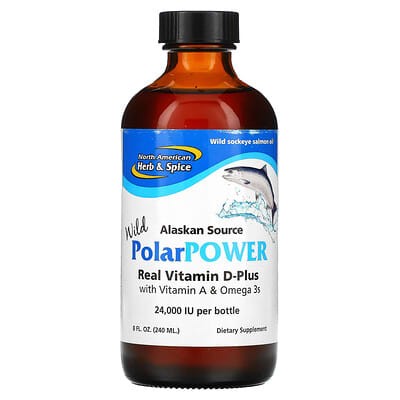

$35.43 $0.73 per serving


Product analysis
PolarPower supplies EPA and DHA that contribute to the processing of blood fats. Their content is relatively expensive, and the very small astaxanthin amount adds little to that purpose.
AI assessment of the formula, label and price. How scoring works
Nutrient Quality20
Ingredient forms are unspecified, making the oil and other preparations less straightforward to compare. Clear active amounts do not resolve uncertainty about form quality.
Ingredient Transparency64
Most amounts and the EPA and DHA composition are disclosed. Rosemary lacks a stated amount, and the ingredient forms remain unspecified.
Value For Money41
EPA, DHA and the vitamins are relatively expensive for their content. Omega-9 offers favorable value, but that does not make the complete combination economical for its omega-3 content.
Customer Satisfaction71
Customer feedback is generally positive from a modest review pool. That offers some perspective on satisfaction without establishing health effects.
Product Focus41
EPA and DHA provide the clearest connection to processing blood fats. The amounts offer limited support for that purpose, while the wider mixture does not establish broad cardiovascular benefits.
- Format
Liquid - Container
- 8 Fluid Ounce(s)
- Per serving
- $0.73
- Customer rating
- 4.6 · 261 ratings
Goals

Impact
Situational effect
Astaxanthin · 120 mcgOmega-3 · 1022 mg
Omega-9 Not classified
No linked studies yet.

Impact
High effect
Vitamin D · 500 IUFish Oil · 4700 mgAstaxanthin · 120 mcg
EPA and DHA in the salmon oil connect mainly to triglyceride metabolism. Their declared amounts provide a partial comparison with the larger daily exposures reviewed for triglyceride lowering, without establishing prevention of heart attacks or strokes. Astaxanthin is present at a very small amount compared with the reviewed exposures, so it makes little practical contribution to this goal.
How this product is rated for Cardiovascular Support
Ingredient fit59
EPA and DHA provide the relevant fatty-acid contribution, while the broader formula and unresolved vitamin D amount limit its focus and amount finding.
Goal fit
EPA and DHA connect directly to triglyceride support; several other actives serve different goals.
Dose adequacy
EPA and DHA provide partial exposure; the unresolved vitamin D amount contributes nothing to the amount finding.
Pathways60
Triglyceride metabolism dominates, with little representation of other cardiovascular routes.
Depth
EPA and DHA account for the strongest finding in triglyceride metabolism.
Breadth
Triglyceride metabolism alone reaches the saved coverage threshold.
Evidence83
EPA and DHA provide the main support through triglyceride findings, with counted preparations accepted by the saved criteria.
Evidence strength
EPA supplies the strongest counted support, limited to triglyceride markers rather than cardiovascular-event prevention.
Studied preparation
The two counted fatty acids meet the saved preparation criteria; no superiority of an oil form is established.
Formulation logic92
EPA and DHA meet the minimum amount threshold and need no missing partner; vitamin D does not meet that threshold.
Partner coverage
The counted fatty acids work without an additional required partner.
Conflicts
No listed stimulant or high-sodium conflict applies to the supplied ingredient facts.
Effective doses
EPA and DHA clear the minimum amount threshold; the unresolved vitamin D amount does not.

Impact
Moderate effect
Vitamin D · 500 IUFish Oil · 4700 mgAstaxanthin · 120 mcg
EPA at 395 mg and DHA at 361 mg relate to fatty-acid signals involved in the inflammatory response. Human findings support some inflammatory-marker changes, although results vary. Rosemary and vitamin D have unresolved amounts, and the small astaxanthin amount adds little to this goal.
How this product is rated for Inflammation
Ingredient fit47
Relevant ingredients sit alongside actives aimed at other needs, so the formula has a broader focus. The relevant amounts make a modest match to the saved dose comparisons; unresolved amounts limit that match.
Goal fit
Relevant ingredients sit alongside actives aimed at other needs, so the formula has a broader focus.
Dose adequacy
The relevant amounts make a modest match to the saved dose comparisons; unresolved amounts limit that match.
Pathways12
The strongest saved connection is anti-inflammatory fatty-acid mediators, with limited coverage. None of the reviewed routes reaches the saved level for broad coverage.
Depth
The strongest saved connection is anti-inflammatory fatty-acid mediators, with limited coverage.
Breadth
None of the reviewed routes reaches the saved level for broad coverage.
Evidence70
EPA (eicosapentaenoic acid) provides the strongest saved evidence at the assessed amount; its relevance remains dependent on the studied context. The preparations at the assessed amounts match those recognized in the saved review.
Evidence strength
EPA (eicosapentaenoic acid) provides the strongest saved evidence at the assessed amount; its relevance remains dependent on the studied context.
Studied preparation
The preparations at the assessed amounts match those recognized in the saved review.
Formulation logic88
The assessed ingredients can work independently or have their relevant partner. No ingredient conflicts were recorded in the supplied assessment. 2 of 4 assessed ingredients reach the saved amount threshold; Rosemary , Vitamin D fall below it.
Partner coverage
The assessed ingredients can work independently or have their relevant partner.
Conflicts
No ingredient conflicts were recorded in the supplied assessment.
Effective doses
2 of 4 assessed ingredients reach the saved amount threshold; Rosemary , Vitamin D fall below it.
Rosemary Not classified
No linked studies yet.

Impact
Lower effect
Omega-3 · 1022 mg

Impact
Situational effect
Omega-3 · 1022 mgVitamin D · 500 IU
Ingredients
| Ingredient | Amount per serving | Score |
|---|---|---|
Alaskan Sockeye Salmon Oil | 4700 mg | |
Omega-3s | 1022 mg | |
EPA | 395 mg | |
DHA | 361 mg | |
Omega-6s | 103 mg | |
Omega-9s | 1040 mg | |
Vitamin A | 2000 IU | |
Vitamin D | 500 IU | |
Astaxanthin | 120 mcg | |
Wild Rosemary Extract | 0 NP |
Omega-9 · 1040 mg OverallScore100
Each serving lists 1,040 mg of omega-9. The price is about $0.07 per 100 mg of omega-9.
How this ingredient is rated
Active Ingredient Quality & Bioavailability100
A specific oil source is recorded. A processing claim and antioxidant are recorded.
Oil Source & Form Quality
A specific oil source is recorded, though the omega-9 molecular form is not identified in the saved facts.
Extraction & Processing Method
The saved facts record a recognized extraction or processing claim, but do not specify its wording.
Oxidation & Stability Protection
The saved information records an antioxidant used for protection; it does not measure the oil’s oxidation.
Dose, Safety & Label Transparency100
The omega-9 amount is clearly listed as 1,040 mg per serving.
Omega-9 Potency per Serving
A serving provides 1,040 mg of omega-9.
Label Transparency & Disclosure
The label gives an exact omega-9 amount of 1,040 mg per serving.
Value100
The whole-product price works out to about $0.07 per 100 mg of omega-9.
Price per 100mg Omega-9
The whole-product price works out to about $0.07 per 100 mg of omega-9.
Omega-3 · 1022 mg OverallScore48
A serving provides 395 mg EPA and 361 mg DHA. Together they account for about 16.1% of the stated oil weight.
How this ingredient is rated
Active Ingredient Quality & Bioavailability40
The molecular structure of the omega-3s is not established in the saved facts. An antioxidant is also recorded.
Molecular Form & Absorption Potential
The molecular structure of the omega-3s is not established in the saved facts.
Source Purity & Oxidative Protection
A krill or larger-fish source is recorded. The serving lists 0.12 mg astaxanthin; that does not establish measured freshness.
Dose, Safety & Label Transparency55
EPA and DHA are listed separately and account for about 16.1% of the stated oil.
EPA & DHA Label Specificity
The serving lists 395 mg EPA and 361 mg DHA separately.
Active Ingredient Concentration
EPA and DHA together account for about 16.1% of the stated oil weight.
Third-Party Purity Verification
No qualifying independent certification or testing claim is established in the saved facts.
Value50
At about $0.74 per serving, the whole-product price equals roughly $0.98 per gram of EPA and DHA.
Price per 1000mg of EPA+DHA
The whole-product price works out to about $0.98 per gram of combined EPA and DHA.
EPA (Eicosapentaenoic Acid) · 395 mg OverallScore41
A serving provides 395 mg of EPA and 361 mg of DHA. EPA accounts for about 8.4% of the fish oil, so most of the oil is other material.
How this ingredient is rated
Active Ingredient Quality & Bioavailability41
The available information does not establish the EPA molecular form. EPA accounts for about 8.4% of the stated fish oil.
Molecular Form and Bioavailability
The available information does not establish the EPA molecular form.
EPA Concentration Density
EPA accounts for about 8.4% of the stated fish oil.
Oxidation Protection
A recognized antioxidant is recorded; its presence does not establish measured oil stability.
Dose, Safety & Label Transparency51
Each serving provides 395 mg of EPA. It provides more EPA than DHA. The available facts do not establish a qualifying testing or purification claim.
Absolute EPA Dose per Serving
Each serving provides 395 mg of EPA.
EPA-Centric Ratio
A serving has 395 mg of EPA and 361 mg of DHA.
Purity and Contaminant Testing
The available facts do not establish a qualifying contaminant-testing, certification, or oil-purification claim.
Value20
The saved whole-product price is about $1.87 per gram of EPA.
Price per Gram of EPA
The saved whole-product price is about $1.87 per gram of EPA.
Alternative products
Report alternatives
Sources
Published studies used for the product analysis and the top-ranked studies for each ingredient and goal.
- Astaxanthin, a natural antioxidant, lowers cholesterol and markers of cardiovascular risk in individuals with prediabetes and dyslipidaemia.
- Antioxidant Lipid Supplement on Cardiovascular Risk Factors: A Systematic Review and Meta-Analysis.
- Administration of natural astaxanthin increases serum HDL-cholesterol and adiponectin in subjects with mild hyperlipidemia.
- Effects of Astaxanthin Supplementation on Glycemic Control and Lipid Profile in Patients With Prediabetes and Type 2 Diabetes: A Meta-Analysis of Randomized Controlled Trials.
- Astaxanthin Supplemented with High-Intensity Functional Training Decreases Adipokines Levels and Cardiovascular Risk Factors in Men with Obesity.
- Marine Omega-3 Supplementation and Cardiovascular Disease: An Updated Meta-Analysis of 13 Randomized Controlled Trials Involving 127 477 Participants.
- Impact of omega-3 fatty acids on hypertriglyceridemia, lipidomics, and gut microbiome in patients with type 2 diabetes.
- A systematic review of fish-oil supplements for the prevention and treatment of hypertension.
- Effects of fish oil-derived fatty acids on suboptimal cardiovascular health: A multicenter, randomized, double-blind, placebo-controlled trial.
- Effect of High-Dose Marine Omega-3 Fatty Acids on Atherosclerosis: A Systematic Review and Meta-Analysis of Randomized Clinical Trials.
- Comparative Efficacy of Nutraceuticals on Endothelial Function: A Systematic Review and Network Meta-Analysis.
- A Randomized Trial of Vitamin D Supplementation on Vascular Function in CKD.
- Randomized, placebo-controlled, double-blind clinical trial on the contributions of vitamin D in the control of cardiovascular risk factors, depressive symptoms and suicide risk.
- Dose responses of vitamin D3 supplementation on arterial stiffness in overweight African Americans with vitamin D deficiency: A placebo controlled randomized trial.
- Paricalcitol and endothelial function in chronic kidney disease trial.
- The anti-inflammatory and antioxidant effects of astaxanthin as an adjunctive therapy in community-acquired pneumonia: a randomized controlled trial.
- The Role of Astaxanthin as an Antioxidant and Anti-Inflammatory Agent in Human Health: A Systematic Review.
- Astaxanthin ameliorates inflammation, oxidative stress, and reproductive outcomes in endometriosis patients undergoing assisted reproduction: A randomized, triple-blind placebo-controlled clinical trial.
- Astaxanthin Modulates Inflammation in Type 2 Diabetes via Regulation of microRNAs, Lysophosphatidylcholine, and α-Hydroxybutyrate.
- Redox-sensitive miRNAs and Humanin could mediate effects of exercise and astaxanthin on oxidative stress and inflammation in type 2 diabetes.