





Magnesium Supportive
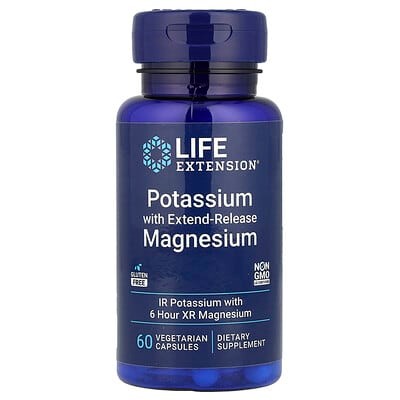
Potassium with Extend-Release Magnesium
Goals
$11.25 $0.18 per serving
Product analysis
Life Extension Potassium with Extend-Release Magnesium provides 250 mg of magnesium and 99 mg of potassium in one capsule to help fill magnesium gaps and support normal electrolyte balance. Potassium contributes a much smaller nutritional amount, and the unknown split between magnesium citrate and oxide makes the absorption benefits of the extended-release formula less certain.
AI assessment of the formula, label and price. How scoring works
Nutrient Quality38
The two minerals are supplied in named forms, but the magnesium blend includes less readily absorbed magnesium oxide. The exact proportions of citrate and oxide are unclear.
Ingredient Transparency80
The label specifies both mineral amounts and identifies the source forms. The split between magnesium citrate and oxide is not disclosed.
Value For Money62
The capsule offers good value for its potassium content but more moderate value for magnesium. The latter depends in part on the uncertain mix of magnesium sources.
Customer Satisfaction92
The product receives very favorable customer ratings. Thousands of ratings make that feedback substantial.
Product Focus68
The two minerals keep the formula focused primarily on nutritional magnesium support and related electrolyte functions. Its breadth of potential uses does not establish equally strong benefits for them all.
- Format
Capsule - Container
- 60 Capsule(s)
- Per serving
- $0.18
- Customer rating
- 4.8 · 6,456 ratings
Goals
Impact
High effect
Magnesium · 250 mg
Potassium with Extend-Release Magnesium is mainly a magnesium option for everyday energy metabolism. Its selected serving supplies 250 mg magnesium from citrate and oxide forms, a substantial partial nutrient contribution when dietary intake falls short.

Impact
High effect
Magnesium · 250 mgPotassium · 99 mg
Potassium with Extend-Release Magnesium is most relevant when inadequate magnesium intake contributes to tiredness. Magnesium at 250 mg is the main ingredient for that nutritional role. Potassium at 99 mg has no supported general energy benefit at this amount in the supplied facts.
Magnesium Supportive
Potassium Supportive

Impact
High effect
Magnesium · 250 mg
Potassium with Extend-Release Magnesium offers limited heart-health support through 250 mg of magnesium, which contributes to electrolyte and vascular-tone balance. Blood-pressure benefits from magnesium are marginal and inconsistent. Its 99 mg of potassium adds a smaller nutritional contribution to the same role.
Potassium Supportive
Magnesium Supportive

Impact
High effect
Magnesium · 250 mg
Potassium with Extend-Release Magnesium is mainly an option for filling a magnesium intake gap to support normal bone metabolism. Its 250 mg of magnesium leads the bone-health contribution; the 99 mg of potassium is supplied as chloride, so the narrower evidence for potassium citrate does not transfer to it.
Magnesium Supportive
Potassium Supportive

Impact
High effect
Potassium · 99 mgMagnesium · 250 mg
Potassium with Extend-Release Magnesium offers a focused but limited approach to vascular tone and blood-pressure support. Its 250 mg of magnesium has mixed support for vascular markers, while 99 mg of potassium is far below the amounts behind the supplied blood-pressure findings. The magnesium citrate and oxide forms do not establish a cardiovascular advantage from extended release.
Magnesium Supportive
Potassium Supportive

Impact
Moderate effect
Magnesium · 250 mg
Potassium with Extend-Release Magnesium offers conditional nutritional support for stress, especially where magnesium intake is low. Its 250 mg elemental magnesium provides the main calming-related contribution.
Magnesium Supportive
Ingredients
| Ingredient | Amount per serving | Score |
|---|---|---|
Magnesium (Magnesium Citrate, ZumXR Magnesium Oxide) | 250 mg | |
Potassium (Potassium Chloride) | 99 mg |
Life Extension Potassium with Extend-Release Magnesium provides a stated amount of magnesium: 250 mg per serving. The magnesium comes as Magnesium Citrate and Magnesium Oxide. The proportions of the forms are not disclosed. The full formula costs $0.17 per serving, or $0.067 per 100 mg of magnesium. The magnesium is a less compelling value on this basis.
Alternative products
Report alternatives
Sources
Published studies used for the product analysis and the top-ranked studies for each ingredient and goal.
- Association between Serum Magnesium and Fractures: A Systematic Review and Meta-Analysis of Observational Studies.
- Bioabsorbable Magnesium-Based Materials Potential and Safety in Bone Surgery: A Systematic Review.
- Vascularized bone grafting fixed by biodegradable magnesium screw for treating osteonecrosis of the femoral head.
- An update on magnesium and bone health.
- Sex-specific differences in the association of magnesium intake with femoral neck bone mineral density among older adults.
- Effect of potassium citrate on bone density, microarchitecture, and fracture risk in healthy older adults without osteoporosis: a randomized controlled trial.
- Long-term persistence of the urine calcium-lowering effect of potassium bicarbonate in postmenopausal women.
- Partial neutralization of the acidogenic Western diet with potassium citrate increases bone mass in postmenopausal women with osteopenia.
- Potassium citrate supplementation results in sustained improvement in calcium balance in older men and women.
- Effects of potassium chloride and potassium bicarbonate on endothelial function, cardiovascular risk factors, and bone turnover in mild hypertensives.
- Circulating and dietary magnesium and risk of cardiovascular disease: a systematic review and meta-analysis of prospective studies.
- Magnesium and the risk of cardiovascular events: a meta-analysis of prospective cohort studies.
- Quantitative Association Between Serum/Dietary Magnesium and Cardiovascular Disease/Coronary Heart Disease Risk: A Dose-Response Meta-analysis of Prospective Cohort Studies.
- Comparative Efficacy of Nutraceuticals on Endothelial Function: A Systematic Review and Network Meta-Analysis.
- Serum magnesium, mortality, and cardiovascular disease in chronic kidney disease and end-stage renal disease patients: a systematic review and meta-analysis.
- Sex-specific associations between sodium and potassium intake and overall and cause-specific mortality: a large prospective U.S. cohort study, systematic review, and updated meta-analysis of cohort studies.
- Potassium intake, stroke, and cardiovascular disease a meta-analysis of prospective studies.
- Blood pressure response to changes in sodium and potassium intake: a metaregression analysis of randomised trials.
- Twenty-Four-Hour Urinary Sodium and Potassium Excretion and Their Associations With Blood Pressure Among Adults in China: Baseline Survey of Action on Salt China.
- Dietary Sodium and Potassium Intake and Risk of Non-Fatal Cardiovascular Diseases: The Million Veteran Program.