
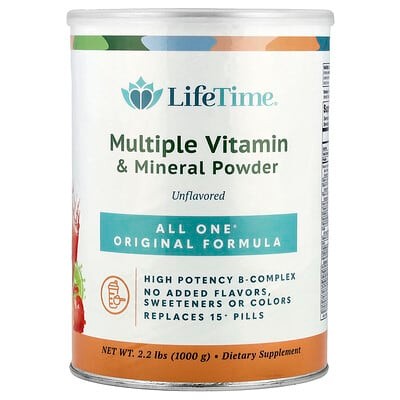

$103.29 $1.56 per serving


Product analysis
Original Formula Unflavored supplies a wide range of vitamins and minerals that can help fill dietary gaps and support normal energy use. Some mineral forms are less readily absorbed, which matters when comparing it with other multivitamins.
AI assessment of the formula, label and price. How scoring works
Nutrient Quality45
Several vitamin forms are clearly identified and favourable, but mineral quality is more mixed. Magnesium carbonate and zinc oxide are less favourable choices for absorption, while some mixed mineral proportions remain unclear.
Ingredient Transparency75
All amounts and many forms are stated, making much of the formula easy to check. Most mixed ingredients lack clear proportions, so the full breakdown is harder to compare.
Value For Money28
Value is weak across many nutrient comparisons, with high costs relative to several vitamins and minerals. The potassium serving comparison is more favourable, but does not establish good value for the whole formula.
Customer Satisfaction70
Customer ratings are positive across hundreds of responses. That supports a picture of satisfaction without proving effectiveness or safety.
Product Focus0
The clearest role is filling nutritional gaps rather than supplying extra benefits when intake is already adequate. A long ingredient list and a wide spread of goals make the formula less focused.
- Format
Powder - Container
- 2 lb(s)
- Per serving
- $1.56
- Customer rating
- 4.3 · 745 ratings
Goals

Impact
High effect
Phosphorus · 200 mgVitamin K · 5 mcgMagnesium · 200 mgCalcium · 600 mgVitamin D · 800 IUCopper · 0.2 mgManganese · 4 mgZinc · 15 mgVitamin C · 1000 mg
Calcium and magnesium help fill mineral intake gaps, while vitamin C supports bone collagen when intake is inadequate. These nutritional roles do not establish routine fracture prevention or extra benefit above adequacy. Vitamin D is present without a usable amount, limiting the absorption-related contribution and calcium's partner finding. The potassium mixture is not attributable to a studied preparation.
How this product is rated for Bone Health
Ingredient fit54
Many nutrients contribute, but the broad formulation reduces bone specificity. Several amounts contribute partially; vitamin D and vitamin A lack usable amounts.
Goal fit
Many nutrients contribute, but the broad formulation reduces bone specificity.
Dose adequacy
Several amounts contribute partially; vitamin D and vitamin A lack usable amounts.
Pathways80
Collagen-framework formation is the strongest represented route. Mineral supply is also represented, with less absorption-related coverage.
Depth
Collagen-framework formation is the strongest represented route.
Breadth
Mineral supply is also represented, with less absorption-related coverage.
Evidence98
Calcium leads the evidence connection for nutritional bone support. Potassium is not matched to a studied preparation; most other eligible preparations are accepted.
Evidence strength
Calcium leads the evidence connection for nutritional bone support.
Studied preparation
Potassium is not matched to a studied preparation; most other eligible preparations are accepted.
Formulation logic93
Calcium lacks a sufficiently established vitamin D partner contribution. No listed ingredient conflict was found.
Partner coverage
Calcium lacks a sufficiently established vitamin D partner contribution.
Conflicts
No listed ingredient conflict was found.
Effective doses
Vitamin D and vitamin A fall below the amount inclusion criterion because their usable amounts are unresolved.

Impact
Moderate effect
Iodine · 180 mcgVitamin D · 800 IUVitamin B5 · 100 mgMagnesium · 200 mgRiboflavin · 25 mgThiamin · 25 mgVitamin B12 · 25 mcgIron · 18 mgPotassium · 99 mg
B vitamins help the body use food for normal energy metabolism, while iron, folate and B12 support functions whose deficiency can cause tiredness. Magnesium and vitamin C add nutritional support. These contributions are most relevant to filling dietary gaps; large vitamin amounts do not imply extra energy in adequately nourished adults.
How this product is rated for Energy
Ingredient fit55
12 ingredients relate to energy, alongside 19 other actives that broaden the formula beyond this goal. The amounts provide substantial support relative to the saved comparisons, with some limitations.
Goal fit
12 ingredients relate to energy, alongside 19 other actives that broaden the formula beyond this goal.
Dose adequacy
The amounts provide substantial support relative to the saved comparisons, with some limitations.
Pathways0
No meaningful contribution was identified across the assessed goal pathways.
Depth
No meaningful contribution was identified across the assessed goal pathways.
Breadth
The assessed contributions remain too limited to show meaningful breadth across the goal pathways.
Evidence97
Iron provides the strongest evidence contribution in the saved assessment, with practical benefits dependent on the relevant nutritional or trial context. Direct transfer of trial findings is limited by preparation matching for Iodine.
Evidence strength
Iron provides the strongest evidence contribution in the saved assessment, with practical benefits dependent on the relevant nutritional or trial context.
Studied preparation
Direct transfer of trial findings is limited by preparation matching for Iodine.
Formulation logic98
The relevant ingredients can contribute alone or have the partners required by the saved findings. No conflict was identified in the supplied checks. 11 of 12 relevant ingredients meet the saved minimum amount criterion; Vitamin D falls short or has an undisclosed amount.
Partner coverage
The relevant ingredients can contribute alone or have the partners required by the saved findings.
Conflicts
No conflict was identified in the supplied checks.
Effective doses
11 of 12 relevant ingredients meet the saved minimum amount criterion; Vitamin D falls short or has an undisclosed amount.
Vitamin B5 Not classified
No linked studies yet.

Impact
Highest effect
Folate · 400 mcgVitamin B12 · 25 mcgVitamin D · 800 IUMagnesium · 200 mgVitamin K · 5 mcgSelenium · 50 mcgZinc · 15 mgVitamin C · 1000 mg
The B vitamins provide nutritional building blocks for normal metabolism, with folate contributing to blood formation. Iodine can fill a dietary gap that otherwise disrupts thyroid function. Iron can help correct inadequate intake associated with anaemia. Magnesium adds a contribution toward mineral needs. These contributions concern nutrient availability when intake is low; larger amounts and special forms do not establish added health benefits when intake is adequate.
How this product is rated for Everyday Health
Ingredient fit68
Vitamin B1 (Thiamin), Vitamin B2 (Riboflavin), Vitamin B3 (Niacin) provide the recorded nutritional connection. The amounts match those references unevenly.
Goal fit
The formula includes relevant nutrients alongside ingredients serving other purposes, giving it a broader focus.
Dose adequacy
Amounts vary in how fully they match the nutritional comparison references; unresolved quantities cannot establish a contribution.
Pathways100
The strongest connection is to energy metabolism cofactors. Recorded coverage also depends on the amounts available for each function.
Depth
The strongest recorded coverage concerns energy metabolism cofactors, reflecting ingredient availability rather than a measured health improvement.
Breadth
The recorded coverage includes energy metabolism cofactors, one-carbon metabolism and blood formation, antioxidant and immune defence.
Evidence86
Magnesium anchors the recorded evidence finding. Benefits remain conditional on nutritional need rather than proving improved general health in adequately nourished adults.
Evidence strength
Magnesium provides the strongest recorded evidence finding; the supplied context supports conditional nutritional usefulness rather than broad disease prevention.
Studied preparation
The counted preparations match those recognized in the saved findings, without establishing that any chemical form or delivery method is superior.
Formulation logic98
No missing partners or configured conflicts were identified. Vitamin D remains below the comparison’s amount threshold.
Partner coverage
No required ingredient partner is missing from the counted contributions; this does not imply extra benefit from combining nutrients.
Conflicts
No configured ingredient conflict was identified in the supplied findings.
Effective doses
Vitamin D does not meet the comparison’s amount threshold; the other counted ingredients do.

Impact
High effect
Magnesium · 200 mgVitamin C · 1000 mgZinc · 15 mgVitamin A · 15000 IUVitamin D · 800 IUSelenium · 50 mcg
Vitamin C may modestly shorten colds with regular use, while zinc supports normal immune function and B vitamins, folate, iron and selenium can help when intake is low. Vitamin A, D and E amounts remain unresolved, which limits the amount finding. Copper falls below the saved inclusion criterion. Magnesium receives a saved contribution, but its mechanistic observations do not establish routine infection prevention.
How this product is rated for Immunity
Ingredient fit47
Unresolved amounts for Vitamin A, Vitamin D, Vitamin E limit the amount finding alongside partial contributions from known amounts.
Goal fit
Vitamin C contributes to the identified immune-related area, while other actives and links to additional goals make the formula less focused.
Dose adequacy
Unresolved amounts for Vitamin A, Vitamin D, Vitamin E limit the amount finding alongside partial contributions from known amounts.
Pathways100
The identified contributions cover innate immune cell activity, lymphocyte function and immune regulation, oxidative and inflammatory balance.
Depth
The strongest identified coverage is in innate immune cell activity.
Breadth
The identified coverage extends to innate immune cell activity, lymphocyte function and immune regulation, oxidative and inflammatory balance.
Evidence100
Vitamin C has modest regular-use cold-duration support, without establishing general prevention or treatment of an existing cold.
Evidence strength
Vitamin C has modest regular-use cold-duration support, without establishing general prevention or treatment of an existing cold.
Studied preparation
The saved preparation finding accepts the counted forms; no superiority for a particular form or delivery method follows.
Formulation logic93
Unresolved Vitamin A, Vitamin D, Vitamin E amounts prevent all included ingredients from reaching the saved minimum amount criterion.
Partner coverage
Each counted ingredient works alone or has its required partner; this does not establish added clinical benefit from combining them.
Conflicts
No configured ingredient conflict was triggered by the supplied facts.
Effective doses
Unresolved Vitamin A, Vitamin D, Vitamin E amounts prevent all included ingredients from reaching the saved minimum amount criterion.

Impact
High effect
Biotin · 25 mcgVitamin D · 800 IUZinc · 15 mgIron · 18 mgVitamin C · 1000 mg

Impact
Moderate effect
Zinc · 15 mgVitamin C · 1000 mgCopper · 0.2 mgSelenium · 50 mcgVitamin E · 400 IU
Niacin and vitamin B5 relate to skin-barrier lipid processes, while vitamin C supports normal collagen formation and zinc supports repair. Selenium and riboflavin add antioxidant-related nutritional functions. These roles do not ensure improved skin in well-nourished adults, and unresolved vitamin A and E amounts limit their assessment.
How this product is rated for Skin Health
Ingredient fit47
8 ingredients relate to skin health, alongside 22 other actives that broaden the formula beyond this goal. The amounts provide partial support relative to the saved comparisons.
Goal fit
8 ingredients relate to skin health, alongside 22 other actives that broaden the formula beyond this goal.
Dose adequacy
The amounts provide partial support relative to the saved comparisons.
Pathways18
The clearest connection is epidermal barrier lipids, with limited support in the saved findings.
Depth
The clearest connection is epidermal barrier lipids, with limited support in the saved findings.
Breadth
The assessed contributions remain too limited to show meaningful breadth across the goal pathways.
Evidence100
Vitamin C provides the strongest evidence contribution in the saved assessment, with practical benefits dependent on the relevant nutritional or trial context. The ingredients contributing at assessed amounts meet the saved preparation criteria.
Evidence strength
Vitamin C provides the strongest evidence contribution in the saved assessment, with practical benefits dependent on the relevant nutritional or trial context.
Studied preparation
The ingredients contributing at assessed amounts meet the saved preparation criteria.
Formulation logic94
The relevant ingredients can contribute alone or have the partners required by the saved findings. No conflict was identified in the supplied checks. 6 of 8 relevant ingredients meet the saved minimum amount criterion; Vitamin A, Vitamin E falls short or has an undisclosed amount.
Partner coverage
The relevant ingredients can contribute alone or have the partners required by the saved findings.
Conflicts
No conflict was identified in the supplied checks.
Effective doses
6 of 8 relevant ingredients meet the saved minimum amount criterion; Vitamin A, Vitamin E falls short or has an undisclosed amount.
Ingredients
| Ingredient | Amount per serving | Score |
|---|---|---|
Calories | 40 Calorie(s) | |
Total Carbohydrates | 1 Gram(s) | |
Protein | 8 Gram(s) | |
Vitamin A (Beta-Carotene, Vitamin A Palmitate) | 15000 IU | |
Vitamin C (Ascorbic Acid) | 1000 mg | |
Vitamin D-3 (Nutritional Yeast) | 800 IU | |
Vitamin E (D-Alpha-Tocopheryl Succinate) | 400 IU | |
Vitamin K (Alfalfa concentrate) | 5 mcg | |
Thiamine (Thiamine Hydrochloride) | 25 mg | |
Riboflavin | 25 mg | |
Niacin (Niacinamide) | 100 mg | |
Vitamin B6 (Pyridoxine Hydrochloride) | 25 mg | |
Folic Acid | 400 mcg | |
Vitamin B12 (Methylcobalamin) | 25 mcg | |
Biotin | 25 mcg | |
Pantothenic Acid (D-Calcium Pantothenate) | 100 mg | |
Calcium (Calcium Carbonate, Calcium Caseinate, Dicalcium Phosphate, Milk) | 600 mg | |
Iron (Iron Sulfate) | 18 mg | |
Phosphorus (Dicalcium Phosphate) | 200 mg | |
Iodine (Potassium Iodide) | 180 mcg | |
Magnesium (Magnesium Carbonate) | 200 mg | |
Zinc (Zinc Oxide) | 15 mg | |
Selenium (L-Selenomethionine) | 50 mcg | |
Copper (Copper Amino Acid Chelate) | 0.2 mg | |
Manganese (Manganese Carbonate) | 4 mg | |
Chromium (Chromium Amino Acid Chelate) | 50 mcg | |
Molybdenum (Molybdenum Amino Acid Chelate) | 50 mcg | |
Potassium (Potassium Alginate, Potassium Citrate) | 99 mg | |
Calcium Caseinate (Milk) | 8600 mg | |
Rice Bran | 1000 mg | |
Lemon Bioflavonoids | 400 mg | |
Lecithin (Soy) | 350 mg | |
Choline Bitartrate | 100 mg | |
Inositol | 100 mg | |
Hesperidin Complex (Citrus) | 50 mg | |
Para Amino Benzoic Acid | 25 mg | |
Rutin | 25 mg | |
Proprietary Digestive Blend | 3 mg |
Iodine (Potassium Iodide) · 180 mcg OverallScore84
The serving provides 180 mcg iodine at a high cost per serving. The iodine comes from potassium iodide.
How this ingredient is rated
Active Ingredient Quality & Bioavailability100
The iodine comes from potassium iodide. No marine source is indicated, so seaweed-specific purity concerns do not apply to the stated source.
Iodine Form & Bioavailability
The iodine comes from potassium iodide.
Marine Source Purity & Sourcing
No marine source is indicated, so seaweed-specific purity concerns do not apply to the stated source.
Dose, Safety & Label Transparency100
The serving provides 180 mcg iodine, an amount suited to daily thyroid maintenance. The 180 mcg per serving is below the adult upper intake level of 1,100 mcg.
Dosage Efficacy for Daily Support
The serving provides 180 mcg iodine, an amount suited to daily thyroid maintenance.
Dosage Safety & Upper Limits
The 180 mcg per serving is below the adult upper intake level of 1,100 mcg.
Elemental Iodine Transparency
The iodine amount per serving is stated.
Value20
The cost per serving is high.
Price Per Effective Serving
The cost per serving is high.
Phosphorus (Dicalcium Phosphate) · 200 mg OverallScore76
The serving provides 200 mg of phosphorus, a supplemental amount, at a high cost per serving. The phosphorus comes from Dicalcium Phosphate.
How this ingredient is rated
Active Ingredient Quality & Bioavailability79
The phosphorus comes from Dicalcium Phosphate.
Phosphorus Form Quality
The phosphorus comes from Dicalcium Phosphate.
Form Disclosure Clarity
The phosphorus row names Dicalcium Phosphate as the source.
Dose, Safety & Label Transparency100
The label clearly states 200 mg of phosphorus per serving, a supplemental amount.
Dose Adequacy and Safety
The serving provides 200 mg of phosphorus, a supplemental amount.
Elemental Dose Transparency
The phosphorus amount is clearly stated as 200 mg per serving.
Value20
The cost per serving is high.
Price Per Serving Efficiency
The cost per serving is high.
PABA · 25 mg OverallScore70
The serving supplies 25 mg of PABA. The whole-product price is high relative to its PABA amount. PABA is named, but a pharmaceutical grade or high-purity designation is not available.
How this ingredient is rated
Active Ingredient Quality & Bioavailability80
PABA is named, but a pharmaceutical grade or high-purity designation is not available.
PABA Source & Grade
PABA is named, but a pharmaceutical grade or high-purity designation is not available.
Dose, Safety & Label Transparency75
The serving supplies 25 mg of PABA. The available information does not establish whether artificial colors, titanium dioxide or hydrogenated oils are present.
PABA Dosage Alignment
The serving supplies 25 mg of PABA.
Label Disclosure Clarity
The PABA amount is stated as 25 mg per serving.
Additive and Excipient Quality
The available information does not establish whether artificial colors, titanium dioxide or hydrogenated oils are present.
Value40
The whole-product price is high relative to its PABA amount.
Price per 100mg PABA
The whole-product price is high relative to its PABA amount.
Sources
Published studies used for the product analysis and the top-ranked studies for each ingredient and goal.
- What is the impact of daily oral supplementation of vitamin D3 (cholecalciferol) plus calcium on the incidence of hip fracture in older people? A systematic review and meta-analysis.
- Calcium supplementation prevents seasonal bone loss and changes in biochemical markers of bone turnover in elderly New England women: a randomized placebo-controlled trial.
- The effects of calcium supplementation (milk powder or tablets) and exercise on bone density in postmenopausal women.
- The efficacy of calcium supplementation alone in elderly Thai women over a 2-year period: a randomized controlled trial.
- Calcium-enriched foods and bone mass growth in prepubertal girls: a randomized, double-blind, placebo-controlled trial.
- The Association between Dietary and Circulating Copper Levels and Osteoporosis: a Scoping Review.
- Association between dietary copper, iron, zinc, selenium intake and osteopenia or osteoporosis in elderly hypertensive patients: a retrospective cohort study.
- Associations of dietary copper intake with total bone mineral density and lumbar spine bone mineral density in American adults.
- The association between dietary mineral intake and bone mineral density: a cross-sectional study.
- Association between dietary copper intake and bone mineral density in children and adolescents aged 8-19 years: A cross-sectional study.
- Association between RBC folate and lumbar bone mineral density in postmenopausal women, a cross-sectional study from NHANES 2009-2018.
- Genetic variants modify the associations of concentrations of methylmalonic acid, vitamin B-12, vitamin B-6, and folate with bone mineral density.
- Adequate Intake and Supplementation of B Vitamins, in Particular Folic Acid, can Play a Protective Role in Bone Health.
- Relation of homocysteine, folate, and vitamin B12 to bone mineral density of postmenopausal women.
- Dietary intake of folate, but not vitamin B2 or B12, is associated with increased bone mineral density 5 years after the menopause: results from a 10-year follow-up study in early postmenopausal women.
- Association between Serum Magnesium and Fractures: A Systematic Review and Meta-Analysis of Observational Studies.
- Bioabsorbable Magnesium-Based Materials Potential and Safety in Bone Surgery: A Systematic Review.
- Vascularized bone grafting fixed by biodegradable magnesium screw for treating osteonecrosis of the femoral head.
- An update on magnesium and bone health.
- Sex-specific differences in the association of magnesium intake with femoral neck bone mineral density among older adults.