
Nutrient quality
The total omega amount offers basic daily fish-oil support from named small fish. Missing individual EPA and DHA amounts prevent a confident potency assessment.
 Vitacost Vitacost | $ 20.15 | |
 iHerb iHerb | $ 18.31 | |
 Walmart Walmart | $ 11.40 |
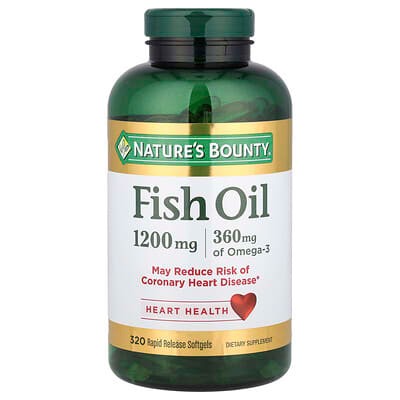
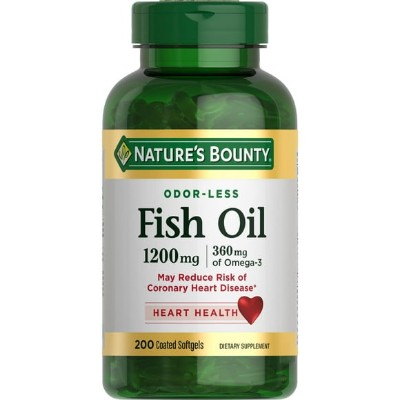
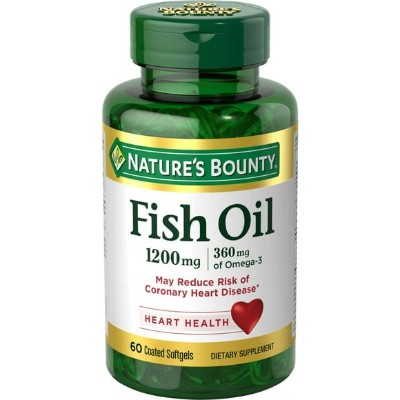
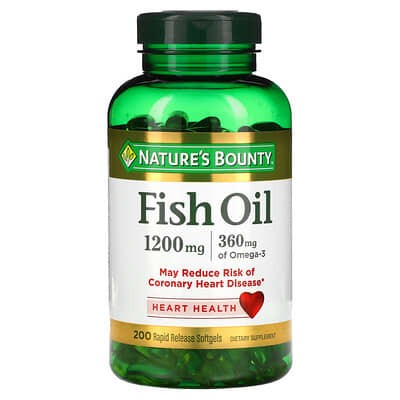
One softgel provides 1,200 mg fish oil and 360 mg total omega-3 from anchovy, herring, mackerel, and sardine. That amount can contribute to routine intake, but it is modest for targeted cardiovascular or inflammatory-balance goals.
EPA and DHA are shown without usable quantities, so the active balance cannot be assessed. A large fish-oil total therefore looks more substantial than the clearly quantified omega-3 content it delivers.
The molecular form, purification method, antioxidant stabilizer, and independent contaminant testing are not stated. The high-count bottle and simple serving are convenient, though disclosure and concentration trail better-focused products.
The total omega amount offers basic daily fish-oil support from named small fish. Missing individual EPA and DHA amounts prevent a confident potency assessment.
Important active-label details are incomplete or ambiguous. Complete use directions and inactive-ingredient details are not available.
The aggregate satisfaction measure is favorable, with response volume determining how much confidence it deserves. Comment-level evidence is absent, so recurring complaints and purpose fit cannot be verified.
A long supply and low recurring cost provide practical basic value. Missing EPA and DHA quantities prevent proof of strong active value.

Marine omega-3 fats directly support production of compounds that help resolve inflammatory signaling. Human evidence for EPA and DHA is strong when their combined intake is sufficiently high.
The 360 mg total omega-3 amount is below common anti-inflammatory target intakes. Fish species and total omega-3 content are clear, but EPA, DHA, oil form, and purity testing are not quantified. The oil comes from several fish species and may not be suitable for people with a fish allergy.

Fish oil directly supports lipid management, a central cardiovascular pathway. The total omega-3 amount is modest and falls short of a strong targeted serving.
The modest total omega-3 amount and missing EPA and DHA breakdown make its practical strength uncertain. A simple fish-oil softgel is logically matched to lipid support.
| Ingredient | Amount per serving |
|---|---|
Calories | 15 Calorie(s) |
Total Fat | 1.5 Gram(s) |
Saturated Fat | 0.5 Gram(s) |
Cholesterol | 10 mg |
Fish Oil | 1200 mg |
Total Omega-3 Fatty Acids | 360 mg |
Eicosapentaenoic Acid | 0 NP |
Docosahexaenoic Acid | 0 NP |
Other Fatty Acids | 0 NP |
Small-fish sourcing is identified, but only total omega-3 is quantified while EPA and DHA are marked as not provided. The molecular form, antioxidant protection, and independent purity testing are also absent from the supplied details. A low shelf price cannot establish active-gram value because the key fatty-acid amounts are unknown.
Anchovy, herring, mackerel, and sardine give the oil a clearly identified fish source. The label states total omega-3 content but does not provide usable individual EPA and DHA amounts. A low serving cost cannot offset missing molecular-form, purification, testing, stabilizer, and active-dose details.
Published studies used for the product analysis and the top-ranked studies for each ingredient and goal.